

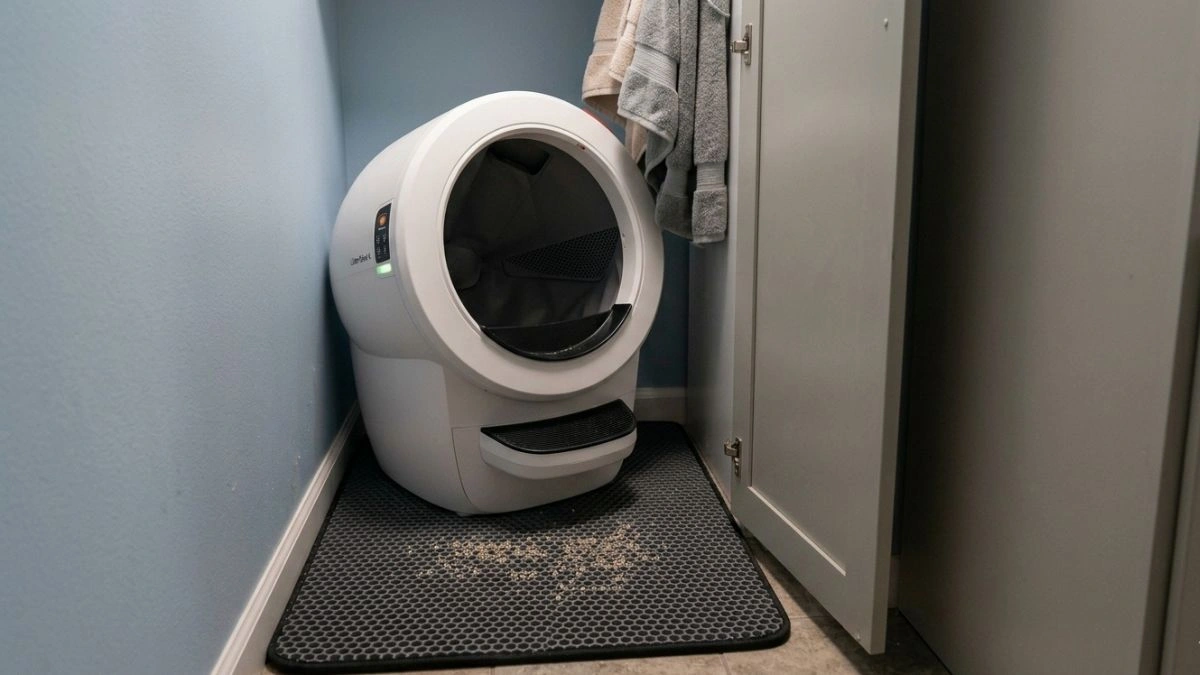
Where Should You Put an Automatic Litter Box? Avoid These Smell Mistakes
Is your home smelling off, or is your cat avoiding its restroom, and you can’t figure out why? Poor placement causes persistent odor, extra noise, and stress for your pet. You may be losing fresh air and daily convenience without realizing it.
Good placement solves all three problems: better odor control, quiet operation, and easy access for daily use. If odor is already an issue in your home, understanding why automatic litter boxes smell and how to fix it can help you address the root cause instead of just moving the unit.
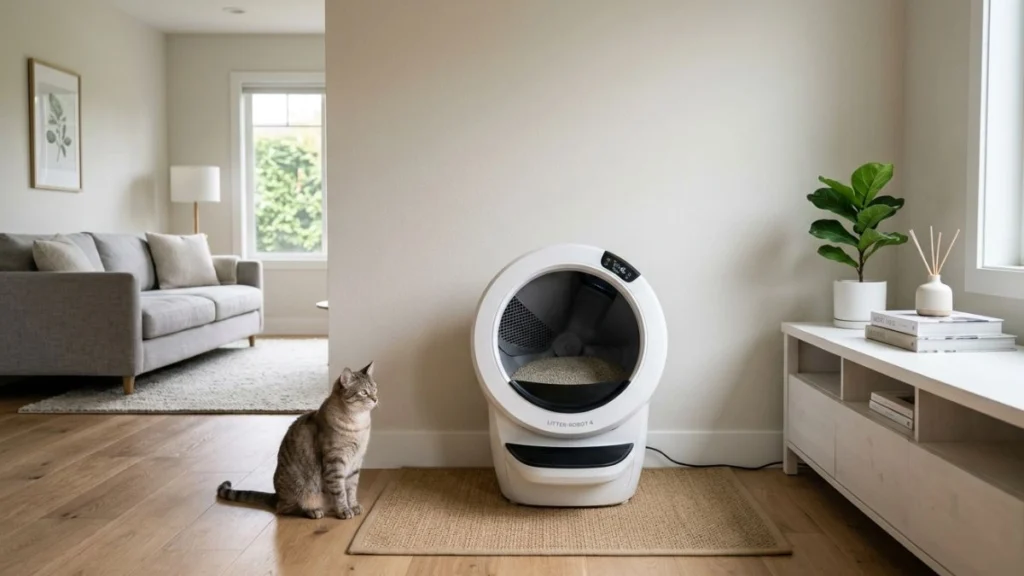
Follow a simple rule like Dr. Justine Lee’s n+1 advice, so your cat always has a clean option. In a small apartment, choose a compact unit that fits under furniture and gives your cat privacy and space.
Pick an out-of-the-way but accessible room or a well-ventilated corner of a bathroom or closet. Avoid high-traffic areas such as your living room or bedroom unless your unit seals odors well. Proper placement protects your home and keeps your cat calm.
Key Takeaways
- Placement directly affects odor control, noise levels, and your cat’s comfort.
- Follow the n+1 rule: one unit per cat plus one extra to prevent stress and accidents.
- Choose an out-of-the-way, well-ventilated spot to improve airflow and reduce smell.
- In small apartments, use compact units under furniture to save space while keeping privacy.
- Avoid main living areas unless your unit has strong odor control and sealing.
Why Proper Placement Matters for Your Cat
Cats rely on quiet, private corners where they can feel safe while they eliminate.
Wrong placement causes stress, avoidance, and behavioral issues. When a unit sits in busy hallways or near noisy appliances, your cat may feel exposed. That stress often leads to accidents, urinary problems, and routine disruption.
Good placement supports natural instincts. Cats seek low-traffic, sheltered areas that reduce the risk of surprise while they use their litter. A secure spot encourages consistent use and better overall health.
If your cat is already avoiding the litter box or showing unusual behavior, it may not be the device — it could be a placement issue. In some cases, this is also connected to common automatic litter box problems and how to fix them.
There are simple ways to hide litter boxes — such as tucked furniture covers or plant corners — that keep your home aesthetic while still providing privacy and accessibility.
- Keep the litter box away from loud appliances and busy paths
- Provide a clean, accessible location and monitor your cat’s reaction
- Maintain a consistent, low-stress environment so your cat feels safe
| Placement Issue | Effect on Cat | Quick Fix |
|---|---|---|
| High-traffic area | Avoidance and stress | Move to a secluded corner |
| Lack of privacy | Interrupted use, accidents | Use a covered option or screen |
| Nearby loud appliances | Startled behavior | Relocate to a quiet room |
Common Mistakes When You Decide Where to Put Automatic Litter Box Units
Small mistakes in location can cause serious problems: odor buildup, litter box avoidance, and disrupted routines.
The Danger of Enclosed Spaces
Never place an automatic unit in a tight closet with a closed door. This traps odor, heat, and moisture, cutting airflow and making the environment uncomfortable for your cat.
If you hide the unit inside furniture, ensure proper ventilation and a clear exit path. A cramped, dark enclosure often increases stress and reduces consistent use.
Why Food Areas Are Off-Limits
Placing the unit near food or water bowls is a common mistake. Cats instinctively avoid eliminating near eating areas, which can lead to accidents elsewhere in your home.
Avoid kitchens and dining corners. Keep feeding and litter areas separated so your cat maintains a stable routine.
This setup often leads to odor, poor hygiene, and inconsistent litter box use over time.
- Do not use a humid bathroom or basement — moisture increases bacteria and odor
- Avoid laundry rooms with loud machines — vibration and noise cause stress
- High-traffic hallways reduce privacy and increase avoidance behavior
| Poor Location | Why It Fails | Quick Fix |
|---|---|---|
| Near food or water | Cats instinctively avoid eating areas | Move unit to a quiet, separate room |
| Closed closet or cramped furniture | Trapped odors and stress | Use a ventilated enclosure or leave door open |
| Laundry room with machines | Noise and vibration cause avoidance | Relocate to a quieter spot |
| Humid bathroom or basement | Moisture increases odor and bacteria | Choose a dry, ventilated area |
| Hidden, hard-to-find spaces | Cat may not locate unit easily | Ensure clear path and visible entrance |
The Importance of Airflow and Ventilation
Good airflow is one of the most important factors for keeping your cat comfortable and your home smelling clean.
Ventilation matters. A well-ventilated area helps disperse odor, reduce moisture, and maintain hygiene. Place your litter box where air naturally circulates, such as near a window or an HVAC vent.
Poor airflow allows ammonia and moisture to build up, which can lead to odor and make your cat avoid the litter box over time.
Humidity directly affects performance. Damp litter breaks down faster, loses clumping ability, and increases odor intensity. Using cross-ventilation or a small exhaust fan helps keep the area dry and extends litter lifespan.
- Choose a spot with steady airflow, not a sealed space
- Allow vent openings in enclosed setups
- Use fans or window gaps to improve circulation
Better airflow means less odor, less stress, and more consistent litter box use.
Why You Should Avoid High-Traffic Zones
Constant movement and noise strip away the privacy your cat needs when using its litter box.
Busy hallways, entryways, and open-plan living areas are poor locations. Your cat needs a calm, low-stress environment to feel safe and maintain consistent habits.
Doors that swing often or rooms with frequent activity can create startle events, leading to avoidance or accidents in other parts of your home.
Identifying High-Traffic Disruptions
- Watch daily movement patterns — identify where people walk most often.
- Keep the litter box away from noisy appliances; if in a laundry room, place it far from washers and dryers.
- Ensure the path stays clear and accessible — no obstacles blocking entry.
- Choose quiet corners like a guest room, hallway alcove, or small bedroom.
If your cat’s routine is already inconsistent, adjusting placement is only part of the solution. Following a proper automatic litter box cleaning schedule also helps maintain consistency and prevent avoidance behavior.
Selecting the Best Quiet Spots for Your Home
Find a calm, low-traffic corner that keeps your cat relaxed and your space fresh.
Choose a quiet area in your home as the ideal location for a litter box. A peaceful environment gives your cat privacy and confidence, reducing startle events and helping maintain consistent habits.
Use furniture such as a side table, bench, or cabinet to hide the unit in a small apartment. This keeps your space visually clean while still providing a private and accessible area. Keep entrances visible and avoid tight or obstructed spaces.
Guest bathrooms and quiet living room corners often work well, as long as they remain accessible at all times. Keep the area away from noisy appliances and ensure your cat has a clear line of sight to feel secure.
If you’re working with limited space or multiple cats, choosing the right setup becomes even more important. In those cases, understanding how automatic litter boxes perform in multi-cat environments can help you avoid overcrowding and placement conflicts.
Simple screens, tall plants, or a decorative partition can add privacy without blocking airflow. Always prioritize ventilation and easy access over hiding the unit completely.
| Spot | Why it works | Quick tip |
|---|---|---|
| Quiet corner of living room | Accessible, low traffic | Use a screen for privacy |
| Guest bathroom | Private and easy to clean | Keep door open |
| Open closet or nook | Hidden but ventilated | Leave gap for airflow |
- Choose a spot that balances privacy and accessibility
- Hide the unit with furniture, but maintain airflow and entry space.
- In small apartments, use nooks or alcoves to keep the area calm.
Practical Considerations for Power and Flooring
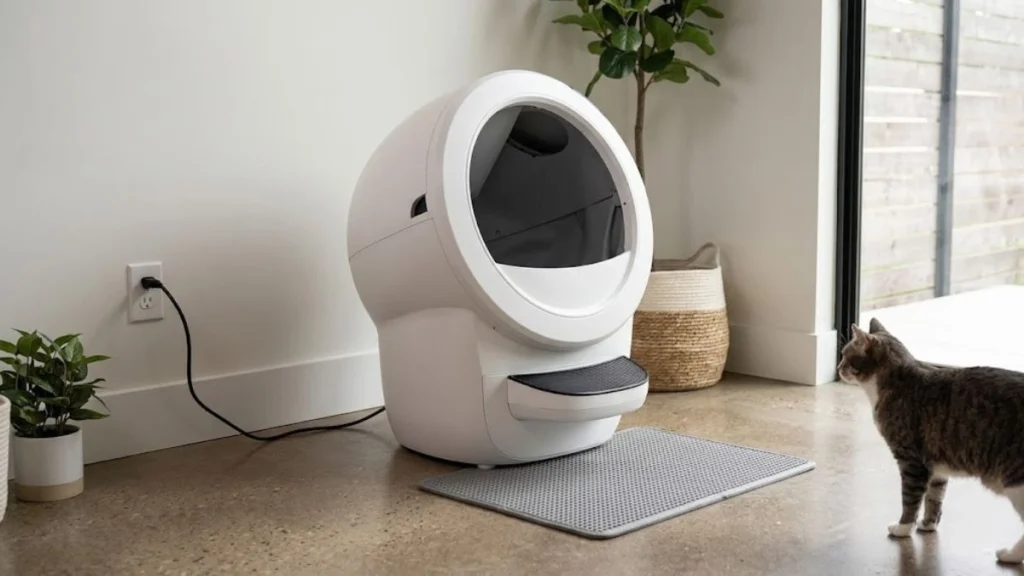
Proper power access and stable flooring are essential for safe operation, odor control, and long-term performance of automatic litter boxes.
Access to Power Outlets
Place the unit near a grounded outlet so it runs reliably without long extension cords. Tuck cords behind furniture and use cord covers to prevent chewing or tripping hazards.
If the chosen room lacks an outlet, consider installing one instead of stretching cables across walkways. This keeps the setup safe, clean, and stable.
Protecting Your Flooring
Choose floors that are easy to clean, such as tile or vinyl, for daily maintenance. A large waterproof mat under the unit helps catch litter, moisture, and debris.
If you plan to place the unit in a laundry room, ensure the floor is level and stable. Excessive vibration can affect both the unit’s performance and your cat’s comfort.
Improper setup in these areas can also lead to mechanical issues and inconsistent cleaning cycles, especially over time. Understanding how to maintain an automatic litter box properly helps prevent these problems and keeps the system running efficiently.
| Consideration | Why it matters | Quick action |
|---|---|---|
| Nearby outlet | Ensures continuous power and safety | Place within ~6 feet or install outlet |
| Floor type | Easier cleaning and odor control | Use tile, vinyl, or waterproof mat |
| Vibration | Can affect performance and comfort | Level the unit and isolate from machines |
- Use furniture or enclosures to contain mess and protect flooring
- Plan electricity and placement early to avoid future adjustments
- Maintain a stable, accessible setup for long-term reliability
Creating Privacy Without Sacrificing Accessibility
Give your cat a private, comfortable space that still allows easy access for cleaning and daily use.
A simple piece of furniture with a hidden entry can conceal the litter box while keeping your cat relaxed. Leave a wide, open entrance so your cat can enter, turn around, and exit without stress.
Keep a few inches of open space around the unit. This makes cleaning easier and prevents trapped odors and heat buildup.
“Privacy and access are not opposites — a well-designed setup supports both your cat’s comfort and your home’s cleanliness.”
Use a door, curtain, or removable panel that your cat can move through easily. Make sure the entrance remains visible and unobstructed, so your cat never feels blocked.
- Choose an enclosure large enough for free movement and comfort
- Place the unit where you can access trays and filters easily
- Use furniture that doubles as décor while still allowing airflow
- Keep the area clear and accessible for daily cleaning
Tips for Managing Odor and Tracking
Smart placement and consistent daily habits make a measurable difference in keeping your home clean.
Using Litter Mats Effectively
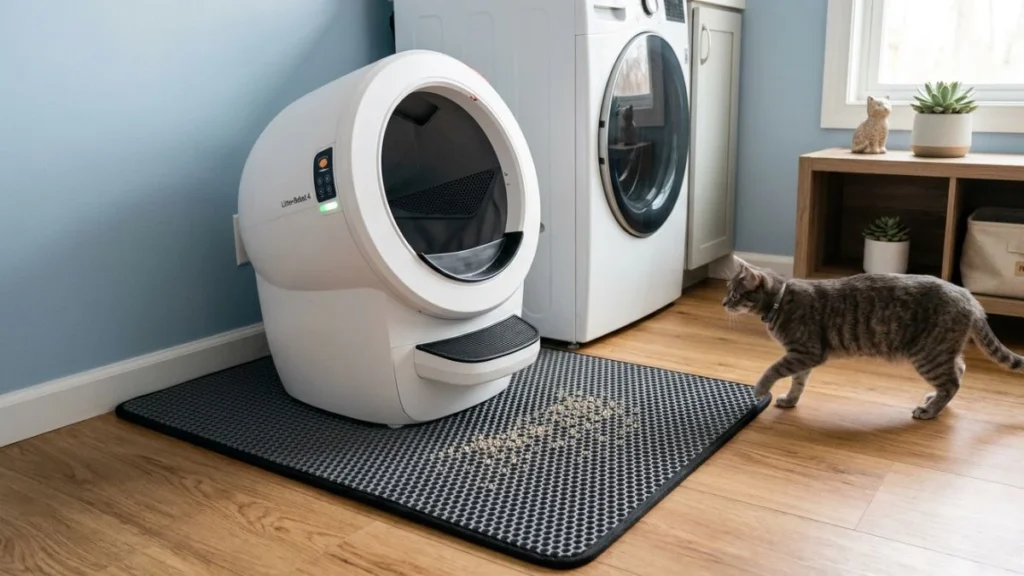
Place a high-quality litter mat just outside the unit to catch tracked granules. This keeps your floors cleaner and reduces dust and airborne particles.
Choose an absorbent, low-dust mat that traps particles effectively. Shake or vacuum it daily to maintain performance.
The Role of Daily Cleaning
Daily checks are the most effective habit for odor control. Empty the waste compartment regularly and monitor filters to prevent buildup.
In many cases, ongoing odor issues are not caused by the machine itself, but by inconsistent maintenance and overlooked buildup over time.
Managing Humidity Levels
Keep the area dry and well-ventilated. Damp conditions cause litter to break down faster and increase odor intensity.
“Small, consistent actions are more effective than occasional deep cleaning.”
- Quick checklist: scoop daily, check the mat, and allow airflow
- Use unscented, low-dust litter for better air quality
- Keep the unit in an accessible spot to make cleaning easier
| Task | Why it helps | Frequency |
| Mat cleaning | Reduces tracking and dust | Daily |
| Waste check | Keeps odors contained | Daily |
| Ventilation check | Prevents moisture buildup | Weekly |
How to Gradually Transition Your Cat to a New Spot
Start the move in small, gradual steps so your cat sees the new location as a natural extension of its territory.
Begin by shifting the litter box a few feet each day. Slow changes help your cat adapt without feeling displaced or stressed.
Keep the old litter box in place for several days while the new area becomes familiar. This fallback option reduces stress and prevents accidents during the transition.
Place a piece of familiar furniture nearby. A chair or small table provides scent cues and adds comfort during the change.
- Watch your cat closely — body language shows if the pace is right
- Use gentle rewards like treats or praise when your cat explores the new area
- If signs of avoidance appear, pause and adjust the pace
In a small apartment, keep access clear and open, avoiding tight enclosures. A slow and consistent approach is the most effective way to maintain routine and prevent setbacks.
“A gradual transition builds confidence and helps your cat adapt without stress.”
Final Thoughts on Maintaining a Clean Environment
A few consistent, simple habits are all it takes to keep your cat’s space clean and your home fresh.
Maintain daily routines — quick checks, regular cleaning, and using the right litter all help prevent buildup and keep odor under control.
Choose a calm, well-placed location that offers both privacy and easy access. Combined with proper airflow, this creates a stable environment your cat can rely on.
Pay attention to your cat’s behavior. Small changes often signal discomfort or stress, and adjusting early can prevent bigger problems.
With the right setup and a consistent routine, you’re not just managing a litter box — you’re creating a cleaner, healthier, and more comfortable home for both you and your cat.
Automatic Litter Box Placement FAQ
Can you hide an automatic litter box in furniture or a closet?
Yes, but only if the space has proper ventilation and a clear entry path. Fully enclosed areas trap heat and odor, reducing comfort and performance.
How does placement affect odor and performance?
Poor placement leads to odor buildup, moisture retention, and inconsistent cleaning cycles. Good airflow and a stable location help maintain hygiene and reduce smell.
How close should the unit be to a power outlet?
Place it near a grounded outlet to avoid extension cords. Keep cables secure and ensure the surface is level to prevent movement during operation.
How do you move the litter box to a new location safely?
Move it gradually over several days. Keep the old location available at first and use rewards to help your cat adapt without stress.
What are the most common placement mistakes?
Common mistakes include placing it in sealed closets, near food, in noisy areas, or high-traffic spaces. These lead to stress, odor issues, and avoidance behavior.
Where is the best place to put an automatic litter box?
The best place to put an automatic litter box is a quiet, low-traffic area with good airflow and easy access. Avoid placing it near food, noisy appliances, or tight enclosed spaces to prevent odor and stress.
What locations should you avoid?
Avoid placing an automatic litter box in kitchens, dining areas, humid rooms, laundry spaces, and high-traffic zones. These environments increase odor, noise, and can make your cat avoid the litter box.