

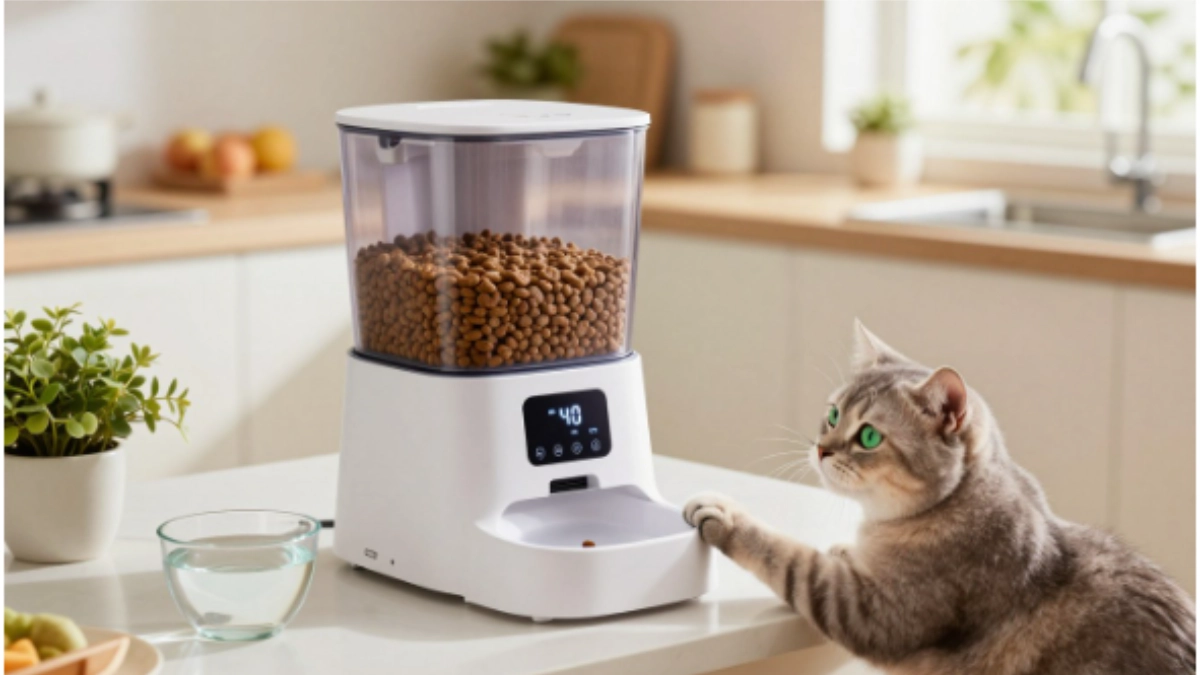
Best Automatic Cat Feeders for Busy Owners (2026): 3 Reliable Picks Worth Considering
Keeping a cat on a consistent feeding schedule sounds simple until long workdays, travel plans, and unexpected commitments get in the way. Even the most dedicated cat owners occasionally find themselves rushing home late or worrying about missed meal times.
A reliable automatic cat feeder can help maintain a predictable feeding routine by dispensing food at scheduled times and controlling portions throughout the day. This can be especially useful for busy owners, frequent travelers, or households where feeding schedules vary from one day to the next.
Not all feeders offer the same experience, however. Capacity, portion accuracy, food compatibility, scheduling flexibility, and power reliability can make a significant difference in daily use. Some models are designed for simple dry-food feeding, while others support wet food feeding or advanced scheduling options.
In this guide, we’ll compare three popular automatic cat feeders and examine their key features, strengths, and limitations based on product specifications, expert evaluations, and owner feedback. The goal is to help you choose a feeder that fits your cat’s needs while making daily feeding routines easier to manage.
At a Glance: Our Recommended Feeders
| Feeder | Best For | Meals Per Day | Standout Feature |
|---|---|---|---|
| IMIPAW Automatic Cat Feeder | Budget-Friendly Simplicity | Up to 6 | Battery Backup |
| PetSafe Healthy Pet Simply Feed | Best Overall | Up to 12 | Advanced Scheduling |
| Cat Mate C500 | Wet Food Feeding | Up to 5 | Ice Pack Cooling System |
Why Busy Owners Need Automated Feeding Solutions
Keeping meal times consistent can be challenging when work schedules change, meetings run late, or travel becomes part of your routine. For many cat owners, maintaining a reliable feeding schedule isn’t about convenience alone—it’s about supporting their cat’s long-term health and well-being.
One of the biggest advantages of an automatic cat feeder is consistency. Meals are delivered at scheduled times, helping establish a predictable routine while reducing the risk of missed feedings. Consistent meal timing can also support healthy eating habits and make portion management easier.
Portion control is another valuable benefit. Instead of estimating serving sizes each day, automatic feeders dispense pre-set amounts, helping owners follow feeding guidelines more accurately. This can be particularly helpful for cats that need weight management or controlled diets.
For busy households, the ability to create custom feeding schedules adds flexibility. Many models allow multiple meals throughout the day, making it easier to accommodate different routines, feeding preferences, and nutritional needs.
Owners frequently mention that automated feeding systems help reduce daily stress, especially during long workdays, weekend trips, or unexpected schedule changes. While these devices don’t replace regular interaction and care, they can make maintaining a consistent feeding routine significantly easier.
Key benefits of automatic cat feeders:
- Consistent meal schedules, even when you’re away from home.
- Better portion control for weight management.
- Flexible programming with multiple feeding times.
- Reduced risk of missed meals during busy days.
- Greater convenience for travel and changing schedules.
Essential Features to Look for in the Best Automatic Cat Feeders for Busy Owners
Choosing the right automatic cat feeder involves more than simply comparing capacities and meal schedules. Small design details can have a significant impact on reliability, food freshness, ease of cleaning, and your overall experience as an owner.
Material Safety
The materials used in a feeder play an important role in both durability and food safety. Look for models made from BPA-free plastic, stainless steel, or a combination of both. These materials are generally easier to clean and help keep food fresh between refills.
It’s also worth paying attention to the design of the food storage compartment. Feeders with secure lids, tight seals, and smooth interior surfaces help reduce moisture exposure, prevent food contamination, and make routine cleaning much easier.
Programmable Settings
A good automatic feeder should be simple to program and flexible enough to fit your cat’s routine. The ability to customize meal times and serving sizes allows owners to create a feeding schedule that matches their cat’s specific needs.
Precise portion control is especially valuable for weight management and controlled feeding plans. Even small differences in serving sizes can add up over time, making accuracy an important feature when comparing models.
Many modern feeders also support multiple meals per day, allowing owners to divide daily food intake into smaller portions rather than serving large meals at once. This can help maintain a more consistent feeding routine and reduce overeating in food-motivated cats.
When evaluating different options, prioritize feeders that combine reliable scheduling, easy programming, secure food storage, and straightforward maintenance. These features often make the biggest difference in everyday use.
Understanding Capacity and Portion Control Requirements
Choosing the right feeder capacity starts with understanding how much food your cat eats each day. A feeder that is too small may require frequent refills, while an oversized model can take up unnecessary space and may not provide additional benefits for a single-cat household.

As a general rule, estimate your cat’s average daily food intake and consider how many days you want the feeder to operate before needing a refill. Owners who travel frequently or work long hours often prefer larger hoppers that can hold several days’ worth of dry food.
Capacity becomes even more important in multi-cat households. Multiple cats can empty a food reservoir much faster than expected, making larger-capacity models a more practical choice for maintaining a consistent feeding schedule.
When comparing feeders, don’t focus on storage capacity alone. Portion control accuracy is equally important. The ability to dispense consistent serving sizes helps support healthy feeding habits and makes it easier to follow veterinarian-recommended feeding guidelines.
Look for models that allow you to:
- Adjust portion sizes with precision.
- Schedule multiple meals throughout the day.
- Customize feeding routines based on your cat’s needs.
- Maintain consistency even when you’re away from home.
Larger hoppers can reduce refill frequency, but portion control is often the feature that has the biggest impact on your cat’s long-term health. The best automatic feeders balance both capacity and accuracy to create a reliable daily feeding routine.
For households with multiple cats, calculate the combined daily food consumption of all pets before selecting a feeder. This simple step can help you avoid choosing a model that runs out of food sooner than expected.
The Importance of Battery Backup and Power Reliability
Power outages are easy to overlook when shopping for an automatic cat feeder, but they can quickly become a problem if a scheduled meal is missed. For owners who work long hours, travel frequently, or spend extended periods away from home, power reliability is one of the most important features to consider.
Many automatic feeders rely on a wall outlet for daily operation. While this works well under normal conditions, an unexpected outage can interrupt feeding schedules, reset internal clocks, or prevent meals from being dispensed altogether.
Preventing Feeding Interruptions
Models with battery backup provide an additional layer of protection by continuing to operate when household power is unavailable. In many cases, backup batteries help maintain feeding schedules, preserve programmed settings, and ensure meals are delivered on time.
Dual-power systems that combine an AC adapter with battery support are often preferred because they reduce the risk of interruptions and provide greater peace of mind when owners are away from home.
When comparing automatic feeders, consider the following:
- Battery backup availability and expected runtime.
- Whether feeding schedules remain active during outages.
- If programmed settings are preserved after power is restored.
- The ease of replacing or recharging backup batteries.
While power outages may be infrequent, having a reliable backup system can help prevent missed meals and maintain a consistent feeding routine. For many owners, this feature becomes especially valuable during travel, severe weather, or unexpected disruptions.
Reviewing the IMIPAW Automatic Cat Feeder
The IMIPAW Automatic Cat Feeder is designed for owners who want a simple and affordable way to maintain a consistent feeding routine. Its compact design makes it a practical choice for apartments, smaller homes, and single-cat households.
With a 3L food capacity, the feeder can store several days’ worth of dry food for most adult cats, reducing the need for frequent refills. The straightforward LCD interface allows owners to schedule meals and adjust portions without relying on a mobile app, which may appeal to those who prefer a simple setup.
One of the standout features is its dual-power system. The combination of a DC adapter and battery backup helps maintain feeding schedules during temporary power outages, adding an extra layer of reliability.
Key advantages include:
- Compact design suitable for smaller living spaces.
- Up to six programmable meals per day.
- Battery backup support for improved reliability.
- Easy-to-use controls and straightforward setup.
- Secure lid design that helps prevent food access between meals.
For owners looking for a budget-friendly automatic feeder with essential scheduling features, the IMIPAW offers a practical balance of convenience, reliability, and ease of use.
Analyzing the PetSafe Healthy Pet Simply Feed
The PetSafe Healthy Pet Simply Feed is a strong option for owners who prioritize capacity, feeding flexibility, and long-term convenience. Its larger food reservoir and advanced scheduling options make it particularly appealing for households that want to automate feeding with minimal daily involvement.

The PetSafe Healthy Pet Simply Feed is a strong option for owners who prioritize capacity, feeding flexibility, and long-term convenience. Its larger food reservoir and advanced scheduling options make it particularly appealing for households that want to automate feeding with minimal daily involvement.
One of the biggest advantages of this feeder is its 5L capacity, which can store enough dry food for several days in most single-cat households. This reduces refill frequency and makes the feeder especially practical for busy owners, frequent travelers, or households with multiple pets.
The scheduling system offers a high level of customization, allowing owners to program up to 12 meals per day. This flexibility can be useful for cats that benefit from smaller, more frequent meals rather than one or two larger servings.
Another important advantage is its adjustable portion control system. Consistent serving sizes help support healthy feeding habits and make it easier to follow veterinarian-recommended feeding plans.
Key advantages include:
- Large 5L food capacity.
- Up to 12 programmable meals per day.
- Adjustable portion control for consistent feeding.
- Slow-feed functionality designed to reduce fast eating.
- Durable construction built for long-term daily use.
For owners seeking a feeder that combines capacity, flexibility, and reliable scheduling, the PetSafe Healthy Pet Simply Feed remains one of the most well-known options in this category.
Evaluating the Cat Mate C500 for Wet Food Feeding
Feeding wet food presents different challenges than dry food, especially when owners are away from home for extended periods. Maintaining freshness and food safety becomes a priority, which is where the Cat Mate C500 stands out.
Ice Pack Functionality
One of the most distinctive features of the Cat Mate C500 is its use of removable ice packs positioned beneath the food compartments. These packs help keep wet food cooler for longer periods, slowing temperature increases that can affect freshness.
This design allows owners to schedule multiple meals throughout the day without leaving wet food exposed for extended periods. For cats that prefer wet food or require it as part of their diet, this feature offers added convenience and peace of mind.
Freshness Considerations
Food freshness plays an important role in both palatability and safety. Many cats are sensitive to changes in texture, aroma, and temperature, making proper food storage particularly important when using automatic feeding systems.
The Cat Mate C500 includes five individual meal compartments, allowing owners to prepare portions in advance and schedule feeding times throughout the day. Combined with the included ice packs, this design helps maintain food quality more effectively than many traditional dry-food feeders.
Key advantages include:
- Designed specifically for wet food feeding.
- Five programmable meal compartments.
- Removable ice packs to help maintain freshness.
- Simple operation with minimal setup.
- Useful for owners who are away during the day but still feed wet food regularly.
For cat owners who primarily feed wet food, the Cat Mate C500 offers a practical solution that balances convenience, meal scheduling, and food freshness.
Comparing App-Controlled Feeders Versus Manual Programming
Choosing between an app-controlled feeder and a manually programmed model largely depends on your lifestyle and how much remote access you want.
App-controlled feeders allow owners to adjust meal schedules, modify portions, and receive notifications directly from a smartphone. These features can be particularly useful for frequent travelers or owners who spend long hours away from home and want additional flexibility.
Manually programmed feeders take a simpler approach. Feeding schedules and portion settings are adjusted directly on the device, eliminating the need for Wi-Fi connectivity or mobile apps. Many owners prefer this simplicity because it often reduces potential technical issues and makes daily operation more straightforward.
Both options can effectively support portion control and scheduled feeding. The best choice ultimately depends on whether you value remote management features or prefer a reliable, no-frills feeding solution.
When comparing these two approaches, consider how often you travel, your comfort level with technology, and whether real-time control is important for your routine.
| Feature | App-Controlled Feeders | Manual Feeders |
|---|---|---|
| Remote Adjustments | Yes — schedules and portions can be changed through a smartphone app | No — changes must be made directly on the feeder |
| Notifications & Alerts | Often included | Typically not available |
| Reliability | Depends on Wi-Fi and app connectivity | Generally fewer technical interruptions |
| Ease of Use | Convenient for remote management | Simple and straightforward operation |
| Best For | Frequent travelers and tech-focused owners | Owners who prefer simplicity and reliability |
Selecting the Right Feeder for Multi-Cat Households
Feeding multiple cats can be more complicated than simply increasing food portions. Different appetites, feeding speeds, and personalities often create challenges that aren’t as common in single-cat households.
An automatic feeder can help establish a more structured routine, but choosing the right setup is essential. In many multi-cat homes, preventing food stealing and ensuring each cat receives the appropriate amount of food becomes the biggest challenge.
Managing Territorial Eating Habits
Some cats naturally eat faster or become protective of food, which can make shared feeding stations difficult to manage. Observing your cats during meal times can help identify dominant eaters and determine whether separate feeding arrangements are necessary.
Many owners find that using multiple feeding stations reduces competition and allows each cat to eat more comfortably. In households where food stealing is a recurring issue, microchip-activated feeders can provide additional control by restricting access to specific pets.
When selecting a feeder for multiple cats, consider:
- Whether each cat requires different portion sizes.
- If food stealing or guarding behavior is common.
- The total daily food consumption of all cats in the household.
- Whether separate feeding stations would reduce competition.
A consistent feeding schedule, combined with the right feeder setup, can help create a calmer feeding environment and make mealtime easier to manage for both cats and owners.
Best Practices for Cleaning and Maintaining Your Device
Regular cleaning is one of the simplest ways to keep an automatic cat feeder working properly and ensure your cat’s food stays fresh. Even the most reliable feeder can experience performance issues over time if food residue, dust, or moisture are allowed to accumulate.
A simple maintenance routine can help prevent dispensing problems, reduce bacterial growth, and extend the lifespan of the device.
Recommended Cleaning Routine
Food trays and feeding bowls should be cleaned regularly using warm water and mild soap. This helps remove food residue, oils, and debris that can build up over time.
Each time you refill the feeder, take a moment to inspect the dispensing mechanism. Small pieces of kibble, dust, or food residue can occasionally interfere with normal operation if left unchecked.
It’s also a good idea to inspect seals, lids, and moving parts periodically. Components that no longer close properly may affect food freshness and overall performance.
To help maintain your feeder:
- Wash removable food trays and bowls regularly.
- Check the dispensing mechanism during refills.
- Inspect lids and seals for wear or damage.
- Keep electronic components dry at all times.
- Replace backup batteries according to the manufacturer’s recommendations.
A few minutes of routine maintenance can help ensure reliable feeding schedules, improve food hygiene, and keep the device operating efficiently for years.
Troubleshooting Common Issues with Automatic Feeders
Even reliable automatic feeders can occasionally experience minor issues. Fortunately, most common problems can be resolved quickly without replacing the device or contacting customer support.
One of the most frequent issues is food failing to dispense properly. In many cases, the cause is a blockage created by oversized kibble, food residue, or small debris inside the dispensing mechanism. Regular cleaning can help prevent these interruptions.
Power-related problems are another common concern. Low batteries, loose power connections, or interrupted power supplies may cause feeding schedules to stop working as expected. Checking power sources should always be one of the first troubleshooting steps.
Timing issues can also occur after power outages or accidental resets. Verifying the internal clock and feeding schedule settings often resolves missed or delayed meals.
If your feeder is not operating correctly, try the following:
- Inspect the dispensing mechanism for food blockages.
- Confirm that batteries and power connections are functioning properly.
- Verify that feeding schedules are programmed correctly.
- Keep the hopper clean and free from moisture.
- Check that the lid and food reservoir are securely closed.
Most feeding problems can be prevented through routine cleaning, proper setup, and periodic inspections. A few minutes of maintenance can help keep your feeder operating reliably and ensure your cat receives meals on schedule.
Conclusion
The best automatic cat feeder is the one that fits both your cat’s feeding habits and your daily routine. While some owners may prioritize advanced scheduling and large food capacity, others may be looking for a simple solution that keeps meals consistent during busy workdays or short trips.
The IMIPAW offers an affordable and straightforward option for everyday use, the PetSafe Healthy Pet Simply Feed stands out for its flexibility and scheduling features, and the Cat Mate C500 provides a practical solution for owners who regularly serve wet food.
When comparing feeders, focus on the features that matter most to your household, including portion control, meal scheduling, power reliability, ease of cleaning, and food compatibility. Choosing the right feeder can help create a more consistent feeding routine while giving you greater peace of mind when you’re away from home.
A well-designed automatic feeder won’t replace your care and attention, but it can make daily feeding more predictable, convenient, and reliable for both you and your cat.
Automatic Cat Feeder FAQs
How do I choose the right feeder capacity for my cat?
Choose a feeder based on your cat’s daily food consumption and how often you want to refill it. Single-cat households can often use smaller feeders, while multi-cat homes usually benefit from larger food reservoirs that require fewer refills.
Can I use wet food in an automatic feeder?
Not all automatic feeders are designed for wet food. Models such as the Cat Mate C500 include dedicated compartments and cooling features that help keep wet food fresh between scheduled meals.
Are app-controlled feeders worth it compared to manually programmed models?
App-controlled feeders offer remote access, schedule adjustments, and notifications through a smartphone. Manually programmed feeders provide a simpler experience and often rely less on internet connectivity. The best choice depends on your lifestyle and preferences.
How important is battery backup in an automatic feeder?
Battery backup helps maintain feeding schedules during power outages and can prevent missed meals. For owners who travel frequently or spend long hours away from home, this feature provides additional peace of mind.
Will my cat adapt to scheduled meals if they’re used to free-feeding?
Most cats adjust gradually when feeding times become more consistent. A slow transition and predictable schedule can help make the change easier while reducing stress and food-related anxiety.
Can feeders help prevent food stealing in multi-cat households?
Some feeders are designed to reduce food stealing by controlling access to meals. Microchip-enabled models can be especially useful in households where one cat regularly eats another cat’s food.
How often should I clean my automatic cat feeder?
Food trays and feeding areas should be cleaned regularly to prevent food buildup and maintain hygiene. It’s also a good idea to inspect the dispensing mechanism during refills and follow the manufacturer’s cleaning recommendations.