

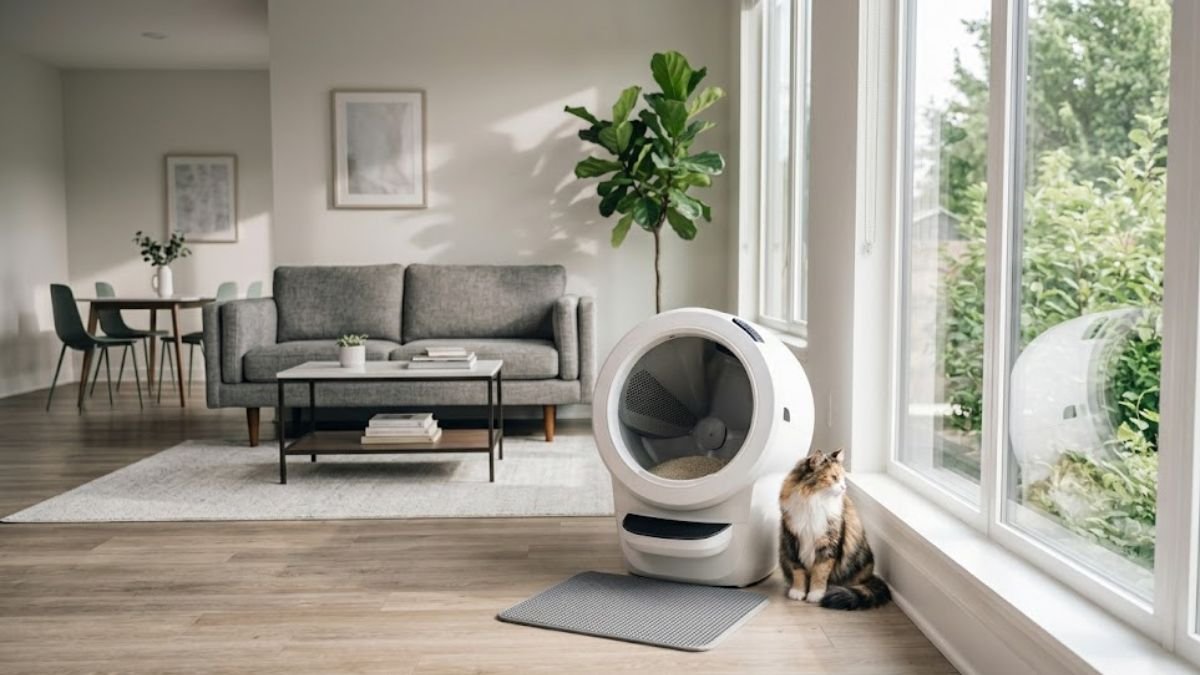
Best Litter for Litter-Robot 4: What Actually Works (And What Ruins It)
You bought a smart box to make life easier, but now the unit stalls, tracks dust, and smells linger.
That frustration comes up again and again among owners who pick the wrong cat litter.
Many Litter-Robot 4 owners only notice the problem after a few weeks, when sticky residue starts building inside the globe and cleaning cycles become less reliable.
In many cases, sensor errors, odor buildup, and poor cycling performance trace back to particle size, dust levels, and weak clumping ability.
The Litter-Robot 4 uses a patented sifting process that depends on gravity and rotation. If the litter clumps too wet, or if granules are too fine, the screen can clog and create extra residue inside the globe.
That often leads to interrupted cycles, false alerts, sticking problems, and more manual cleaning than most owners expect from a premium automatic litter box.
Whisker recommends GreatLitter because it closely matches the machine’s calibration and sifting design. Choosing the right formula helps reduce sticking, minimize tracking, improve odor control, and keep the globe cleaner over time.
The wrong litter, however, can quickly make the Litter-Robot 4 feel frustrating instead of convenient.
Quick Answer
The best litter for the Litter-Robot 4 is usually a low-dust, fast-clumping clay litter with medium-weight granules.
Litters that are too lightweight, overly dusty, crystal-based, or slow-clumping often cause sticking, odor buildup, tracking, false alerts, and poor cleaning performance.
Quick Highlights
- Wrong cat litter can cause sensor alerts and interrupted cleaning cycles.
- Particle size and clumping strength directly affect sifting performance.
- Low-dust, fast-clumping clay formulas usually work best in the Litter-Robot 4.
- The right litter helps reduce sticking, tracking, and odor buildup.
- Proper litter selection improves long-term performance and reduces maintenance.
Why Your Choice of Litter Matters for the Litter-Robot 4
Your choice of cat litter directly affects whether the Litter-Robot 4 runs smoothly or turns into a constant maintenance problem.
The globe and sifting screen are designed around specific clumping behavior. When the litter forms tight, solid clumps, the cleaning cycle stays efficient and the globe remains much cleaner over time.
Problems usually start when owners use litter that is too dusty, too lightweight, or slow to clump. In many cases, that leads to sticking, false drawer alerts, dirty sensors, and interrupted cleaning cycles.
Non-clumping or pellet-based formulas can also confuse the sifting system, allowing clean granules to fall into the waste drawer and increasing litter waste over time.
What this means for you: heavier, fast-clumping clay litter helps maintain accurate sensor readings, improves odor control, and reduces residue buildup inside the globe.
That means fewer deep cleanings, fewer interruptions, and a better overall experience for both you and your cat.

- Sensor interference usually comes from excessive dust and lightweight granules.
- Sticking and odor buildup often happen when litter fails to form strong clumps.
- Wasted litter becomes more common when particle size does not match the sifting screen properly.
| Issue | Cause | Quick Fix | Result |
|---|---|---|---|
| False drawer alerts | Dust coats sensors | Switch to low-dust, heavy clay | Fewer interruptions |
| Stuck waste | Poor clumping | Use a fast-clumping formula | Cleaner globe |
| Clean litter loss | Too-fine granules | Choose coarser granules | Less waste, lower cost |
The Best Litter for Litter-Robot 4 Performance
The right litter can completely change how the Litter-Robot 4 performs on a daily basis.
When the formula clumps quickly, produces less dust, and maintains proper weight, the cleaning cycle becomes smoother and far more reliable.
Many owners notice fewer sticking problems, cleaner rotations, better odor control, and fewer false alerts after switching to a higher-quality litter.
Low-dust, fast-clumping clay formulas usually perform best because they create solid clumps that stay intact during the cleaning cycle instead of breaking apart inside the globe.
Top Recommended Clay Options
GreatLitter uses sun-dried sodium bentonite that forms strong clumps and helps reduce residue buildup inside the globe. It closely matches the unit’s recommended calibration and works especially well for multi-cat homes.
Tidy Cats Designed for Litter-Robot is specifically formulated for the unit’s sifting system and offers reliable odor control with lower tracking than many lightweight formulas.
Fresh Step Simply Unscented is a popular low-dust option that performs well in smaller homes or apartments where odor control and cleaner air matter more.
Scoop Away Multi-Cat creates heavier clumps that help improve sensor accuracy while also reducing sticking and waste buildup over time.
Benefits of Fast-Clumping Formulas
- Faster cleaning cycles: strong clumps help the globe rotate smoothly without leaving residue behind.
- Cleaner globe interior: solid clumps are less likely to break apart during rotation.
- Better odor control: fast clumping traps moisture before smells spread inside the drawer.
- Less dust buildup: low-dust formulas help keep sensors and internal components cleaner.
- Lower maintenance: fewer sticking problems mean less manual cleaning over time.
Understanding the Mechanics of Sifting and Clumping
The sifting screen does the heavy lifting inside the Litter-Robot 4. It separates solid waste from reusable litter as the globe rotates during each cleaning cycle.
The system is designed around specific particle sizes and clumping behavior. When the litter forms tight, solid clumps, clean granules fall back into the litter bed while waste drops cleanly into the drawer.
Problems usually begin when clumps break apart too easily.
Small fragments can smear across the globe, leave residue behind, and contaminate the clean litter bed. Over time, this often leads to stronger odors, sticking problems, and more manual cleaning.
The rotation speed and sifting screen are calibrated for standard clumping clay, which is why the Litter-Robot 4 typically performs best with heavy, fast-clumping formulas.
Many owners only realize how important this is after switching from lightweight or weak-clumping litter and suddenly noticing more residue inside the globe.
- Sifting performance depends heavily on particle size and clumping strength.
- Weak clumping formulas often create crumbling residue and dirty litter beds.
- Proper litter weight and granule size help the globe rotate more smoothly and reduce waste buildup.
Use consistent, high-quality litter so the sifting system can work properly and the globe stays cleaner over time.
Why Some Popular Litters Fail in the Litter-Robot 4
Many litter problems start because the formula simply doesn’t match the way the Litter-Robot 4’s sifting system and sensors are designed to work.
When the litter is too light, too large, too dusty, or unable to form solid clumps, the cleaning cycle becomes far less reliable. That often leads to false drawer alerts, sticking residue, missed cycles, and more manual cleaning over time.
The Problem with Pellet-Based Options
Pellet-based litters like Feline Pine and Tidy Cats Breeze are usually too large for the Litter-Robot 4’s sifting screen.
Instead of cycling properly, many pellets fall directly into the waste drawer, creating false “drawer full” alerts and increasing litter waste after each rotation.
Why Crystal Litters Often Cause Problems
Crystal and silica-based litters may help absorb moisture, but they often behave unpredictably inside automatic litter boxes.
Some translucent crystal formulas can interfere with the unit’s sensors and create inaccurate waste level readings. Many owners also report leftover crystals remaining inside the globe after cleaning cycles.
Risks of Lightweight and Wood-Based Litters
Lightweight litter formulas may not provide enough density for accurate weight detection. In some cases, the unit may fail to recognize when a cat enters the globe, leading to interrupted or missed cleaning cycles.
Wood-based and tofu litters can also create extra dust, softer clumps, and sticky residue inside the liner. Over time, that buildup can increase odors and make the globe harder to keep clean.
| Type | Primary Issue | Result in Unit |
|---|---|---|
| Pellet-based litter | Too large for the sifting screen | False drawer alerts and wasted litter |
| Crystal litter | Sensor interference | Inaccurate waste level readings |
| Lightweight formulas | Low density | Missed or interrupted cleaning cycles |
| Wood or tofu litter | Weak clumping and dust | Residue buildup and stronger odors |
Using a fast-clumping, low-dust litter that matches the unit’s design usually results in smoother cycles, fewer alerts, and a much cleaner globe over time.
The Dangers of Dust and Sensor Interference
Excessive dust is one of the most common reasons the Litter-Robot 4 starts behaving unpredictably over time.
Fine particles slowly collect around the sensors and interfere with the unit’s ability to detect waste levels correctly. Many owners first notice the problem when random drawer alerts or interrupted cleaning cycles start appearing more often.
Dust is the enemy inside automatic litter boxes.
Low-quality litter can release large amounts of fine dust during every cleaning cycle, coating the globe, sensors, and internal surfaces with residue over time.
Although the Litter-Robot 4 includes a LowDust screen, extremely dusty litter can still create sensor interference, poor air quality, and additional maintenance problems.
Low-dust clay formulas usually perform much better because they help keep both the globe and internal components cleaner.
- Dust buildup can trigger persistent false drawer alerts.
- Low-dust litter helps improve air quality and reduce tracking around the home.
- Dirty sensors often lead to interrupted cycles and extra manual resets.
| Problem | Cause | Fix |
|---|---|---|
| False drawer alerts | Dust coating the sensors | Switch to a low-dust clay formula |
| Poor air quality | Excessive airborne dust during sifting | Use dust-rated litter and ventilate the area |
| Increased maintenance | Residue buildup inside the globe | Inspect and clean sensors regularly |
Tip: avoid extremely cheap or overly dusty litter whenever possible. Lower dust levels help protect the sensors, reduce maintenance, and create a cleaner environment for both you and your cat.
Managing Odors Without Relying on Fragrances

Many owners try to solve litter box smells with heavily scented litter, but that usually hides the problem instead of fixing it.
Real odor control inside the Litter-Robot 4 depends much more on fast clumping, low moisture buildup, and regular waste removal than on artificial fragrance.
Strong perfumes can also bother sensitive cats. In some homes, heavily scented litter may even discourage regular litter box use over time.
The sealed waste drawer already helps contain odors effectively. When litter forms tight, fast-drying clumps, moisture becomes trapped quickly before smells spread throughout the globe.
That’s why low-dust, fast-clumping clay formulas usually control odor better than heavily perfumed alternatives.
- Unscented litter is often more comfortable for sensitive cats.
- Fast clumping helps trap moisture before ammonia odors develop.
- Regular drawer cleaning plays a bigger role than fragrance alone.
- Poor clumping litter usually leads to stronger odors and more residue buildup.
| Action | Why it works | When to do it |
|---|---|---|
| Use unscented litter | Reduces irritation and traps moisture naturally | Daily use |
| Rely on the sealed drawer | Helps contain odor inside the unit | Continuous |
| Replace poor clumping litter | Prevents ammonia buildup and residue | At the first sign of odor |
| Empty the waste drawer regularly | Reduces trapped moisture and smell | Before the drawer becomes full |
Over time, most owners notice that better clumping performance and cleaner cycles improve odor control far more effectively than strong fragrance additives.
How to Properly Maintain Your Litter Bed Levels
The fill line inside the globe exists for a reason — both overfilling and underfilling can create unnecessary cleaning problems and interrupted cycles.
Keeping the litter bed at the recommended level helps the Litter-Robot 4 sift more efficiently, form cleaner clumps, and reduce waste buildup inside the globe.
When owners overfill the unit, clean litter may get dumped into the waste drawer during rotation. Over time, that increases litter waste and makes the drawer fill much faster than expected.
Underfilling creates a different problem.
If there isn’t enough litter inside the globe, clumps may fail to form properly. That often leads to sticky residue, poor odor control, and more buildup along the liner.
The LitterHopper accessory can help maintain more consistent litter levels automatically, especially in multi-cat homes where litter levels change more quickly throughout the week.
- Check the litter level every few days if you do not use an automatic dispenser.
- Keep the litter bed even to help the globe rotate and sift properly.
- Avoid overfilling the globe, especially with heavy clay formulas.
- Consistent litter levels help reduce sticking, residue, and interrupted cycles over time.
Maintaining the correct litter level is one of the easiest ways to improve long-term performance while reducing unnecessary maintenance.
Comparing Clay, Crystal, and Natural Formulas

Not all litter types behave the same once the Litter-Robot 4 starts rotating and sifting.
The material you choose directly affects clumping performance, sensor accuracy, odor control, tracking, and long-term maintenance. Some formulas work smoothly inside the globe, while others create residue buildup, false alerts, and unreliable cleaning cycles.
Why Clay Remains the Best Overall Option
High-quality clay litter continues to perform best in the Litter-Robot 4 because it offers the ideal balance of weight, fast clumping, and consistent sifting performance.
When the litter forms dense clumps quickly, waste separates more cleanly and the globe stays noticeably cleaner over time.
Many owners also notice fewer sticking problems and better odor control when switching from lightweight or weak-clumping alternatives to heavier clay formulas.
The Limitations of Crystal and Natural Litters
Crystal litter can absorb moisture effectively, but translucent granules sometimes interfere with the unit’s sensors and create inconsistent waste level readings.
Natural, wood, and tofu-based formulas are often marketed as eco-friendly alternatives, but many struggle to create the tight, durable clumps needed for reliable automatic cleaning cycles.
Some natural litters also produce softer residue that sticks more easily to the liner, especially in humid environments.
| Type | Main Advantage | Common Problem |
|---|---|---|
| Clay litter | Strong clumping and reliable sifting | Can become dusty if low quality |
| Crystal litter | Moisture absorption | Sensor interference and false alerts |
| Natural or tofu litter | Lower tracking and eco-friendly materials | Weak clumping and residue buildup |
Choosing a litter that matches the unit’s mechanics usually leads to cleaner cycles, fewer interruptions, and lower maintenance over time.
Troubleshooting Common Sticking and Humidity Issues
If residue keeps building inside the globe, the problem is usually connected to humidity, litter quality, or improper litter levels.
Many Litter-Robot 4 owners only notice sticking problems after residue slowly starts building inside the globe over time. At first, the globe may only show small patches of residue, but over time the buildup becomes harder to ignore and cleaning cycles start feeling less reliable.
Dealing with Globe Residue and Humidity
Start with the basics first.
Make sure the unit is placed in a dry, well-ventilated area and that the litter bed stays close to the recommended fill line. High humidity can cause clay litter to clump too early and stick directly to the rubber liner during rotation.
A simple cleaning routine also makes a major difference.
Use a damp cloth to wipe away residue inside the globe, then allow the interior to dry completely before adding fresh litter again. Adding new litter while moisture is still present usually makes sticking worse.
- Check the waste drawer regularly, since trapped moisture increases humidity inside the unit.
- Avoid overly fine litter, which often creates more smear and residue buildup.
- Fast-clumping clay formulas usually separate more cleanly during rotation.
- Keep the interior dry to help reduce sticking and odor buildup over time.
| Issue | Quick Fix | Result |
| Sticky residue inside the globe | Wipe and fully dry the liner | Cleaner rotation and less buildup |
| Premature clumping | Move the unit to a drier area | Better clumping and cleaner cycles |
| High internal humidity | Empty the waste drawer more often | Lower moisture and reduced sticking |
Final tip: when the globe stays dry and the litter clumps properly, the cleaning cycle becomes smoother, cleaner, and far more reliable over time.
Conclusion
Choosing the right litter has a much bigger impact on the Litter-Robot 4’s performance than most owners expect.
The wrong formula can lead to sticking residue, false alerts, extra dust, stronger odors, and unreliable cleaning cycles that make the unit feel far more frustrating than convenient.
On the other hand, a high-quality, fast-clumping litter helps the globe stay cleaner, improves odor control, reduces maintenance, and keeps the cleaning cycle running more smoothly over time.
Avoid lightweight, pellet-based, and weak-clumping formulas whenever possible, especially if you want fewer interruptions and a cleaner overall experience.
With the right litter, the Litter-Robot 4 starts feeling the way it was designed to feel — cleaner, easier to manage, and far more reliable for daily use.
Litter-Robot 4 Questions Answered
Why Does Litter Stick Inside the Litter-Robot 4?
Litter usually sticks inside the globe when the formula clumps too slowly, contains excessive moisture, or produces weak clumps that break apart during rotation. High humidity and underfilled litter beds can also make sticking problems worse over time.
What Litter Actually Works Best in the Litter-Robot 4?
Most owners get the best results with a low-dust, fast-clumping clay litter that forms dense clumps and maintains proper weight during the cleaning cycle. Heavier clay formulas usually provide better odor control, cleaner sifting, and fewer sensor issues.
Which Litters Cause the Most Problems in the LR4?
Pellet-based, crystal, lightweight, and weak-clumping litters tend to create the most problems. These formulas can lead to false alerts, residue buildup, missed cycles, and unreliable cleaning performance.
Why Is My Litter-Robot 4 Smelling Worse Over Time?
Stronger odors often appear when litter stops clumping properly or when residue begins collecting inside the globe. A full waste drawer, excess humidity, and dusty low-quality litter can also make odor problems worse.
Can the Wrong Litter Trigger False Sensor Alerts?
Yes. Excessive dust, lightweight granules, and translucent crystal litter can interfere with the Litter-Robot 4’s sensors and create inaccurate waste level readings or interrupted cycles.
What Causes Sticky Residue Inside the Globe?
Sticky residue usually happens when litter contains too much moisture or fails to form strong clumps quickly enough. Over time, weak clumps smear across the liner and create buildup that becomes harder to clean.
How Do You Keep the Litter-Robot 4 Cleaner Longer?
Using a high-quality low-dust litter, maintaining proper litter levels, emptying the waste drawer regularly, and keeping the globe dry all help reduce buildup and improve long-term cleaning performance.