

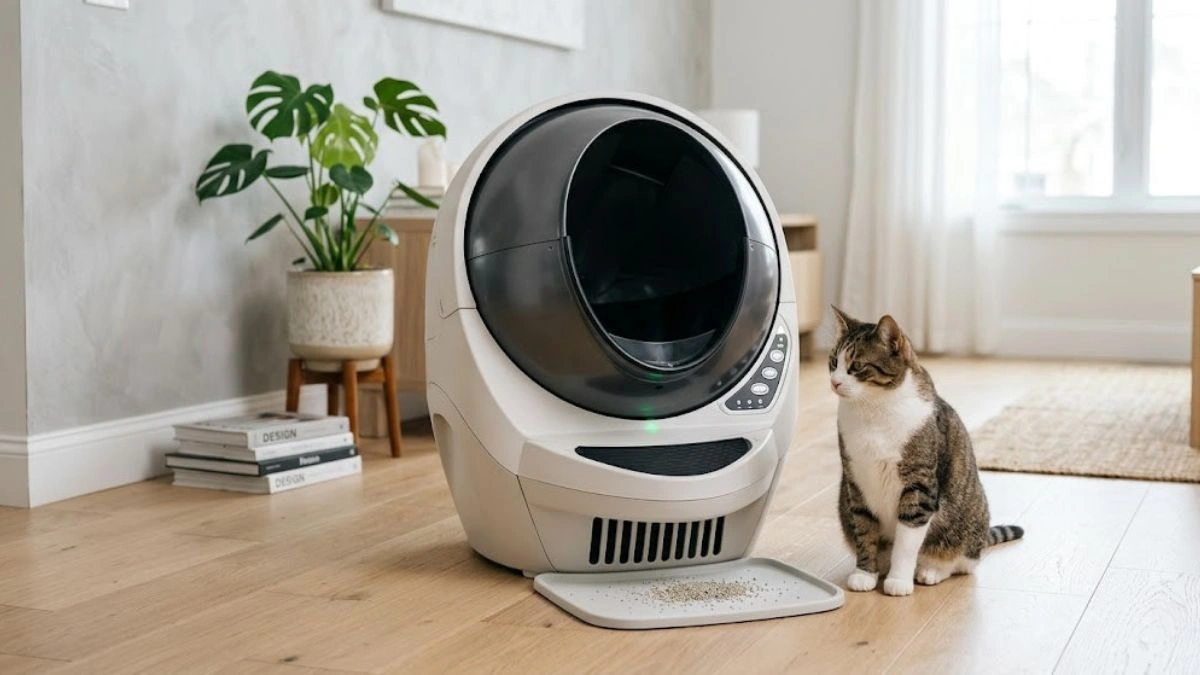
How Do Automatic Litter Boxes Work? (What Actually Happens Inside)
This page contains affiliate links. As an Amazon Associate, we earn from qualifying purchases made through these links at no extra cost to you. We only recommend products we believe add value to our readers.
Ever wondered what actually happens inside an automatic litter box after your cat walks away?
Most people assume it just “cleans itself” — but the reality is far more complex.
Behind that simple process, there are sensors, timed cycles, and different cleaning mechanisms working together. And if you don’t understand how they work, you’re much more likely to deal with odor, clumping issues, or even a box your cat refuses to use.
In this guide, you’ll see exactly how automatic litter boxes work step by step — including what happens inside, the different systems available, and what really affects performance in real homes.
Quick Answer:
Automatic litter boxes detect when your cat leaves, wait a short delay, and then start a cleaning cycle.
They separate waste using a rake, rotating drum, or sifting system, and move it into a sealed drawer that must be emptied regularly.
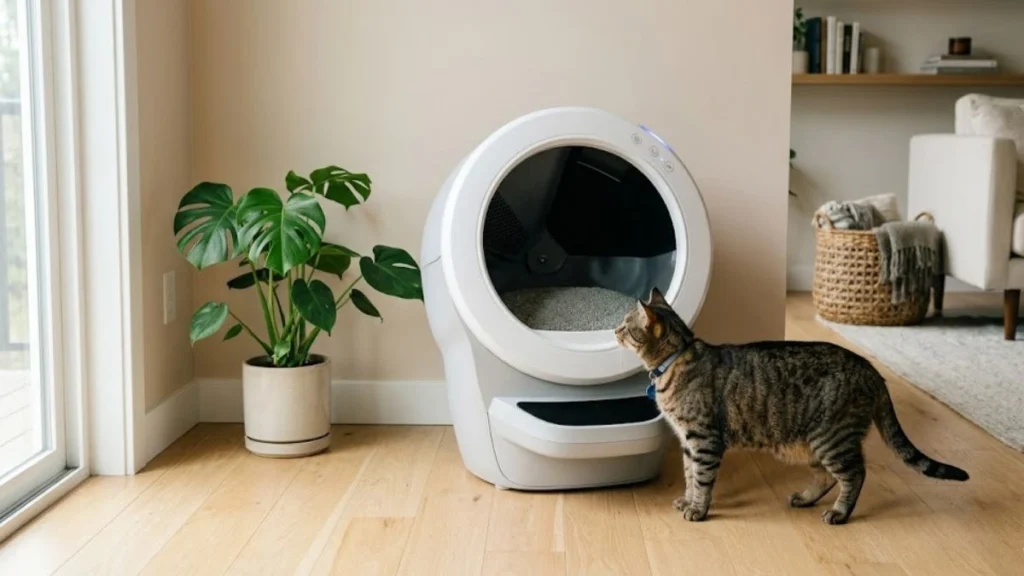
Key Takeaways
Ongoing costs and long-term reliability often matter more than the initial price when choosing the right automatic litter box.
An automatic litter box detects when your cat leaves, waits a short delay, and then automatically removes waste into a sealed compartment.
Understanding how automatic litter boxes work makes it easier to compare different cleaning systems and identify which models actually perform well.
A self-cleaning system reduces daily scooping, but it still requires regular maintenance — including emptying the waste drawer, refilling litter, and cleaning internal components.
Odor control depends on multiple factors, such as sealed waste storage, high-quality clumping litter, and proper placement inside your home.
Capacity, noise level, and available space are especially important for apartments and multi-cat households.
What Is an Automatic Litter Box (And Why Cat Owners Choose One)
An automatic litter box is a device designed to clean your cat’s litter automatically, reducing the need for daily scooping.
Instead of manual cleaning, the system moves the litter, separates solid waste from clean litter, and deposits it into a sealed compartment. This keeps the litter fresher and helps maintain a cleaner environment around the box.
You’ll often see the term “self-cleaning litter box” — in most cases, it refers to the same type of device.
However, some models go further by including advanced sensors, app connectivity, and usage tracking, depending on the brand and design.
For many cat owners, the main appeal is simple:
less daily work, better odor control, and a more consistent cleaning routine.
Automatic Litter Box vs. Self-Cleaning Litter Box: What’s the Difference?
The terms “automatic litter box” and “self-cleaning litter box” are often used interchangeably — but there are small differences worth understanding.
An automatic litter box typically refers to a system that uses sensors to detect when your cat leaves, then automatically starts a cleaning cycle. These models often include safety features, alerts, and adjustable timers, focusing on smart, hands-free operation.
On the other hand, “self-cleaning litter box” is a broader term used by consumers.
It can refer to both advanced sensor-based systems and simpler models that rely on timed cleaning mechanisms, such as rakes that activate at set intervals rather than reacting to your cat’s behavior.
Even without advanced features like app control or tracking, these systems still reduce manual scooping and help maintain more consistent litter conditions.
Who Benefits Most from a Smart Litter Box in the United States
Smart litter boxes are especially popular in the United States among busy cat owners and households with limited space.
If you have a packed routine or spend long hours away from home, these systems help reduce daily effort and keep the litter box consistently clean without constant attention.
They’re also a strong fit for multi-cat households, where maintaining a clean litter box can be more challenging. Automatic cleaning cycles help ensure the box stays fresh and more appealing for multiple cats throughout the day.
For apartment living, odor control becomes even more important.
Features like sealed waste drawers and enclosed systems help contain smells in smaller spaces, making a noticeable difference in overall comfort.
Some models go further by offering app-based tracking, allowing you to monitor your cat’s activity and litter box usage — which can help identify early signs of potential health issues.
Common Pain Points These Systems Solve: Scooping Time, Odor, and Tracking
Automatic litter boxes are designed to solve three of the most common problems cat owners face: time-consuming cleaning, persistent odors, and lack of insight into their cat’s habits.
By automatically separating waste from clean litter and storing it in a sealed compartment, these systems significantly reduce the need for daily scooping and make routine maintenance much simpler.
Odor control is also improved, since waste is contained in an enclosed drawer instead of being left exposed. However, performance still depends on factors like litter quality, clumping efficiency, and how often the waste drawer is emptied.
Many users also notice less litter tracking and mess around the box compared to traditional setups.
If you’re still dealing with bad smells, learn why automatic litter boxes smell and how to fix it.
Another major advantage of smart litter boxes is tracking and monitoring.
Advanced models can record cleaning cycles, usage frequency, and even your cat’s weight in some cases. This data helps identify behavior changes early, which can be useful for spotting potential health issues.
That said, it’s important to be aware of a few trade-offs:
some cats may need time to adjust, certain models can produce noise during cleaning cycles, and there are ongoing costs like liners, filters, or replacement parts.
| User Need | How It Solves It | Trade-Offs |
|---|---|---|
| Less daily scooping | Moves clumps into a sealed waste drawer after each use | Requires emptying the bin every few days and periodic deep cleaning |
| Lower odor in small spaces | Reduces exposed waste with sealed compartments | Depends on litter quality, airflow, and emptying frequency |
| Better insight into routines | Tracks usage, cleaning cycles, and sometimes weight | Not all models offer tracking; app setup may vary |
| Cleaner environment for multi-cat homes | Prevents buildup with frequent automatic cleaning | Higher usage may require more frequent emptying and refills |
How Do Automatic Litter Boxes Work (Step-by-Step)
If you’ve ever wondered how automatic litter boxes work without creating a mess, the answer lies in a controlled, sensor-based cleaning process.
These systems detect when your cat leaves the box, wait for a short delay, and then start a cleaning cycle automatically.
The process only begins when the box is empty, helping ensure your cat’s safety and avoiding interruptions.
From there, the system separates waste from clean litter and moves it into a sealed compartment, keeping the remaining litter fresh and ready for the next use.
If your unit ever seems inconsistent, it’s usually related to setup or maintenance rather than a defect — understanding common odor and performance issues can help you spot problems early.
The Basic Self-Cleaning Cycle: From Detection to Waste Removal
The cleaning process starts the moment your cat enters the litter box.
Built-in sensors detect your cat’s presence and immediately pause any movement, ensuring the system stays completely still while your pet is inside.
Once your cat leaves, the unit begins a short delay period. This allows waste to fully clump, which improves separation and prevents smearing during the cleaning cycle.
After the delay, the system activates its cleaning mechanism.
Depending on the design, it may rake, sift, or rotate to separate waste from clean litter and move it into a sealed waste drawer.
Finally, the remaining clean litter is redistributed, and the system returns to standby mode, ready for the next use.
This continuous, automated cycle is what keeps the litter box clean with minimal daily effort.
What Triggers Cleaning: Motion Sensors, Weight Sensors, and Timers
The cleaning cycle in an automatic litter box is controlled by a combination of sensors and timing systems working together.
Most models rely on three key elements: motion sensors, weight sensors, and timers.
Motion sensors detect activity near the entrance and help identify when your cat approaches or leaves the litter box. On their own, they’re not always precise — which is why they’re combined with other systems.
Weight sensors play a critical role in both safety and accuracy.
They detect when your cat is inside the box, confirm when your cat has exited, and can immediately pause or stop the cleaning cycle if weight is detected again. This prevents any movement while your cat is still inside.
Timers control when the cleaning process actually begins.
Some systems run on fixed intervals, while others activate only after your cat leaves, followed by a short delay. This delay is essential — it allows clumps to fully form, improving separation and preventing mess during the cleaning cycle.
Together, these components ensure the system runs safely, efficiently, and consistently.
What Happens After Your Cat Leaves: Rake, Sift, Rotate, or Flush Methods
Once yoOnce your cat leaves the litter box and the delay period ends, the cleaning mechanism activates.
While designs may vary, all systems follow the same goal: separate waste from clean litter and move it into a sealed compartment.
Most automatic litter boxes use one of these methods:
Rake:
A comb-like mechanism moves through the litter, collecting clumps and pushing them into a waste compartment. This is one of the most common and straightforward systems.
Sift:
The system uses a grate or screen that allows clean litter to pass through while larger clumps stay on top and are removed.
Rotate:
A rotating drum spins the litter, allowing clean granules to fall through a filter while clumps are separated and deposited into a sealed drawer. This is commonly found in advanced models.
Flush:
In more advanced, plumbed systems, waste is directed into a flushing mechanism. These setups require proper installation and regular maintenance.
Each method is designed to keep clean litter available for reuse while efficiently isolating waste.
Choosing the right system can make a big difference in performance — especially when paired with the best litter for automatic litter boxes.
How the Cleaning Process Keeps Clean Litter Separate from Clumps
The separation process in an automatic litter box depends on how clumping litter reacts to moisture.
When used, the litter forms larger, heavier clumps, while clean litter remains as smaller, loose granules. This difference allows the system to separate waste efficiently.
Screens, grates, or filters are designed to let clean litter pass through while holding back solid clumps and waste.
Many systems improve this process with features like baffles, ramps, or guided dump points.
These components help direct waste into a sealed compartment, while returning clean litter to the main tray or drum for reuse.
However, real-world performance can vary.
Factors like high humidity, low-quality litter, dust buildup, or incorrect fill levels can cause clumps to break apart, reducing separation efficiency and leaving behind residue.
That’s why both delay timing and litter choice are critical.
They directly affect how well clumps form and hold together — which ultimately determines how efficiently the system works over time.
If you want better results, choosing the best litter for automatic litter boxes can significantly improve clumping performance and reduce residue issues.
Automatic Litter Box Mechanism Types and Self-Cleaning Designs
In real-world use, the differences between automatic litter box designs become noticeable quickly.
Factors like noise level, cleaning frequency, maintenance needs, and litter compatibility can vary significantly from one model to another.
Choosing the right system isn’t about finding the “best overall” option — it’s about matching the design to your space, your cat’s behavior, and your daily routine.
For example, in a quiet apartment, even a short cleaning cycle can feel loud — especially at night.
In contrast, in a busy home with multiple cats, the same system may perform much better by running more frequently and keeping the litter consistently clean.
Understanding how these mechanisms behave in real conditions makes a big difference when choosing a model.
If you’re comparing options, it helps to see which automatic litter boxes actually perform best in real use.
Rake-Style Systems: Combing Clumps into a Covered Waste Bin
Rake-style automatic litter boxes use a motorized comb that moves through the litter after your cat leaves.
The rake collects clumps and solid waste, then pushes them into a covered waste compartment, keeping the remaining litter clean for reuse.
These models are often preferred because they feel more familiar, closely resembling a traditional litter box in size and layout.
This makes them easier for many cats to adapt to — especially during the transition from a standard litter box.
However, rake-style systems can face some common issues.
They may jam if the box is overfilled, if clumps are too large, or if the litter becomes sticky.
Regular maintenance — such as cleaning the rake teeth and track mechanism — helps ensure smooth operation and consistent cleaning cycles.
Sifting and Vibrating Trays: Separating Clumps Through a Grate
Sifting-based automatic litter boxes use a grate or screen to separate waste from clean litter.
During the cleaning cycle, loose, clean litter falls through the openings, while larger clumps remain on top and are moved into a waste compartment.
Some models add gentle vibration to help break apart loose particles and improve separation.
While this can increase efficiency, it may also raise noise levels — especially in quiet homes or on hard flooring.
Over time, the grate can accumulate residue, which means regular cleaning is needed to keep the system working properly.
This type of system performs best when litter depth is consistent and a high-quality clumping litter is used.
These factors help ensure cleaner separation and reduce the risk of buildup or incomplete cleaning cycles.
Rotating Drum Systems (“Litter Robot” Style): Gravity-Based Separation
Rotating drum systems — often referred to as “litter robot” designs — use a fully enclosed chamber that rotates during the cleaning cycle.
A well-known example is the Litter-Robot 4, which uses a gravity-based system to separate waste from clean litter.
As the drum rotates, clean litter passes through an internal screen, while clumps are isolated and carried into a sealed waste drawer below.
This design allows for efficient separation with minimal direct contact between clean litter and waste.
Automatic litter boxes have become increasingly popular because they reduce daily maintenance and keep the litter consistently clean.
If you want to see how this system performs in real use, check the Litter-Robot 4 review and real-world results.
One of the most recognized premium options in this category is shown below.
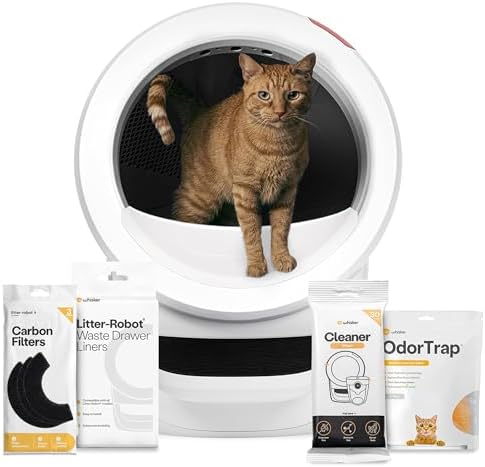
- SELF-CLEANING LITTER BOX: Never scoop again with Litter-Robot 4, the automatic, self-cleaning cat litter box. The patent…
- MONITOR + CONTROL VIA APP: Control the WiFi-enabled sifting litter box straight from the Whisker app. Monitor waste and …
- REDUCES LITTER BOX ODORS & TRACKING: The automatic clean cycle and OdorTrap Packs significantly reduce odors compared to…
This design reduces the risk of mechanical jams often seen in rake-style systems and delivers more consistent waste separation.
As a result, many users consider it one of the most efficient self-cleaning mechanisms available.
However, there are a few trade-offs to consider.
These units are typically larger and heavier, requiring more space and more effort during deep cleaning.
The enclosed structure also means more internal surfaces that need occasional wiping to maintain performance.
On the other hand, many households prefer this design because it offers more consistent odor control, especially between waste drawer emptying cycles.
Disposable Tray and Cartridge Systems: Simpler Setup, Ongoing Costs
Disposable tray and cartridge systems are designed for maximum convenience and minimal maintenance.
Instead of manually cleaning the unit, the entire tray or cartridge is replaced at scheduled intervals, with waste contained inside the disposable component.
This approach reduces direct contact with waste and makes daily upkeep much easier — especially for users who prefer a low-maintenance routine.
However, the main trade-off is ongoing cost.
As disposable components must be replaced regularly, long-term expenses can add up quickly compared to other self-cleaning designs.
Additionally, these systems often have limited compatibility, requiring brand-specific trays or refills to function properly.
For users who value convenience and predictable maintenance over long-term savings, this type of automatic litter box can still be a practical option.
Comparison of Automatic Litter Box Design Types
| Design Type | Typical Noise in Real Homes | Common Failure Points | Cleaning Effort | Litter Compatibility | Best Fit in the United State |
| Rake-style | Low to moderate motor noise; brief scraping sound during cycles | Rake jams due to overfilling, sticky litter, large clumps, or debris | Clean rake teeth and rails; empty covered waste bin regularly | Compatible with most clumping litters; avoid overly sticky types | Single-cat homes looking for a familiar design and simple operation |
| Sifting/vibrating trays | Moderate; vibration may transfer through floors, especially in apartments | Grate buildup, poor separation with low-quality litter, incorrect depth | Rinse grate and tray edges; maintain proper litter level | Performs best with strong clumping litter; correct depth is key | Owners who prefer simple separation systems and can tolerate moderate noise |
| Rotating drum | Moderate; longer cycles but smoother and more consistent motion | Sensor interruptions, drawer misalignment, residue buildup on screens | Clean drum interior and screen; maintain drawer and seals | Generally flexible; very dusty or lightweight litter may affect sensors | Multi-cat households needing efficient cleaning and enclosed odor control |
| Disposable tray/cartridge | Low noise; fewer moving parts in most designs | Improper refill placement, limited capacity, scheduling inconsistencies | Replace tray or cartridge; occasional light cleaning of the housing | Typically requires proprietary refills; limited litter flexibility | Busy households that prioritize convenience and quick maintenance over long-term cost savings |
To choose the right automatic litter box for your needs, start by considering noise level, available space, and the number of cats in your home.
In smaller apartments, a quieter system with strong odor control may be the best fit, while larger households often benefit from models that can handle frequent cleaning cycles.
If you’re still deciding which option makes the most sense, it’s also important to follow a proper automatic litter box maintenance routine to keep performance consistent over time.
Keep in mind that while rotating drum systems are often praised for efficiency, they may require more space — which can be an important factor depending on your home layout.
Odor Control Features That Actually Matter
Odor can build up quickly in a litter box environment — especially as urine breaks down into ammonia, creating a strong and unpleasant smell.
An effective automatic litter box helps reduce this by removing waste promptly and storing it inside a sealed compartment.
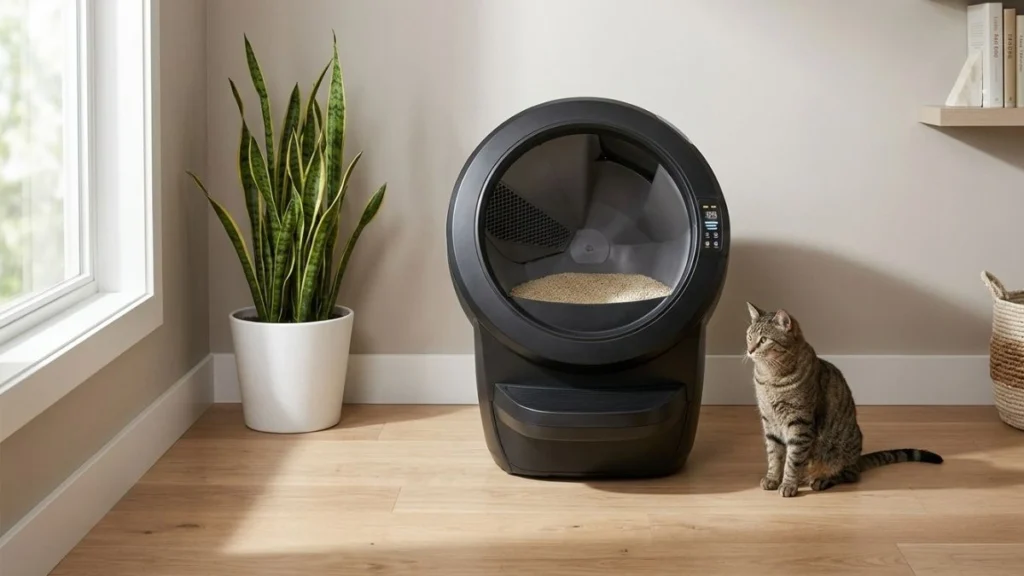
By limiting air exposure and reducing how long waste remains in the open, these systems help maintain a fresher environment overall.
If you’re still dealing with persistent smells, learn why automatic litter boxes smell and how to fix it.
That said, odor control doesn’t depend on the device alone.
It also relies on proper maintenance, litter quality, and airflow management, all of which directly affect how well the system performs over time.
Sealed Waste Drawers and Gaskets: Reducing Ammonia Smell Between Changes
Effective odor control in automatic litter boxes often starts with a well-sealed waste drawer.
Many models use rubber gaskets or tight-sealing lids to contain odors when the compartment is closed, helping slow the spread of ammonia between cleaning cycles.
This makes a noticeable difference, especially in smaller spaces where odors can build up more quickly.
However, sealing alone isn’t enough.
Even with liners in place, a full waste drawer will eventually produce noticeable smells.
That’s why regular maintenance is essential.
Emptying the drawer frequently and cleaning it periodically helps keep the system running efficiently and maintains a fresher environment over time.
Carbon Filters, Deodorizer Pods, and Ventilation Fans: What Helps and What Doesn’t
Carbon filters can reduce odors by trapping odor-causing particles, but they’re not a permanent fix.
Over time, filters become saturated and lose effectiveness, so regular replacement is necessary. If smells start coming back, a worn-out filter is often the reason.
Deodorizer pods usually mask odors instead of eliminating them at the source.
They may offer short-term improvement, but they don’t solve the underlying issue of waste buildup. For long-term results, it’s more effective to focus on proper containment and regular maintenance.
Ventilation fans can improve airflow by directing air through filters, but their performance depends on the overall design.
If the unit isn’t well sealed, fans may actually spread odors instead of containing them.
In practice, the best results come from a balanced approach:
tight sealing, timely cleaning, and effective filtration working together.
Litter Choice and Clumping Performance: The Foundation of Odor Control
Litter selection plays a critical role in how effectively an automatic litter box controls odor and maintains cleanliness.
High-quality clumping litter forms solid, compact clumps that trap moisture and waste efficiently, making it easier for the system to separate and remove them during each cleaning cycle.
This helps keep the remaining litter clean, dry, and ready for reuse.
A low-dust, strong-clumping litter can significantly improve overall performance — especially in automatic systems that rely on precise separation.
One effective option is shown below.

- LASTS 2X LONGER – Our litter absorbs urine and locks in odor with just half the amount compared to leading U.S. brand. O…
- SMART SCOOP SAVINGS – Use less, scoop less, spend less. A single bag keeps working long after other brands quit. Because…
- OUTSTANDING ODOR CONTROL — More cats shouldn’t mean more smells — keep your cats happy with a natural litter with long-l…
Beyond clumping ability, dust levels also matter.
High-dust litter can build up inside the unit, clog ventilation areas, and leave residue on internal components — which may reduce performance over time.
Using a low-dust formula helps keep the system running more efficiently and extends its lifespan.
Litter weight and grain size also play an important role.
If the litter is too lightweight, it may stick to components. If it’s too heavy, it can slow down the cleaning mechanism.
If you notice issues like incomplete cleaning, residue buildup, or reduced efficiency, the type of litter is often one of the main factors to check.
Placement and Airflow Tips for Apartments and Multi-Cat Homes
Placement and airflow play a major role in both odor control and overall performance.
Avoid placing the unit in tight, enclosed spaces with poor ventilation, as this can trap odors and reduce airflow efficiency.
At the same time, keep it away from direct air vents, since strong airflow can spread odors throughout your home instead of containing them.
Choose a quiet, well-ventilated area where your cat feels comfortable and where cleaning cycles won’t be disruptive.
Make sure there is enough space around the unit to fully open the waste drawer and perform regular maintenance.
In multi-cat households, placement becomes even more important.
Using more than one litter box can help distribute usage, reduce odor buildup, and maintain a cleaner environment for all cats.
Key Features That Impact Odor Control
| Feature | How It Affects Odor Day-to-Day | Upkeep That Keeps It Effective |
| Sealed waste drawer with gasket | Minimizes air leaks, helping contain ammonia between cleaning cycles | Empty before overfilling; clean the rim to maintain a tight seal |
| Carbon filter panel | Reduces mild odor escaping from the waste compartment | Replace regularly; remove dust buildup that may block airflow |
| Ventilation fan | Circulates air through filters but may spread odor if sealing is weak | Clean fan intake; ensure the waste drawer closes securely |
| Low-dust, clumping litter | Enhances waste separation and reduces odor-causing residue over time | Maintain proper fill level; replace litter when clumps soften |
Smart Litter Box Technology, Safety Sensors, and App Tracking
“Smart” features enhance how an automatic litter box operates — but they don’t replace the core cleaning system.
At its foundation, every unit still relies on the same process to separate clumps from clean litter and store waste in a sealed compartment.
What smart technology adds is control, safety, and visibility.
With app connectivity and built-in sensors, users can monitor litter box activity, cleaning cycles, and usage patterns in real time.
This added layer of insight helps make daily maintenance more predictable and consistent.
Safety sensors also play a key role.
They can pause or stop the system if your cat re-enters, helping prevent unwanted movement during operation.
In practice, smart features don’t change how the litter box works —
they make it easier to manage, monitor, and optimize over time
Smart Features and App Connectivity
Modern smart litter boxes go beyond basic automation by adding a layer of control, convenience, and real-time insight.
Most models connect via Wi-Fi or Bluetooth and provide a clean, easy-to-use app interface.
From there, you can adjust cleaning cycle delays, activate quieter night modes, and track daily usage patterns — all without needing to interact directly with the unit.
Some systems also allow remote start and stop, although these actions are typically limited when safety sensors detect activity inside the box.
In multi-person households, this becomes even more valuable.
Shared app access allows different people to monitor activity, track cleaning cycles, and coordinate maintenance tasks, reducing guesswork and keeping routines consistent.
More advanced models go a step further by tracking frequency of use, cleaning cycles, and even weight changes, offering early signals that may indicate shifts in your cat’s behavior.
Still, it’s important to understand this:
Smart features don’t change how the litter box works —
they simply make it easier to manage, monitor, and optimize over time.
At its core, every system still depends on a motor, a separation mechanism, and a sealed waste compartment to perform the cleaning cycle effectively.
Safety Sensors and Automatic Stop Mechanisms
Modern automatic litter boxes are built with multiple fail-safe systems to ensure safe operation at all times.
Most units rely on a combination of weight detection, motion sensing, and resistance monitoring to prevent the cleaning cycle from running when it shouldn’t.
If any unexpected interaction is detected, the system can pause, stop, or reverse automatically, reducing the risk of accidents and improving overall reliability.
Beyond built-in protection, proper setup also plays a key role.
Placing the unit on a stable, level surface helps sensors perform accurately and prevents false readings during operation.
During the initial setup phase, it’s worth observing a few cleaning cycles.
This allows you to understand how the system behaves in real conditions and ensures everything is working as expected from the start.
Monitoring and notifications
Smart litter box apps provide real-time alerts for common issues like a full waste drawer, paused cleaning cycles, sensor errors, or lost connectivity.
These notifications help you act quickly — reducing odor buildup and preventing small issues from turning into bigger problems.
Many systems also track usage data, including visit frequency and time spent inside the box.
When patterns change suddenly, it can signal behavioral shifts or potential health concerns — especially when combined with other symptoms.
However, this data should always be interpreted with caution.
Tracking accuracy can vary, particularly in multi-cat households, where similar weights may make identification less precise.
For that reason, app insights are best used as supporting information, not a diagnosis.
They help you stay informed — but shouldn’t replace professional evaluation if something seems off.p you stay informed — not a replacement for professional evaluation when something seems off.
Smart App Features and Real-World Limitations
| App Feature | What It Does Day to Day | Where the Mechanism Still Matters | Common Limitation to Expect |
| Cycle delay and scheduling | Waits a set time after use before starting a cleaning cycle | Clump firmness and the rake, sift, or rotation system affect results | Delays that are too short can smear waste; too long can increase odor |
| Remote controls (start/stop) | Allows you to pause or trigger a cycle remotely within safety limits | Motors and moving parts require proper alignment and clear pathways | Controls may be disabled when sensors detect weight or movement |
| Waste drawer alerts | Notifies when the waste bin is full or a cycle is interrupted | Sealing and waste compression depend on the physical design | Alerts may be inaccurate if the drawer is overfilled or misaligned |
| Usage tracking and trends | Displays visit frequency and usage patterns over time | Sensor accuracy depends on stable placement and calibration | Multi-cat tracking may be less precise with similar-weight cats |
Setup, Maintenance, and Troubleshooting: Getting the Best Performance from Your Litter Box
Getting started correctly with an automatic litter box is essential for long-term performance and odor control.
When the system is properly set up from the beginning, it runs more efficiently, more consistently, and with fewer issues over time.
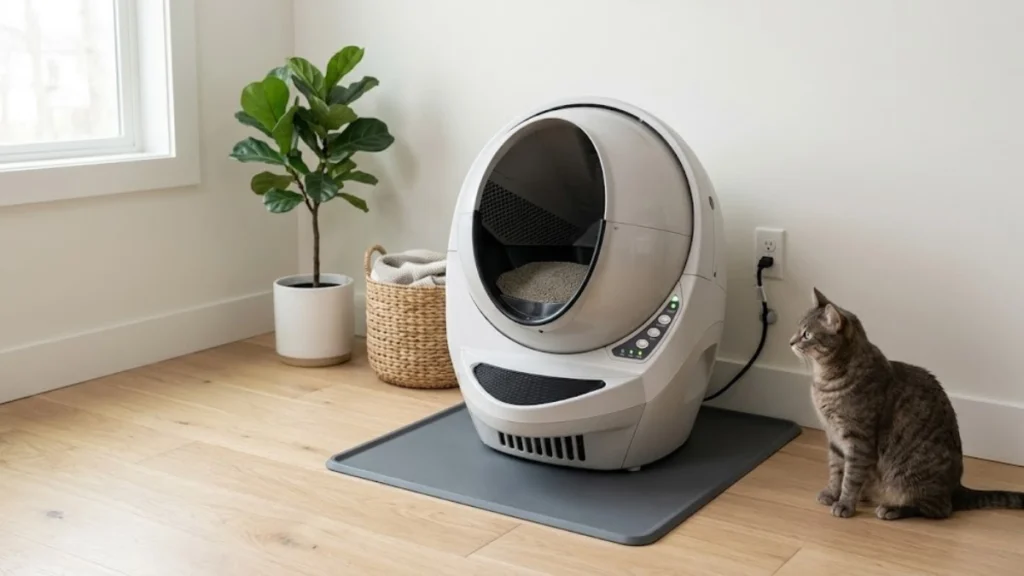
A well-configured setup helps prevent common problems like incomplete cleaning cycles, persistent odors, and unexpected interruptions.
With the right combination of placement, litter type, and system settings, the unit can operate smoothly and require far less day-to-day effort.
In practice, most performance issues aren’t caused by the machine itself —
they come from setup mistakes or inconsistent maintenance routines.
Taking a few minutes to get things right early on can make a significant difference in how well the system performs over time.
Initial Setup Checklist: Placement, Power, and Litter Fill Lines
Getting the setup right from day one ensures consistent performance and fewer issues over time.
Follow this quick checklist:
Placement
Place the unit on a flat, stable surface to prevent movement during cleaning cycles.
Avoid thick mats under models that use weight sensors — they can interfere with detection accuracy.
Power
Position the unit near a reliable power outlet and route the cord safely to avoid tripping hazards.
Using a surge protector helps protect the system from power fluctuations and unexpected resets.
Litter Fill Level
Always fill to the manufacturer’s recommended line.
Overfilling can cause jams, poor clump separation, and excess litter in the waste drawer.
Test Before Use
Run a full test cycle before letting your cat use the unit to confirm everything is working properly.
Transition Tip
If your cat seems hesitant, keep the previous litter box nearby for a few days to make the adjustment smoother.
Cleaning Schedule: Waste Drawer Emptying, Deep Cleaning, and Sensor Maintenance
Keeping a consistent cleaning routine is essential for long-term performance and odor control.
How often you need to empty the waste drawer depends on usage.
In single-cat homes, this may be needed less frequently, while multi-cat households require more regular emptying.
Avoid letting the waste drawer become overfilled.
Compacted waste can block internal components, strain the motor, and reduce overall performance.
In addition to routine emptying, schedule periodic deep cleaning sessions.
Remove the waste drawer and any detachable parts, then clean internal surfaces, screens, or raking components.
Always ensure all parts are fully dry before reassembly to prevent moisture-related issues.
Sensors also need regular attention.
Dust and debris can build up over time, leading to false triggers or interrupted cleaning cycles.
Use a dry or slightly damp cloth to gently clean sensor areas.
Routine Maintenance Checklist for Optimal Performance
| Task | What to Watch For | What to Do | Why It Helps |
| Check waste drawer | Strong odor, full liner, clumps near the grate | Empty before reaching capacity; reseat the drawer securely | Prevents system blockages and reduces ammonia buildup |
| Verify litter level | Litter above fill line or low spots exposing the base | Level to the recommended line; top off with the same litter | Ensures consistent cleaning performance and effective separation |
| Wipe sensors | Random cycles, interruptions, frequent alerts | Gently clean sensor areas; keep surrounding floor dust-free | Reduces false triggers and improves system reliability |
| Deep clean contact points | Sticky buildup, dragging sounds, residue on rakes or screens | Clean and fully dry all contact surfaces; remove compacted litter | Minimizes jams and reduces wear on the self-cleaning mechanism |
Common Issues and Fixes: Jams, Overfilling, Stuck Cycles, and False Triggers
Most problems with automatic litter boxes come from a few common causes: overfilling, incorrect litter type, or internal buildup.
Here’s how to identify and fix the most frequent issues:
Jams and Blockages
Jams usually happen when the litter level is too high, clumps are too large, or residue builds up in key areas.
Fix:
- Keep litter at the recommended fill line
- Use a high-quality clumping litter
- Clean areas where clumps tend to get caught during the cycle
Waste Drawer Filling Too Fast
If the drawer fills quickly, it may be due to high usage or incomplete cleaning cycles.
Fix:
- Empty the drawer more frequently
- Check that the liner is properly positioned
- Make sure cycles are fully completing
Stuck or Interrupted Cycles
Cycles may stop if there’s an obstruction or a positioning issue.
Fix:
- Perform a quick power reset
- Check for obstructions or debris
- Ensure the waste drawer is properly seated
False Triggers
Unexpected cycles are often caused by external vibrations, dust buildup, or poor placement.
Fix:
- Place the unit in a low-traffic, stable area
- Clean sensors regularly
- Adjust delay settings if available
These small adjustments can significantly improve performance and help the system run more consistently and reliably over time.
Hygiene and Health Monitoring: What Changes in Output Can Signal
A consistent cleaning routine makes it easier to spot changes in your cat’s behavior and waste patterns.
Pay attention to warning signs such as:
- Unusually frequent visits
- Very large or very small clumps
- Diarrhea or very soft stool
- Blood-tinged stool or urine
- Straining or signs of discomfort
- Sudden decrease in output
These changes can indicate potential health issues and shouldn’t be ignored.
Keeping a simple record can help.
Note dates, frequency, and any unusual observations. Taking photos can also make it easier to track patterns and share clear information if needed.
If you notice signs related to urinary problems, contact a veterinarian as soon as possible.
Even if the litter box is functioning normally, changes in output are often early warning signals — and acting quickly can make a real difference.
Are Automatic Litter Boxes Worth It? Pros, Cons, and Key Considerations
Whether an automatic litter box is worth it depends on one thing:
how well the system fits your daily routine and your cat’s behavior.
When the right model is chosen, the benefits are clear:
less daily scooping, better odor control, and more consistent cleanliness.
But the wrong choice can lead to frustration — including noise issues, space limitations, or higher long-term costs.
To make the right decision, focus on what actually matters in real use:
- Your cat’s behavior and adaptability
- Available space and noise tolerance
- Cleaning frequency and maintenance expectations
- Ongoing costs (liners, filters, replacement parts)
The key is not finding the “best” automatic litter box —
it’s choosing the one that fits your home, your routine, and your expectations.
When those factors align, these systems can be a reliable upgrade that simplifies daily pet care over time.
Benefits: convenience, cleaner paws, consistency, and multi-cat advantages
Automatic litter boxes offer clear advantages in everyday use — especially when it comes to saving time and maintaining a cleaner environment.
Convenience
By reducing the need for daily scooping, these systems handle cleaning automatically, making litter box maintenance faster and more predictable.
Cleaner Paws and Less Mess
Frequent waste removal helps keep the litter cleaner, reducing the chance of debris sticking to your cat’s paws and spreading around your home.
Consistency
With scheduled or sensor-based cycles, the litter box stays consistently clean throughout the day, improving hygiene and reducing odor buildup.
Multi-Cat Advantage
In homes with multiple cats, frequent cleaning cycles help prevent the box from becoming overwhelmed, maintaining a cleaner, more comfortable space for all pets.
Tradeoffs: Cost, Noise, Space Requirements, and Ongoing Consumables
While automatic litter boxes offer convenience, they also come with important tradeoffs to consider.
Cost
The upfront price is typically higher than a traditional litter box, and there are ongoing expenses such as liners, filters, and replacement parts.
Models that rely on proprietary trays or cartridges can increase long-term costs even further.
Noise
Cleaning cycles may produce sound from motors, raking mechanisms, or rotating systems.
In quieter homes, this can startle some cats. Adjusting the cleaning schedule or placing the unit in a less sensitive area can help improve acceptance.
Space Requirements
Many automatic litter boxes are larger than standard models.
Make sure there’s enough room not only for the unit, but also to access the waste drawer and perform maintenance comfortably.
Ongoing Maintenance
Although daily scooping is reduced, these systems still require regular upkeep.
Consistent maintenance is key to keeping performance stable and avoiding issues over time.
What to Look for When Comparing Models: Capacity, Cycle Speed, and Waste Drawer Design
When comparing automatic litter box models, capacity, cycle performance, and waste drawer design are key factors to evaluate.
To see how top models compare side by side, it helps to understand how different designs perform in real-world conditions.
A larger waste bin with a secure seal helps contain odors and reduces how often it needs to be emptied — which is especially important in multi-cat households.
If you’re looking for a reliable mid-range option that balances automation, ease of use, and affordability, one popular choice among cat owners is the model below:
- Complete Automatic Litter System: The bundle features the PetSafe SmartSpin Litter Box, Litter Mat, 50 Waste Bin Liners,…
- Hands-Free Cleaning: Enjoy up to two weeks without scooping; SmartSpin sifts clumps into a sealed waste drawer, offering…
- Monitor Health Easily: Use the PetSafe Pet Companion app for real-time updates on your cat’s weight and litter habits, r…
Cycle speed and timing are also critical.
The cleaning cycle should align with your cat’s usage patterns to maintain a consistently clean environment.
Models with adjustable delay settings offer greater flexibility, allowing you to optimize clump formation and reduce noise — particularly during nighttime use.
By balancing capacity, cycle performance, and waste containment, you can choose a model that delivers both efficiency and long-term convenience.
Popular Automatic Litter Box Models Comparison
| Model | Cleaning Method | Best Fit | Odor Approach | Trade-Offs |
| Whisker Litter-Robot 4 | Rotating system | Multi-cat households seeking high automation and app-based monitoring | Sealed waste drawer with strong odor containment | Requires adequate floor space and clearance for the waste drawer; rotation noise may require delay adjustments |
| PETKIT PURA MAX | Rotating self-cleaning system | Tech-focused users who want customizable settings and app notifications | Enclosed design with filtration support | App setup, regular sensor cleaning, and ongoing consumables such as liners and filters |
| Nature’s Miracle Multi-Cat Litter Box | Rake-style cleaning | Owners who prefer a traditional box design with automated scooping | Waste compartment with optional odor control features | Rake may jam with soft clumps; requires routine cleaning and inspection |
| PetSafe ScoopFree (Crystal System) | Disposable tray with rake | Users looking for minimal maintenance and easy tray replacement | Crystal litter with covered tray design | Ongoing tray replacement costs; performance depends on consistent replacement schedule |
Which Cats May Need a Different Approach: Kittens, Seniors, and Anxious Cats
Not every cat adapts to an automatic litter box in the same way.
Some groups need a more careful approach to ensure a smooth transition and consistent use.
Kittens
Very young cats can be challenging because many systems rely on minimum weight thresholds for accurate detection.
If a kitten is too light, the unit may not trigger cleaning cycles properly — which can affect hygiene and odor control.
Senior Cats
Older cats often benefit from designs that prioritize easy access.
Features like a lower entry point, wider opening, or a ramp can make a significant difference for cats with arthritis or reduced mobility.
Anxious or Sensitive Cats
Cats that are easily startled may take longer to adjust.
A gradual introduction works best:
- Place the automatic litter box next to the current one
- Allow your cat to explore at its own pace
- Keep the original box available during the transition
This approach helps maintain consistent bathroom habits while reducing stress.
With the right setup and a bit of patience, most cats can adapt successfully — but understanding these differences early makes the process much smoother.
Conclusion
Automatic litter boxes work by combining sensors, timed cycles, and a cleaning mechanism to remove waste and keep litter clean with minimal effort.
But performance doesn’t depend on the system alone.
Choosing the right model, using the correct litter, and maintaining a consistent routine are what truly determine how well it works in real life.
When everything is set up properly, these systems can deliver better odor control, less daily maintenance, and a cleaner environment for both you and your cat.
Automatic Litter Box FAQ (2026 Guide)
How do automatic litter boxes work step by step?
An automatic litter box uses sensors to detect when your cat enters and exits. After your cat leaves, it waits a short delay to allow clumps to form, then starts a cleaning cycle. The system separates waste from clean litter and deposits it into a sealed drawer before resetting for the next use.
What triggers the cleaning cycle in an automatic litter box?
Cleaning cycles are triggered by a combination of weight sensors, motion detection, and timers. The system detects when your cat leaves and activates the cycle after a short delay for safe and effective cleaning.
Do automatic litter boxes work with all types of litter?
No. Most models perform best with high-quality clumping clay litter. Some systems require specific litter types, and using the wrong one can reduce performance or cause issues.
Do automatic litter boxes eliminate odors completely?
They significantly reduce odors, but don’t eliminate them entirely. Odor control depends on sealed waste storage, regular maintenance, and proper litter choice.
How often should you empty the waste drawer?
It depends on usage. For one cat, every few days is typical. In multi-cat households, more frequent emptying is needed to maintain performance and odor control.
Are automatic litter boxes safe for cats?
Yes. Most models include safety features like weight sensors and automatic stop mechanisms that prevent operation while a cat is inside.
What are the main benefits of an automatic litter box?
The main benefits are reduced daily maintenance, more consistent cleanliness, and improved odor control — especially in busy or multi-cat homes