

How to Introduce a Cat to an Automatic Litter Box Without Fear
Bringing home an automatic litter box can feel exciting — until your cat suddenly avoids it, runs away during cleaning cycles, or starts having accidents outside the box.
For many cat owners, that first reaction creates immediate anxiety. You may start wondering if the noise is too stressful, if the movement feels unsafe, or if your cat will ever fully adapt.
The truth is that most cats need time to trust new environments, unfamiliar sounds, and sudden movement. A self-cleaning litter box changes more than just the cleaning process — it changes your cat’s routine, territory, and sense of control.
Some cats feel overwhelmed at first because self-cleaning systems behave very differently from traditional litter boxes.
That’s why a slow introduction matters so much.
With patience, positive reinforcement, and the right setup, most cats can successfully transition to an automatic litter box without fear, stress, or long-term litter box avoidance. Spacious models like the Neakasa M1 often make the adjustment easier because they feel more open, quieter, and less intimidating during the first few weeks.
Many owners become worried too quickly and assume the machine is the problem. In reality, cats simply need time to observe, smell, and understand the new environment before they fully trust it.
If your cat still seems hesitant, understanding whether cats actually like automatic litter boxes can help you recognize what behavior is normal during the transition process.
In this guide, you’ll learn how to introduce your cat step by step, avoid the most common transition mistakes, and help your pet feel safe, calm, and confident around an automatic litter box from day one.
Key Takeaways
- Move slowly and let your cat explore the new box at its own pace.
- Most cats need days or even weeks to fully adapt.
- Spacious and quieter models are usually less stressful and easier to accept.
- Introduce cleaning cycles gradually to reduce fear and anxiety.
- Positive reinforcement and patience help build trust faster.
- Sudden changes can increase the risk of litter box avoidance.
- Consistency prevents long-term fear and confusion.

Understanding Why Cats Resist New Litter Boxes
A sudden change to a trusted bathroom area can create stress, confusion, and resistance.
Many cats are deeply attached to routine. They often prefer the same location, familiar textures, and recognizable scents every single day. Even small environmental changes can make some cats hesitate before using a new litter box.
That reaction becomes even more common when introducing an automatic system. The sounds, movement, and unfamiliar cleaning cycles may initially feel unpredictable, loud, or unsafe to your cat.
Understanding how automatic litter boxes work can help explain why some cats need more time to adjust to self-cleaning systems.
Sensory Sensitivities
Cats rely heavily on sound, scent, and environmental familiarity to feel secure.
Mechanical movement, cleaning cycles, and sudden motor noise can easily startle sensitive cats and temporarily discourage litter box use. Some pets may observe the machine from a distance for several days before feeling comfortable enough to approach it.
Scents and textures also matter far more than many owners realize. Switching to a different litter type, adding strong fragrances, or changing multiple things at once can quickly increase stress during the transition.
Because of this, many experts recommend keeping familiar litter during the early introduction phase whenever possible.
Strong odors, unfamiliar movement, and sudden environmental changes can make some cats feel overwhelmed during the transition process.
Cats that already seem anxious around unfamiliar movement may also react strongly to loud or sudden cleaning cycles during the first few uses.
The Importance of Routine
Cats are creatures of habit, and sudden environmental changes can trigger fear, anxiety, and litter box avoidance behaviors.
Size and accessibility also play an important role. Cramped interiors, narrow entry points, or loud cleaning mechanisms may feel intimidating — especially for cautious, older, or naturally shy cats.
That’s why a slow and gradual introduction is usually the safest strategy.
Keep the old litter box nearby, maintain familiar odor levels, and allow your cat to investigate the new machine at its own pace. Slow introductions help your pet associate the automatic litter box with safety, comfort, and predictability instead of stress.
As many long-term owners discover, patience and consistency are often more important than the machine itself during the first few weeks.
“According to Meowant research, size and scent are critical for acceptance.”
Preparing Your Home for the Transition
Before introducing the new automatic litter box, focus on creating an environment that feels safe, familiar, calm, and predictable for your cat.
Sudden environmental changes can increase anxiety during the adjustment phase, especially if the new machine is placed in a noisy, busy, or unfamiliar area of the home.
Start by keeping the new unit within sight and scent of the familiar litter box. This helps your cat slowly connect the new machine with an already trusted bathroom space.
Set the new box right next to the old litter box so the location still feels familiar. Using the same litter your cat already knows can also reduce stress and encourage exploration.
Keep the old litter box slightly dirty while the new automatic box remains clean and accessible. The contrast often helps curious cats approach the new system more naturally and with less fear.
Avoid removing the old litter box too quickly. Many cats need time to build confidence before fully transitioning to an automatic system.
Cats also prefer environments that feel stable, quiet, and easy to access. Choosing the right location can significantly reduce fear and hesitation during the first few weeks.
If you are unsure where the new unit should go, learning about proper automatic litter box placement can help you avoid common setup mistakes that increase stress and litter box avoidance.
| Placement Strategy | Why It Helps | Recommended Tip |
|---|---|---|
| Keep both boxes nearby | Builds familiarity and confidence | Leave them side-by-side for 2–4 weeks |
| Choose a quiet location | Reduces stress and sudden fear | Avoid laundry rooms or loud appliances |
| Maintain easy access | Helps nervous or older cats | Ensure clear entry and exit space |
| Use familiar litter | Creates scent consistency | Avoid sudden litter changes early on |
- Keep routines consistent during the first few weeks.
- Avoid moving the new unit between rooms too often.
- Give your cat time to observe the machine before activating cleaning cycles.
- Patience, consistency, and environmental stability usually improve adaptation success.
- Most cats adjust better when changes happen slowly instead of all at once.
How to Introduce Cat to Automatic Litter Box Safely
The first few days are critical. A slow and quiet introduction helps your cat feel safe instead of overwhelmed.
Begin with the new automatic litter box completely powered off. Place it exactly where your current litter box normally sits so the environment still feels familiar and predictable.
This reduces stress caused by sudden movement, mechanical sounds, or environmental changes.
Many cats feel more comfortable investigating the machine when it behaves like a normal litter box during the early stages of the transition.
Maintaining Familiar Scents
Cats rely heavily on familiar smells and routine when deciding whether a space feels safe.
Use the same litter your cat already prefers and avoid changing textures too quickly. Gradually mixing litter types over time usually creates a smoother adjustment process with less resistance.
Adding a small amount of used litter into the new box can also help your cat immediately recognize the scent and understand the purpose of the new environment.
During the first several days, keep the cleaning cycle disabled while your pet explores the box freely. This helps prevent fear caused by unexpected movement or sudden motor noise.
If your cat already seems nervous around mechanical systems, maintaining a calm environment and avoiding sudden cleaning cycles can significantly reduce stress during the transition.
Many owners also discover that consistent maintenance routines help cats adapt more comfortably because the environment feels cleaner and more predictable over time.
“Allowing scent continuity and silence helps most pets accept new units faster.”
- Keep the unit powered off during the first days of the transition.
- Never force your cat into the new box or create negative associations.
- Reward calm behavior and natural curiosity whenever possible.
- Introduce cleaning cycles slowly after your cat consistently uses the new unit.
- Most cats adapt better when changes happen gradually instead of immediately.
| Action | Why It Helps | Recommended Timing |
|---|---|---|
| Place unit in same location | Reduces stress from environmental change | From day one |
| Add familiar litter scent | Builds trust and recognition | Immediately |
| Keep cleaning cycle disabled | Prevents fear from movement or noise | First 3–7 days |
| Reward calm interaction | Encourages positive association | Daily during transition |
Managing the Initial Exploration Phase
Keep the new unit powered down and allow curiosity to guide the first interactions.
Give your pet space and avoid forcing interaction too quickly. During the first visits, let the new litter box remain untouched so your cat can safely sniff, circle, observe, and investigate the environment without pressure.

Many cats feel more confident when they can explore the machine without sudden sounds, movement, or cleaning cycles interrupting the experience.
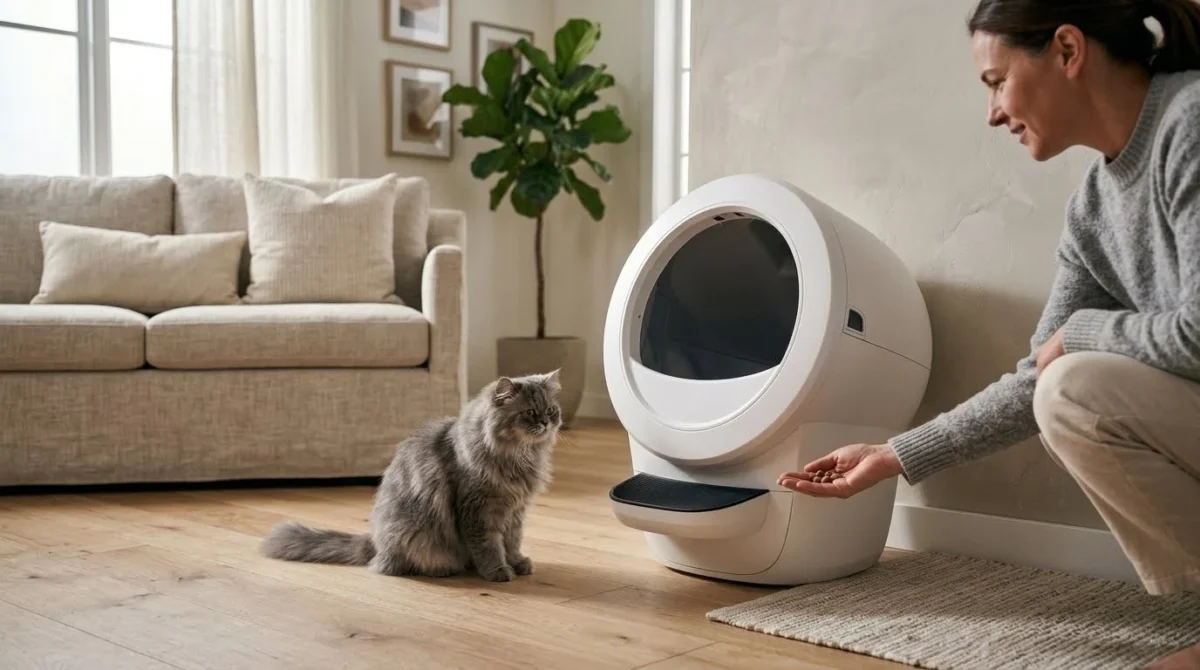
Offer treats whenever your cat approaches or sniffs the new box. Small rewards help create a positive emotional connection with the new area and encourage natural curiosity.
Monitoring your cat closely during this phase is also extremely important. Watch for signs of hesitation, hiding, stress, or litter box avoidance behaviors. If your pet seems uncomfortable, slow the pace and return to a calmer routine before introducing additional changes.
Let the pet explore freely for a full day or two before activating any automatic cleaning features. Some cats need even more time depending on personality, age, or previous experiences with noise and movement.
Placing a favorite toy, blanket, or familiar object near the new litter box can also help create a stronger sense of safety and familiarity.
Cats that already seem anxious around environmental changes may adapt better when the surrounding area stays quiet, stable, and predictable during the transition period.
Keeping the machine clean and preventing sudden mechanical issues can also reduce stress during the adjustment phase. Learning how to identify common automatic litter box problems early may help avoid interruptions that confuse nervous cats.
“A quiet, scent-familiar approach and small rewards help most cats accept a new waste area.”
| Action | Why It Helps | Recommended Timing |
|---|---|---|
| Leave the unit powered off | Reduces fear from movement and noise | First 1–2 weeks |
| Reward calm interaction | Builds positive association | Every approach to the box |
| Monitor behavior daily | Helps identify stress signals early | Throughout transition |
| Keep environment stable | Reduces confusion and anxiety | Entire adjustment phase |
- Keep old litter boxes available while the transition is still happening.
- Avoid sudden environmental changes near the new machine.
- Use treats, praise, and patience to reinforce calm behavior.
- Most cats adapt faster when introductions feel slow, predictable, and pressure-free.
- Consistency usually matters more than speed during the first weeks.
- Small positive experiences help build long-term trust and confidence.
Introducing Mechanical Movements and Sounds
Start by letting your cat hear the unit from a safe distance before introducing movement nearby.
Begin with quiet exposure and avoid activating cleaning cycles too early. Place the automatic litter box in its permanent location and allow your cat to observe it naturally before introducing mechanical movement.
Many cats become startled when the cleaning cycle activates unexpectedly for the first time. Slow exposure helps your pet understand that the sound and movement are not dangerous or threatening.
Choose a quiet room away from loud appliances, heavy foot traffic, or sudden environmental noise. Keeping the old litter box nearby during this stage can also reduce stress and prevent setbacks.
Proper placement, familiar scents, and gradual exposure often create a much calmer and safer adjustment process for nervous or cautious cats.
Gradual Exposure to Noise
Run short cleaning cycles while your cat watches from a comfortable distance. This allows your pet to observe the movement safely without feeling trapped, pressured, or overwhelmed.
If your cat shows signs of fear, hesitation, hiding, or litter box avoidance, stop immediately and return to a slower introduction pace. Some pets need multiple short sessions before feeling comfortable around automatic movement.
Patience matters far more than speed during this phase. Calm and repeated exposure usually helps cats build long-term confidence and trust naturally over time.
Strong mechanical sounds can sometimes increase stress for sensitive pets, especially in small apartments, quiet homes, or narrow spaces where noise feels louder and more intense.
Cats that already seem cautious around unfamiliar sounds may also react more strongly when cleaning cycles happen too suddenly or too close to their resting area.
Timing the Cleaning Cycles
Once your cat feels comfortable approaching and using the box, you can begin introducing automatic cleaning cycles more consistently.
Safety-focused models with motion sensors often create a much smoother transition experience because they pause movement when a cat approaches the unit. This helps reduce fear caused by sudden activation nearby.
Maintaining a clean waste drawer is also extremely important during this stage. Strong odors, waste buildup, or inconsistent cleaning can quickly discourage nervous cats from returning to the new litter box.
If the machine begins behaving inconsistently during the adjustment phase, learning how to identify common automatic litter box issues early can help prevent additional stress and confusion.
| Action | Why It Helps | Recommended Timing |
|---|---|---|
| Run short cleaning cycles from a distance | Builds familiarity with sound and movement | Early transition stage |
| Place the unit in a quiet area | Reduces background stress and distractions | Throughout adjustment |
| Use motion-sensor safety features | Prevents sudden activation near your cat | Before full activation |
| Increase exposure gradually | Builds long-term confidence | Over several days |
- Keep routines calm and predictable during the first weeks.
- Avoid forcing your cat near active cleaning cycles.
- Monitor behavior closely for signs of fear or avoidance.
- Increase exposure slowly as your cat becomes more confident.
- Patience, consistency, and gradual exposure usually create the best long-term results.
- Small positive experiences help nervous cats feel safer and more relaxed around automatic movement.
Common Mistakes That Lead to Litter Box Avoidance
Rushing the transition process often creates fear, confusion, and long-term resistance around the new litter box.
One of the biggest mistakes cat owners make is trying to complete the transition too quickly. Sudden changes in location, litter texture, cleaning sounds, or daily routine can easily overwhelm sensitive pets.

Moving Too Fast
Many cats need time to observe and understand a new environment before fully trusting it.
Trying to remove the old litter box too early or forcing your cat to use the new machine can quickly create negative associations, fear, and litter box avoidance behaviors.
Keeping both litter boxes available during the transition usually creates a safer and less stressful experience.
Changing Too Many Things at Once
Another common mistake is changing multiple factors at the same time.
Switching litter brands, moving the box to another room, activating cleaning cycles immediately, and removing familiar scents all at once can increase stress dramatically.
Cats often adapt better when changes happen slowly, gradually, and predictably.
Strong smells, loud sounds, and sudden environmental changes can also make nervous pets feel unsafe around the new unit.
Punishing Accidents or Hesitation
Never punish your cat for accidents during the transition phase.
Fear-based reactions usually increase anxiety and can make your pet associate the automatic litter box with stress instead of safety.
A calm and patient approach helps preserve confidence while encouraging natural curiosity around the new environment.
If your cat begins avoiding the box completely or reacting negatively to the cleaning process, reviewing a proper automatic litter box cleaning schedule may help create a calmer and more predictable routine.
Choosing the Wrong Box Size
Some cats reject automatic litter boxes simply because the interior feels too cramped or uncomfortable.
Large cats, older pets, or naturally cautious cats often prefer units with wider openings, quieter operation, and easier entry points.
Choosing a model that feels open and accessible can significantly improve acceptance during the first weeks.
| Common Mistake | Why It Causes Problems | Better Approach |
|---|---|---|
| Removing old box too early | Creates insecurity and confusion | Keep both boxes temporarily |
| Changing litter suddenly | Familiar scent disappears | Transition slowly over time |
| Activating cleaning cycles too fast | Increases fear of movement/noise | Delay automatic cycles initially |
| Punishing accidents | Builds negative associations | Use calm reinforcement instead |
- Patience usually matters more than speed during litter box transitions.
- Most cats adapt better when routines stay stable and predictable.
- Avoid forcing interaction with the machine too early.
- Calm environments help reduce fear and hesitation.
- Small setbacks are normal during the adjustment process.
Conclusion
Small, consistent steps help build trust and make unfamiliar routines feel safe over time.
Patience is often the most important part of the entire transition process. Cats rarely adapt well to sudden environmental changes, loud cleaning cycles, or rushed introductions.
A slow and predictable approach helps your pet build confidence around the new automatic litter box while reducing fear, hesitation, and stress-related accidents.
Keeping the old litter box nearby, maintaining familiar litter scents, and introducing sounds gradually usually creates a much smoother adjustment experience.
Reward calm behavior whenever possible and pay close attention to your cat’s body language during the first few weeks. Small signs of progress often matter more than immediate results.
Most cats eventually adapt when the environment feels stable, quiet, clean, and safe.
With patience, consistency, and gentle reinforcement, an automatic litter box can eventually improve hygiene, reduce daily maintenance, and create a cleaner, more comfortable home for both you and your pet.
Owners who maintain calm routines and avoid rushing the process often see the best long-term results. Even nervous cats usually become more confident once the new system feels familiar and predictable.
If you are still deciding whether a self-cleaning system fits your lifestyle, understanding whether an automatic litter box is worth it for busy owners may help you choose the right setup for your home and routine.
Automatic Litter Box Transition FAQ
How long does it take for a cat to adjust to an automatic litter box?
Most cats need several days to a few weeks to fully adapt to an automatic litter box. Confident cats may adjust quickly, while cautious pets often require a slower and more gradual transition process.
Why is my cat afraid of the automatic litter box?
Many cats become nervous because of unexpected movement, unfamiliar sounds, or sudden environmental changes. Allowing the unit to stay powered off during the first days usually helps reduce fear and build trust.
Should I keep the old litter box during the transition?
Yes. Keeping the old litter box nearby creates a safer and less stressful adjustment period. Most experts recommend keeping both boxes available until your cat consistently uses the new automatic unit.
When should I turn on the cleaning cycle for the first time?
You should only activate automatic cleaning once your cat feels comfortable entering, exploring, and using the new litter box without hesitation. Many owners wait several days before introducing movement and sound.
Can automatic litter boxes scare cats with noise?
Yes, especially sensitive or cautious cats. Sudden motor sounds and movement can feel intimidating at first. Gradual exposure and quiet environments usually help cats become more relaxed and confident over time.
What is the best place to put an automatic litter box?
The best location is usually a quiet, low-traffic area with easy access and minimal noise. Avoid placing the unit near loud appliances, busy hallways, or cramped spaces that may increase stress.
What should I do if my cat refuses the new litter box?
Slow the transition process and avoid forcing interaction. Keeping familiar litter, rewarding calm behavior, and maintaining a stable routine usually improves acceptance over time. Patience is often the most important factor during litter box transitions.