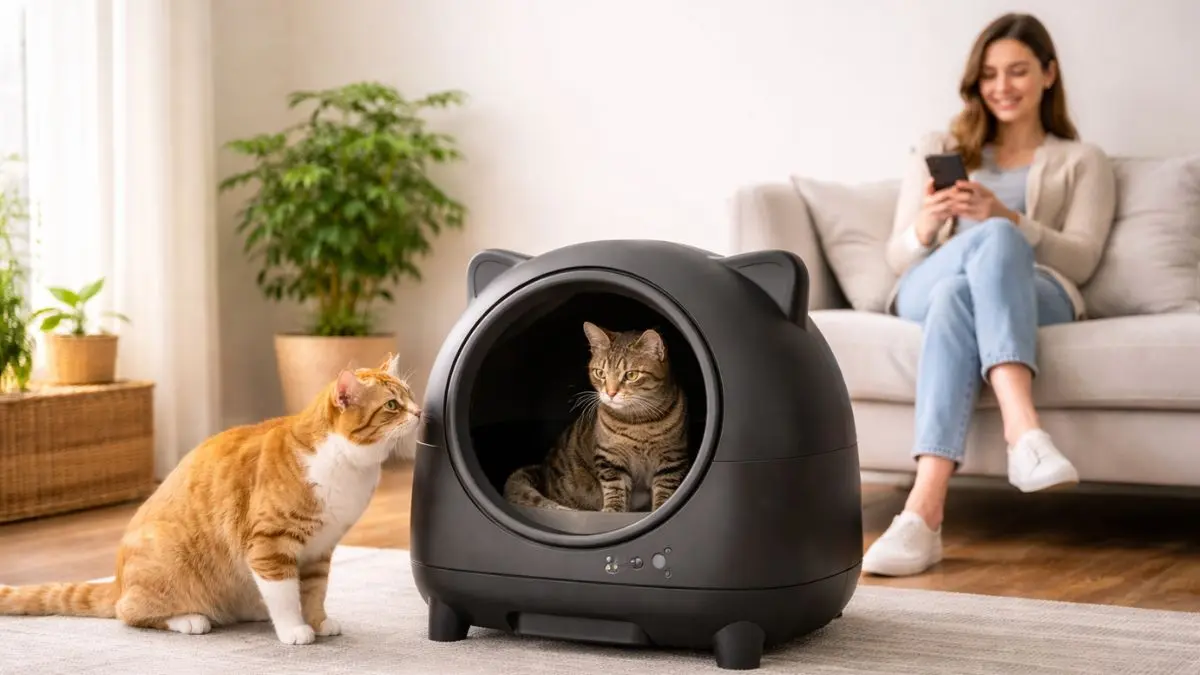
Best Automatic Litter Box for Multiple Cats (2026): Top Picks That Actually Handle Heavy Use
This post contains affiliate links to Amazon. If you make a purchase through these links, we may earn a small commission at no extra cost to you. We only recommend products we trust and believe are useful for your cats.
Expert Verdict (Quick Summary)
If you have multiple cats, a standard litter box simply won’t keep up.
- Best overall: Litter-Robot 4 → handles heavy daily use with minimal maintenance
- Best smart option: PETKIT Pura Max → advanced tracking + strong odor control
- Best value: PetSafe ScoopFree → simple, reliable, and budget-friendly
For multi-cat homes, capacity, odor control, and safety sensors matter more than anything else.
Have you ever wondered if a single device can truly keep up with several feline housemates and cut daily maintenance in half?
What we noticed in practice: with 2 or more cats, waste builds up much faster than most owners expect — and manual scooping quickly becomes overwhelming. In fact, most automatic litter boxes are designed to handle 2–4 cats efficiently, depending on capacity and maintenance frequency.
In busy homes, managing litter box hygiene can feel like a constant chore. That’s exactly why models like the Litter-Robot 4 stand out — they’re built to handle high traffic without clogging, jamming, or creating strong odors.
Modern pet tech has transformed the traditional litter box into a smart, self-cleaning system that saves time and keeps your home consistently cleaner. But choosing the right one isn’t just about automation — it comes down to entry size, waste capacity, cleaning cycle efficiency, and your cats’ behavior.
This guide breaks down the best options that actually handle heavy use, reduce odor, and work reliably in multi-cat households — with practical insights to help you choose the right system for your home.
Key Takeaways
- High-capacity systems are essential for multi-cat homes — they reduce daily maintenance and handle heavy waste volume without constant emptying.
- Entry size and cleaning cycle speed matter more than most people think, especially when different cats have different habits and personalities.
- The Litter-Robot 4 stands out for consistent performance, reliable sensors, and accurate usage tracking in busy households.
- Effective odor control depends on fast waste removal and sealed compartments, not just the type of litter used.
- Choosing the right unit doesn’t just save time — it also supports long-term hygiene and helps you spot changes in your cats’ behavior earlier.
Why Multi-Cat Households Need Automatic Solutions
Juggling multiple cats means constant cleanups — and that daily grind wears on any pet owner.
What we noticed in practice: with more than one cat, litter boxes get dirty much faster than expected. Odor builds up quickly, and even with frequent scooping, it’s hard to keep things consistently clean.
Homes with several felines face constant maintenance, unpredictable usage patterns, and faster waste accumulation. That’s exactly where an automatic litter box designed for multi-cat households makes a real difference — keeping cleaning cycles consistent and reducing hands-on effort.
If you’re still unsure whether these systems are worth it, this honest breakdown of do automatic litter boxes really work explains what to expect in real-world use.
Benefits of Automation
Consistent waste removal keeps the area hygienic and lowers stress for every pet.
What we noticed in practice: when waste is removed shortly after each use, cats are far more likely to keep using the box — which reduces accidents and keeps your home cleaner overall.
Devices clear clumps quickly, so the litter stays fresh for longer and doesn’t become overwhelming in multi-cat households.
- Time savings: Less daily scooping and fewer deep clean sessions.
- Odor control: Waste is sealed away faster, preventing strong smells from spreading through your home.
- Health monitoring: Regular cleaning cycles make it easier to notice changes in usage patterns — an early sign that something might be off with your cat.
Managing Multiple Cats
Different personalities mean different habits — and that directly affects how each cat uses the litter box.
What we noticed in practice: in multi-cat homes, it’s common for one cat to avoid the litter box if it’s not consistently clean, which can quickly lead to accidents or stress-related behavior.
A reliable automatic unit ensures that each cat always has access to a clean space exactly when they need it — reducing competition and making the environment more predictable.
Clean, predictable waste management reduces conflict and keeps multi-pet homes calmer.
That’s why choosing a system with enough capacity and fast cleaning cycles is critical. It prevents overflow, maintains hygiene, and keeps both your home and your cats more comfortable on a daily basis
Understanding How Self-Cleaning Systems Function
A clear understanding of how these devices work makes choosing the right unit much easier — especially in multi-cat homes where performance really matters.
If you want a deeper breakdown, this guide explains exactly how automatic litter boxes work step by step and what happens during each cleaning cycle.
Most modern systems rely on motion and weight sensors to detect when a cat has finished using the box. Once the cat leaves, the system waits a short delay before starting the cleaning process — an important safety feature.
What we noticed in practice: the quality of these sensors makes a huge difference. Cheaper models tend to misread movement, while higher-end units deliver more consistent and reliable cycles.
Many units use a rotating drum mechanism that sifts clean litter from clumps. Waste is then moved into a sealed drawer, while clean litter falls back into place.
Other designs rely on a rake system, which sweeps clumps into a compartment. Both approaches reduce direct contact with waste and help maintain a cleaner environment between manual maintenance.
A reliable sensor system and a well-sealed waste drawer make the biggest difference in daily hygiene and long-term usability.
Below is a quick comparison of the most common mechanisms and how they perform in real-world use.
| Mechanism | How it works | Pros & Cons |
|---|---|---|
| Rotating drum | Sifts litter automatically; clumps are separated and moved into a sealed waste drawer | Excellent odor control and automation; more moving parts may require occasional maintenance |
| Rake system | A rake sweeps clumps into a waste bin after a delay | Simple and effective design; can be noisier and may startle sensitive or shy cats |
| Rubble & trap | Uses gravity to separate waste into a lower tray | Low-tech and affordable; requires more frequent emptying and manual upkeep |
Top Picks for the Best Automatic Litter Box for Multiple Cats
Choosing the right self-cleaning system goes beyond basic features — in multi-cat homes, capacity, consistency, and reliability under heavy use are what really matter.
What we noticed in practice: not all automatic litter boxes can handle multiple cats efficiently. Lower-end models tend to struggle with frequent cycles, leading to odor buildup and more manual intervention over time.
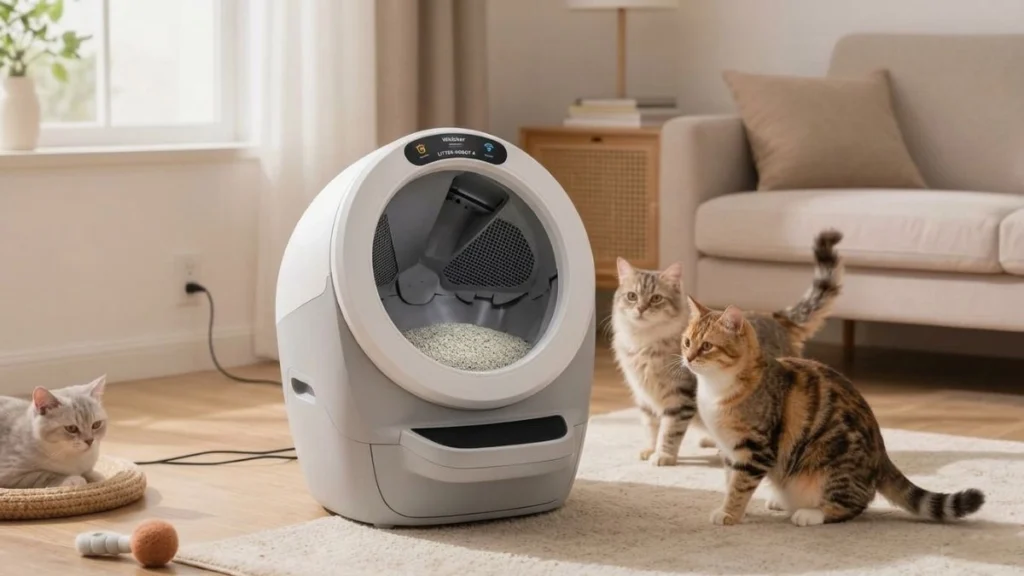
Whisker Litter-Robot 4

- LITTER-ROBOT SUPPLY BUNDLE: Save on the Litter-Robot 4 Supply Bundle, which comes complete with Litter-Robot 4 automatic…
- SELF-CLEANING LITTER BOX: Never scoop again with Litter-Robot 4, the automatic, self-cleaning cat litter box. The patent…
- MONITOR + CONTROL VIA APP: Control the WiFi-enabled sifting litter box straight from the Whisker app. Monitor waste and …
A top-tier choice for multi-cat households, especially if you want reliability with minimal daily maintenance.
With a spacious 15.75 x 15.75 inch entry and a 22 x 27 inch footprint, it comfortably accommodates larger cats and reduces hesitation when entering — something that’s critical in homes with different cat personalities.
Its advanced sensors and well-optimized cleaning cycle deliver consistent performance even under heavy daily use.
Key highlights:
- Large entry and interior space → ideal for big cats and multi-cat environments
- Smart app tracking → monitor usage patterns and detect changes early
- Reliable cleaning cycles → fewer missed clumps and less manual intervention
In real-world use, this is one of the most reliable options currently available for multi-cat households.
Petkit Purobot Max Pro 2

- AI-Powered Camera: The PETKIT MAX PRO 2 self-cleaning cat litter box features a high-resolution AI-powered camera with a…
- 【Upgraded large opening】: The opening area is 43% larger than the previous generation, making it easier for cats to ente…
- Smart App Control: PETKIT MAX PRO 2, which is 2.4&5GHz Wi-Fi enabled, you can easily connected to your smartphone via th…
Best Smart Monitoring Option
This model stands out for its advanced AI-powered tracking, making it ideal for owners who want deeper insights into their cats’ behavior and health.
What we noticed in practice: smart tracking features like this become especially useful in multi-cat homes, where it’s harder to monitor individual habits manually.
With a 10.7 x 10.5 inch entry, it offers comfortable access for most cats, while its intelligent system collects detailed data on usage patterns.
Its app connectivity and precise sensors provide real-time insights, helping you spot changes early — something that can be incredibly valuable for long-term health monitoring.
Key highlights:
- AI-powered camera monitoring → track behavior and litter box usage
- Smart app insights → detailed reports on activity and patterns
- Accurate sensors → reliable detection and safe cleaning cycles
If tracking your cats’ health and behavior is a priority, this is one of the most advanced options available today.
Homerunpet CS106

- Ultra-Large 106L Capacity for Multi-Cat Homes: Designed for families with multiple cats or large breeds like Maine Coon,…
- Physical Anti-Pinch Safety Design: Equipped with advanced sensors and a physical barrier system to prevent pinching or t…
- Automatic Litter Refill System: Intelligently maintains optimal litter levels by auto-dispensing fresh litter, reducing …
Best Low-Maintenance Option
The CS106 stands out for its self-filling reservoir, which helps maintain optimal litter levels without the need for constant refills — a huge advantage in busy multi-cat homes.
What we noticed in practice: features like automatic litter level control significantly reduce daily intervention, especially when multiple cats are using the box throughout the day.
With a 10 x 10.5 inch entry, it offers a more compact design while still remaining functional for most cats. This makes it a good fit for smaller spaces without sacrificing usability.
Its design helps keep clumping litter working efficiently, reducing waste buildup and maintaining more consistent performance over time.
Key highlights:
- Self-filling reservoir → maintains ideal litter levels automatically
- Low-maintenance design → fewer refills and less daily effort
- Compact but functional entry → suitable for most cats and tighter spaces
In real-world use, this is one of the most practical options for reducing daily litter box maintenance in multi-cat households.
PetSafe ScoopFree
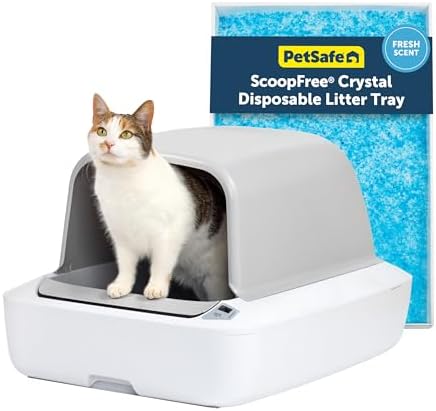
- Self-cleans for Up to 30 Days: No scooping, cleaning or refilling your cat’s litter box for weeks
- Unbeatable Odor Control: Patented Crystal Litter Trays provide 5X better odor control than traditional clay litter, remo…
- Privacy Hood: Give your cat a private bathroom while reducing litter tracking and odor
Simple, Reliable, and Budget-Friendly
The PetSafe ScoopFree is known for its straightforward design and dependable operation, making it an excellent choice for cat owners looking for a no-fuss, budget-friendly solution. Its crystal litter trays help control odor and simplify cleanup without complicated mechanisms.
What we noticed in practice: the automatic rake gently sweeps waste into a covered compartment, reducing daily scooping and keeping the litter box area cleaner for longer.
With its roomy 12 x 18 inch entry, it accommodates most cats comfortably while still fitting nicely in tighter spaces. This balance of size and simplicity makes it especially practical for small households or first-time automatic litter box users.
Its design ensures that clumping litter stays contained, reducing mess and maintaining consistent hygiene.
Key highlights:
- Crystal litter trays → help control odor and minimize cleaning frequency
- Automatic rake system → keeps the box tidy with minimal intervention
- Spacious entry → comfortable for most cats while fitting in smaller areas
In real-world use, the PetSafe ScoopFree proves to be a reliable, low-cost option for keeping litter management simple without sacrificing cleanliness or convenience.
Evaluating Entry Size and Interior Space
Entry width and interior depth play a critical role in whether a cat uses a new system comfortably — or avoids it altogether.
What we noticed in practice: one of the most common reasons cats reject automatic litter boxes is simply lack of space or a tight entry. Even small discomfort can make them hesitate or stop using it entirely.
Make sure the opening provides clear, easy access. A cramped entry often leads to hesitation, especially in multi-cat homes where confidence and routine matter. Before choosing a unit, measure your cat’s shoulder width and compare it with the product specifications.
Interior space becomes even more important when multiple cats share the same box. Larger breeds need enough room to turn, dig, and move naturally without feeling restricted. A more spacious interior also helps reduce litter tracking and stress during use.
The Litter-Robot 4, for example, offers a generous 15.75 x 15.75 inch entry, which is noticeably larger than most competing models. If your cat weighs 15 pounds or more, prioritize units with at least a 10-inch entry to ensure comfort and consistent use.
Quick checklist:
- Measure your cat’s width and height before comparing specs
- Choose deeper interiors → allows natural digging behavior
- Check entry dimensions carefully → avoid hesitation and rejection
Proper interior space is one of the key factors that determines whether your cat will actually use the system consistently.
The Importance of Reliable App Connectivity
Smart litter boxes are only as good as their apps — without a stable connection, you lose most of the benefits that make these systems worth it.
What we noticed in practice: unreliable apps are one of the most frustrating issues for pet owners. Missed notifications can quickly turn into overflow problems, strong odors, or failed cleaning cycles without you even realizing it.
A stable connection gives you real-time alerts, letting you know when the waste drawer is full, when a cycle fails, or when something needs attention. It also helps track your cat’s usage patterns — which can reveal subtle changes in behavior over time.
Without that connection, small issues tend to build up unnoticed, especially in multi-cat homes where usage is much higher.
App Reliability and Notifications
Real-time alerts are one of the most valuable features in a smart litter box — they keep you informed before small issues turn into bigger problems.
What we noticed in practice: timely notifications make a huge difference in multi-cat homes, where waste accumulates quickly and delays can lead to odor or overflow.
Models like the Litter-Robot 4 combine app control with weight detection and visit tracking, allowing you to monitor patterns and spot changes in your cat’s habits early.
On the other hand, poor connectivity can result in missed alerts, meaning you may not notice when the waste drawer is full or when a cleaning cycle fails — leading to unnecessary mess and extra maintenance.
Before choosing a model, take time to test the app interface and notification system. Reliable alerts and a responsive app are essential for a smooth, low-maintenance experience.
| Feature | Why it matters | What to test |
|---|---|---|
| Push notifications | Immediate awareness of issues before they escalate | Receive and open an alert within 30 seconds |
| Usage history | Helps identify trends in visits, weight, and behavior | View at least a 7-day summary and export data |
| Remote control | Allows you to run or pause cleaning cycles from anywhere | Start a cycle remotely and confirm it executes properly |
Consistent app performance gives real peace of mind — especially when you’re away — and prevents small issues from turning into bigger problems.
Quick checklist:
- Check that notifications are timely → delays can lead to overflow or missed cleaning cycles
- Verify the app shows clear usage metrics → helps you track behavior and spot changes early
- Confirm remote control works on mobile networks → ensures you can manage the unit from anywhere
Safety Features to Prioritize for Your Pets
When a device includes moving parts around your cat, safety isn’t optional — it’s essential.
What we noticed in practice: safety features are one of the biggest differences between high-quality models and cheaper alternatives. In multi-cat homes, where usage is frequent, reliable protection becomes even more important.
Sensitive weight sensors are the first line of defense. A good unit should detect pets as light as 1 pound, ensuring the cleaning cycle won’t start while a kitten or smaller cat is still inside.
Some advanced models, like the Leo’s Loo Too, combine weight detection with radar or motion sensors to accurately detect presence and automatically pause movement when needed.
Anti-pinch and presence sensors add another critical layer of protection. These systems immediately stop mechanical action if anything is detected near the entrance or inside the unit.
Key safety features to look for:
- Lightweight detection → prevents cycles from starting when small pets are inside
- Anti-pinch technology → stops movement if any obstruction is detected
- Open-access design → allows cats to exit quickly if they feel uncomfortable
In real-world use, reliable safety sensors are what make automatic litter boxes truly safe for everyday use.
Comparing Litter Compatibility and Waste Management
Not all cat litters work the same across every self-cleaning system. Choosing the right litter directly impacts clump formation, prevents jams, and determines how often you’ll need to empty the waste drawer.
This section will help you understand which litter types suit each mechanism and how drawer size affects maintenance and odor control.
Clumping vs Crystal Litter
Clumping litter forms clumps quickly, which most automatic litter boxes can scoop out during the cleaning cycle. It works very well in systems that rotate or use a rake.
Crystal litter, on the other hand, absorbs moisture and provides superior odor control. Some units, like the PetSafe ScoopFree, are designed specifically for crystal trays and require compatible refills.
Expert tip:
“In practice, we’ve noticed that the wrong granule size can jam the mechanism — always check compatibility before switching litter types.”
For more guidance on choosing the right litter for your automatic box, check out our full guide on best cat litter for automatic litter boxes.
Waste Drawer Capacity
The size of the waste drawer is crucial in busy households. A larger drawer reduces trips to the trash and keeps litter waste contained for longer.
- Capacity: Bigger drawers can handle more waste between empties, making maintenance less frequent.
- Ease of use: Choose a drawer that is easy to remove and reseal, simplifying daily cleaning.
- Design: A well-designed drawer helps control odor and speeds up the cleaning process.
Expert tip:
“From our experience, a poorly sized or badly designed drawer can turn cleaning into a hassle. Opt for drawers that balance capacity with easy handling.”
For more guidance on choosing an automatic litter box that fits your lifestyle, check out our full guide on top self-cleaning litter boxes.
Assessing Long-Term Durability and Maintenance
The durability of a self-cleaning unit determines whether it saves you money or becomes a constant repair headache.
- Mechanical stress: Daily use in busy households challenges gears, motor housings, and seals. Solid construction reduces failures over time.
- Ease of disassembly: Test how easily you can access gears, sensors, and the waste drawer. Tool-free panels simplify jam clearing and prevent corrosion.
- Materials matter: High-grade plastic or stainless steel resists scratches and odor buildup, keeping the interior sanitary and extending lifespan.
- Maintenance routine: Wipe the interior weekly, inspect the drawer and sensors, and run a full teardown every few months if possible. Regular care prevents major repairs.
Expert tip:
“Invest in a durable design and routine checks to make automated cleaning truly cost-effective.”
For those considering advanced, long-lasting models, check our review of the Litter-Robot 4 — it’s designed for longevity, easy maintenance, and tech-driven reliability.
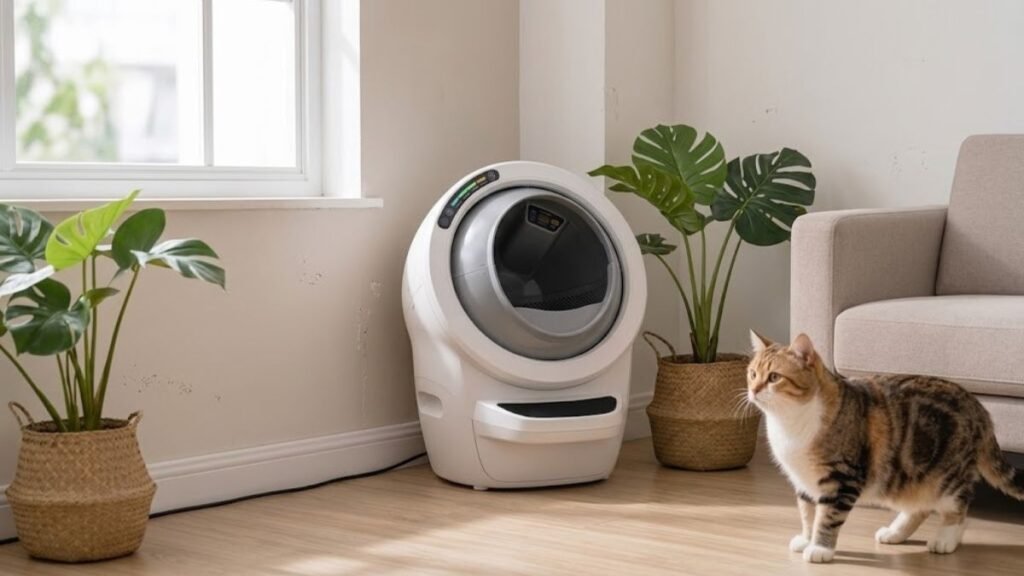
Why We Recommend Avoiding Fully Enclosed Cycling Models
Some self-cleaning litter box designs seal completely during cleaning, which can put pets at real risk if a sensor fails. Units like the PetSnowy Snow+ and Petlibro Luma close fully while the drum or rake cycles, raising safety concerns beyond just odor control.
- Risk: If a sensor or app malfunctions, a cat could be trapped while the mechanism moves, causing injury or panic.
- Safety: Opt for boxes that keep the entrance accessible throughout the cleaning cycle.
- Balance: Look for systems that combine effective odor control with open access, protecting your pet while still reducing daily maintenance.
Expert tip:
“A safe self-cleaning litter box should allow your cat to exit at any time — enclosed models may seem tidy, but the trade-off for safety can be unacceptable.”
For guidance on safe automatic litter boxes, see our detailed review on automatic litter box safety.
Feature Comparison: Fully Enclosed vs Open-Entrance Models
| Feature | Fully Enclosed Models | Open-Entrance Models |
|---|---|---|
| Entrance access during cycle | Closed — may trap the cat if sensors fail | Open — cat can exit anytime |
| Odor control | Strong | Good, especially with a sealed drawer |
| Safety risk | Higher if sensors malfunction | Lower; prioritizes pet escape |
“Always choose an option that keeps the entrance accessible during the entire cleaning cycle. This ensures your cat’s safety while maintaining effective cleaning performance.”
Managing Odor Control in High-Traffic Homes
Homes with heavy cat traffic need targeted odor management solutions that go beyond occasional scooping.
- Quick removal: A self-cleaning litter box that clears clumps soon after use reduces ammonia buildup and bacterial growth. Early action keeps the area fresh and inviting for your pets.
- High-quality clumping litter: Choose litter that traps moisture quickly and limits odor spread. Pairing a good substrate with a reliable cleaning cycle provides the best results in busy households.
- Frequent waste drawer emptying: Even efficient self-cleaning systems can develop odor if waste sits too long. Some units include deodorizing cartridges or sprays to help between empties.
Maintenance tips for busy homes:
- Match drawer capacity to household traffic to reduce trips.
- Use deodorizers sparingly to avoid irritating sensitive noses.
- Monitor odor levels and adjust emptying frequency to protect pet health.
Key takeaway:
“Consistent maintenance — proper litter, regular drawer checks, and steady cleaning cycles — keeps odor under control.”
Tips for Acclimating Your Cats to New Technology
Cats rely heavily on scent and routine, so any new device should respect that natural language. Gradually introducing a self-cleaning litter box helps reduce stress and encourages adoption.
- Start slow: Place the new unit near the old litter box for a few days so your cat can investigate at its own pace.
- Familiar scents: Sprinkle a small amount of used litter from the old box into the new one to provide a comforting scent cue.
- Positive reinforcement: Reward exploration with treats or gentle praise when your cat uses or approaches the new device.
- Observe behavior: Watch for signs of stress or avoidance and adjust placement or timing accordingly.
Key takeaway:
“Respecting a cat’s reliance on routine and scent makes acclimation to new technology smoother and less stressful.”
The Transition Period
- Keep the old box nearby: Place the old litter box close to the new unit so cats have a familiar fallback. This reduces stress while they explore the new device.
- Introduce familiar scents: Mix a small cup of used litter into the self-cleaning litter box. Scent cues help cats recognize the new spot as appropriate.
- Start quietly: Turn off the automatic cleaning cycle for the first few days. Allow cats to walk in and sniff without noise — this builds confidence.
- Positive reinforcement: Reward exploration with treats or gentle praise when a cat approaches or uses the new box. This links the device with positive experiences.
- Be patient: Some cats adapt in hours, others in weeks. Track visits only after consistent use, and keep the old box available until the transition is steady.
Key takeaway:
“Slow, scent-based introductions and calm encouragement reduce transition time and stress for both pets and owners.”
The Role of Sensors in Modern Litter Boxes
Sensors are the backbone of modern self-cleaning litter boxes. Weight, motion, and radar sensors detect when a cat steps in and when the area is clear.
- Weight sensors: Stop the cleaning cycle if anything remains on the platform, protecting pets and giving owners peace of mind.
- Advanced tracking: Sensor arrays can log usage. Apps show visit frequency and changes in waste habits, which may indicate potential health issues.
- Redundancy: Models with multiple sensors reduce false starts and prevent jams, minimizing interruptions and manual intervention.
Key features to consider:
- Presence detection: Pauses cycles while a pet is inside.
- Usage tracking: Provides health insights through app data.
- Fail-safes: Layered sensors increase reliability and safety.
Key takeaway:
“Accurate and redundant sensors ensure safety, consistent cleaning, and useful insights into your cat’s habits.”

Key takeaway:
“Good sensors keep cleaning routines timely, protect pets during cycles, and turn data into useful care signals.”
Budget Considerations for Premium Pet Tech
A premium automatic litter box may seem expensive at first, but it can significantly reduce daily chores over the long term.
- Think beyond the initial price: A quality unit saves time and minimizes scooping, often offsetting a higher purchase cost.
- Ongoing supplies: Some models require specific litter, drawer liners, or deodorizing inserts. Include these recurring items in your budget, as they affect monthly maintenance costs.
- Value factors to consider:Waste drawer capacity: Larger drawers reduce emptying frequency.
- App features: Track visits and weight trends to monitor pet health.
- Durability and warranty: High-quality materials lower repair bills over time.
Key takeaway:
“A top pick may cost more upfront but delivers reliable odor control, fewer interruptions, and steady performance — a practical choice for busy households.”
Cost Breakdown for Premium Pet Tech
| Cost Area | What to Expect | Why It Matters |
|---|---|---|
| Initial price | Higher for premium models | Better build, advanced sensors, and long-term reliability |
| Recurring supplies | Specialized litter or drawer liners | Adds monthly cost but keeps mechanisms clean |
| Maintenance | Parts and periodic cleaning | Extends lifespan and protects your pet’s health |
“Investing in a high-quality system can improve your cat’s health and your own quality of life.”
How We Test and Select Our Top Recommendations
Each model is put through real-world testing to see how it performs over weeks of heavy use.
- Hands-on home testing: Daily cleaning cycles are run, visits are logged, and we monitor how the unit handles clumping litter and loose granules.
- Waste management focus: We measure how often the drawer fills, how well odors are contained, and how easy it is to empty without spills.
- User feedback: Whisker models and other top picks are evaluated with input from cat parents in busy households to capture quirks that short lab runs might miss.
Selection criteria:
- Durability: Can the unit withstand steady, long-term use?
- Predictable cleaning cycles: Ensures consistent performance.
- Low maintenance: Minimal fuss while keeping waste under control.
Key takeaway:
“Real users reveal quirks lab tests can’t catch, so we combine hands-on trials with long-term feedback to select units that deliver reliable, worry-free performance.”
Test Area and Pass Criteria
| Test Area | What We Measure | Pass Criteria |
|---|---|---|
| Cleaning reliability | Cycle success rate and missed clumps | >98% cycles clear clumps |
| Waste handling | Drawer capacity and odor retention | Small trips, low smell for 3 days |
| Durability | Motor stress, sensor faults over 3,000 cycles | No critical failures |
| User feedback | Real-home reports on ease and pet acceptance | Positive long-term reviews |
Key takeaway:
“By combining rigorous performance testing with real-home feedback, we ensure top picks deliver reliable cleaning, low maintenance, and pet-friendly performance.”
Common Pitfalls When Switching to Automatic Systems
New technology can promise relief, but real-world use often reveals hidden challenges.
- Rake vs. drum: Some models, like the Pet Zone Smart Scoop, use a 15-minute countdown with a rake system. This motion can spook shy pets or leave clumps behind if timing doesn’t align with use.
- Poor acclimation: Rushing the switch may cause a cat to avoid the new self-cleaning litter box and soil elsewhere. Always provide a familiar fallback during the transition.
- App dependence: Owners sometimes overlook connectivity. Without alerts, a full drawer or failed cycle can go unnoticed, leading to odor and waste overflow.
- Complex designs: Units that are hard to disassemble trap grime, raise odors, and can cause mechanical faults over time. Check cleaning access and safety features before purchase.
Key takeaway:
“Understanding common pitfalls — from acclimation to design complexity — helps ensure a smooth transition and long-term success with automatic litter systems.”
| Pitfall | Why It Matters | Quick Fix |
| Rake timing (Pet Zone) | May scare pets or leave clumps behind | Lower countdown or choose a drum-style model |
| Poor app alerts | Missed drawer fills and failed cycles | Test notifications and use backup checks |
| Complex design | Hard cleaning, odor buildup | Choose models with tool-free access |
Key takeaway:
“Research safety features and test app alerts before committing to a model to ensure smooth operation and minimal stress for your pets.”
Conclusion
Effective odor control and clear alerts make daily life easier while protecting your cat’s health. Choose a system that remains accessible during cleaning and offers intuitive app monitoring.
Our top picks balance safety, drawer capacity, and reliable performance, reducing chores and keeping your home fresher with less effort.
Take time to acclimate each pet, follow simple maintenance routines, and match cat litter and drawer size to household traffic. A quality unit not only saves time but also supports long-term health and comfort for your cats.
Key takeaway:
“Invest in a self-cleaning system that combines safety, efficiency, and adaptability — making life easier for both you and your pets.
FAQ – Automatic & Self-Cleaning Litter Boxes
How many cats can a self-cleaning system handle?
Most premium units like the Whisker Litter-Robot 4 and Petkit Purobot Max Pro 2 comfortably handle 2–4 adult cats. Check daily cycle recommendations, waste-drawer capacity, and motor duty ratings to match your household’s needs.
Which clumping formulas work best with these units?
Low-dust clumping clay from major brands performs best. Avoid non-clumping or ultra-light litters and most crystals unless the manufacturer confirms compatibility, to prevent sensor errors and tracking issues.
How often do I need to empty the waste drawer?
Frequency depends on cat count and drawer size. In multi-cat homes, empty every 2–7 days. Larger drawers reduce trips, but check daily at first to avoid overflow and odor buildup.
Are self-cleaning models safe for kittens and senior cats?
Yes, if equipped with reliable weight or motion sensors and configurable cycle delays. Choose models with low entrance thresholds and long safety delays, and supervise the transition period.
Do smart models require constant Wi‑Fi to function?
No. Core cleaning runs locally. Wi‑Fi enables remote alerts, usage logs, and firmware updates. If app features are critical, choose a unit with stable app performance reviews.
How noisy are these systems during a cleaning cycle?
Noise varies by design and motor quality. Centrifugal or quiet motors, like in the Litter-Robot line, are usually quieter than rake-based systems. Check manufacturer decibel specs and user reviews.
Can automatic systems help with odor control in busy homes?
Yes. Sealed drawers, carbon filters, and rapid cycles reduce ammonia and feces odors. Regular filter replacement, proper scooping, and compatible litter improve results in high-traffic homes.
What maintenance should I expect beyond emptying the drawer?
Routine care includes wiping the interior every few weeks, replacing filters and liners, checking sensors for litter dust, and inspecting seals. Some consumables reduce hands-on cleaning.
Will my cat accept a self-cleaning unit right away?
Some adapt quickly; others take days or weeks. Gradual introduction works best: place near the old box, allow exploration with power off, and enable slow transition to active cycles. Positive reinforcement helps.
Do these units work with multi-level or very large breeds?
Entry height and interior diameter matter. Look for low thresholds and roomy interiors for large or elderly cats. Measure your cat’s shoulder height and weight against manufacturer specs.
Are there health monitoring features available?
Some smart units track usage frequency and weight distribution to flag unusual patterns. Useful for insights but not diagnostic—share trends with your veterinarian.
What common problems should I watch for after purchase?
Typical issues include sensor false positives, clogged rake/drum, app drops, and overflowing drawers. Follow setup guides, use compatible litter, and keep spare filters and liners handy.
Is clumping clay better than crystal litters in these systems?
Clumping clay usually forms reliable clumps for rakes and sifters. Crystals control odor longer but may cause sensor or drainage issues. Check compatibility before switching.
How does weight capacity affect performance?
Weight sensors stop cycles if a cat is present. Overloaded platforms may misread presence and delay cleaning. Verify the unit’s weight limits.
Can I use liners or special bags in the waste drawer?
Compatible liners simplify disposal, but avoid ones that block airflow or sensor vents. Manufacturers often recommend specific liners or proprietary bags.
What should I consider when placing the unit in my home?
Place on a level surface with 12–18 inches clearance for access and maintenance. Avoid cramped or damp areas, ensure stable Wi‑Fi if using the app, and position near a power outlet.