Do Automatic Litter Boxes Really Work? Honest Pros, Cons & Real Results (2026)
This page may contain affiliate links, including Amazon affiliate links. We may earn a commission if you purchase through our links, at no extra cost to you.
If you could stop scooping every day, would you trust a machine to handle the mess without making your home smell worse?
If you could stop scooping your cat’s litter every day, would you trust a machine to do the job without creating more mess or odor?
An automatic litter box uses sensors and timed cycles to move waste into a sealed compartment. Its goal is to keep the litter bed clean, reduce odors, and save time.

This guide explores what matters in a U.S. household: cleanliness, odor control, time savings, cat acceptance, safety features, and total cost. It also covers the basics, such as clumping strength, fill level, and how often the waste drawer needs to be emptied.
Why do designs vary so much? Products like automatic litter boxes use different cleaning mechanisms, waste systems, and sensors, which can affect performance depending on your cat and environment.
To understand the differences in more detail, you can explore our in-depth comparisons of automatic litter box options and see which type fits your needs best.
If you’re considering specific models, here are some popular options worth checking:


Premium Alternative: CatGenie A.I.
For users looking for a completely different approach, the CatGenie A.I. is a fully automated system that doesn’t use traditional litter. Instead, it washes, sanitizes, and flushes waste through a connected water line, functioning more like a self-cleaning appliance than a standard litter box.
Unlike typical automatic litter boxes, the CatGenie A.I.:
- Uses washable granules instead of clumping litter
- Connects to water and drainage (like a washing machine)
- Automatically flushes and sanitizes after each use
- Reduces the need for manual waste handling entirely
Learn more or check the official product details here:
CatGenie A.I. Official Website: https://www.catgenie.com/pages/catgenie-a-i
Even the best automatic litter box isn’t truly “set it and forget it.” You still need to empty the waste, wipe sensors, and perform regular deep cleaning. However, choosing the right box for your cat and litter can make a significant difference.
Later sections will guide you through practical next steps. These include the best cat litter for clumping and odor control, how to transition a cat to a new litter box, and a litter box cleaning schedule with weekly and monthly checklists.
Key Takeaways
- Automatic litter boxes can reduce daily scooping, but they still require regular emptying and cleaning.
- Results depend on the cleaning mechanism, your choice of litter, and the number of cats using the box.
- Odor control improves most when waste is properly sealed and the drawer is emptied on time.
- Cat acceptance varies, especially with noise, motion, or confined spaces.
- Upfront cost is only part of the total expense—supplies and ongoing maintenance also matter
Do automatic litter boxes actually deliver real results?
Many cat owners wonder whether automatic litter boxes really work in everyday life. They want to know if they’ll notice a difference in odor control, litter cleanliness, and how often they need to clean up.
What “working” actually means: odor control, clump removal, and daily effort
What “working” actually means: odor control, clump removal, and daily effort
Odor control is key. If the box seals waste quickly, your room stays fresher—especially when it uses bags or liners.
Clump removal is another important factor. A good unit separates clumps without creating a mess. The type of litter used plays a significant role here.
Although these boxes may seem low-maintenance, they still require daily attention. You’ll need to add litter, replace bags or trays, and clean the box and sensors regularly.
Realistic expectations for a self-cleaning litter box in a busy home
Homes with kids and pets can be challenging. Placement issues and curious pets may disrupt the cleaning cycle, leaving more mess. In households with multiple cats, the box may run more frequently.
Noise and timing also matter. Some models allow you to delay the cleaning cycle, which can reduce noise but may leave waste sitting longer. Whether this trade-off is worth it depends on your schedule and your cat’s comfort.
Quick snapshot of results most U.S. cat owners report after the first month
After a month, many owners notice less waste and fewer urgent cleanings. There is a learning curve when it comes to finding the right litter and cycle delay. Some cats adapt quickly, while others take longer.
Costs also become clearer within the first month. Electricity usage is minimal, but consumables such as bags and filters add up over time. This initial period helps you determine whether the ongoing maintenance is manageable.
| Result area | What most owners notice by week 4 | What influences it most | What you still need to do |
|---|---|---|---|
| Odor in the room | Less “open waste” smell right after use, especially in smaller spaces | Sealed drawer fit, filter condition, cycle timing, and how often the drawer is emptied | Empty the drawer on schedule, replace filters, and wipe the chute and lid seals |
| Box cleanliness | Cleaner-looking litter surface and fewer visible clumps during the day | Clumping strength, fill level, and whether the rake/drum completes full cycles | Top off litter, break up stuck spots, and deep-clean the globe or rake track |
| Time spent per week | Less scooping time, but more short check-ins | Number of cats, tracking, and how quickly waste builds in the drawer | Swap bags or trays, clean sensors, and reset jams or misreads |
| Owner satisfaction | Relief from daily scooping, with occasional frustration during setup | Cat acceptance, noise tolerance, and the cost of supplies | Adjust cycle delay, keep a backup box during transitions, and monitor patterns |
Questions like “Do automatic litter boxes smell?” and “Are automatic litter boxes worth it?” are best answered through everyday experiences. Real results include cleaner litter, manageable maintenance, and fewer surprises when life gets busy.
How automatic litter boxes work (self-cleaning basics)
Automatic litter boxes work like a loop. A cat uses the box, and the unit detects when the cat leaves. After a short delay, a cleaning cycle begins.
During this cycle, clumps are moved into a waste container, which you then empty regularly. This basic process is why many people ask, “Do self-cleaning litter boxes really work?”
The answer often depends on several factors, including floor level, the type of litter used, and how often the waste container is emptied.

Sensor types and triggers: weight, motion, timers, and app-based cycles
Most units use sensors to prevent a cleaning cycle while a cat is inside. Weight sensors are common in globe-style boxes, and they work best on a hard, level floor.
If the box tilts, you may encounter automatic litter box issues, such as skipped cycles or false “cat present” readings.
Motion sensors are often used to detect entry and exit. In tight spaces, they may be triggered when a person walks by. Some models rely on timer-based cycles, which can be consistent but may run at inconvenient times if the delay cannot be adjusted..
App-based control, offered on select models, can add cycle timing and usage tracking. It can also introduce reliability issues if Wi-Fi drops or sensors become dusty. These details help determine whether self-cleaning litter boxes really work in a busy home with kids, dogs, and doors opening throughout the day.
Cleaning mechanisms: rakes, rotating drums, sifting trays, and liners
Rake systems pull waste into a covered area. Designs inspired by PetSafe ScoopFree-style trays aim for easy upkeep. However, performance still depends on rake strength and litter that does not clog or smear.
Rotating drum or globe systems, like Litter-Robot, rotate and sift clumps into a drawer. They tend to perform best with clumping litter and the correct fill line. Overfilling can block sifting, while underfilling may cause litter to stick along the liner.
Sifting tray systems use a grate to separate clean litter from clumps. Soft clumps, extra-fine litter, or excessive dust can slow separation and create mess. Disposable trays and liners can speed up cleanup, although they add ongoing supply costs.
Waste containment: sealed drawers, bags, carbon filters, and deodorizing systems
Odor control is usually handled in the waste area, not the cleaning mechanism. Sealed drawers help trap smells, but they still require regular emptying. Bags and liners keep the drawer cleaner and make disposal quicker.
Many units include carbon filters or deodorizing vents. These can help with mild odors, but they will not overcome a full drawer or poorly formed clumps. If odor leaks occur, they are among the most common automatic litter box issues, often caused by poor seals or delayed emptying.
What matters most for performance: litter type, clumping quality, and fill level
Litter choice is a key factor in how automatic litter boxes perform day to day. Strong clumping supports clean separation, while dusty or lightweight litter can stick to components and coat sensors. Humidity and diet can also affect how firm clumps are, which influences how cleanly they drop into the drawer.
Fill level matters just as much. Too much litter can prevent proper sifting, while too little can lead to smearing along the base. When owners ask, “Do self-cleaning litter boxes really work?”, the most consistent results come from homes that maintain the correct fill line and match the litter to the machine.
| What you control | What you may notice | Why it affects automatic litter box problems |
| Floor level and box stability | False “cat detected” readings, paused cycles, or error alerts | Weight sensors can misread when the unit rocks or sits on uneven surfaces or carpet edges |
| Litter clumping strength | Cleaner sifting versus sticking, smearing, or broken clumps | Weak clumps can fall apart and coat moving parts and liners |
| Granule size and dust leve | Tracking, residue on sensors, or slower cycles | Fine dust can accumulate on sensors and reduce accurate triggers |
| Fill line discipline | Smooth rotation and sifting versus jammed or incomplete cleaning | Overfilling blocks separation; underfilling can increase streaking on the base |
| Drawer emptying schedule | Stable odor control versus smell leaks and full-drawer alerts | Sealed drawers work best when waste is removed before it compacts and restricts airflow |
Pros and cons of automatic litter boxes for everyday cat owners
Choosing between an automatic litter box and a regular one depends on your lifestyle. It comes down to how much time you have, the size of your space, and how much maintenance you are willing to handle. Automatic litter boxes can perform differently in a small apartment compared to a large home..
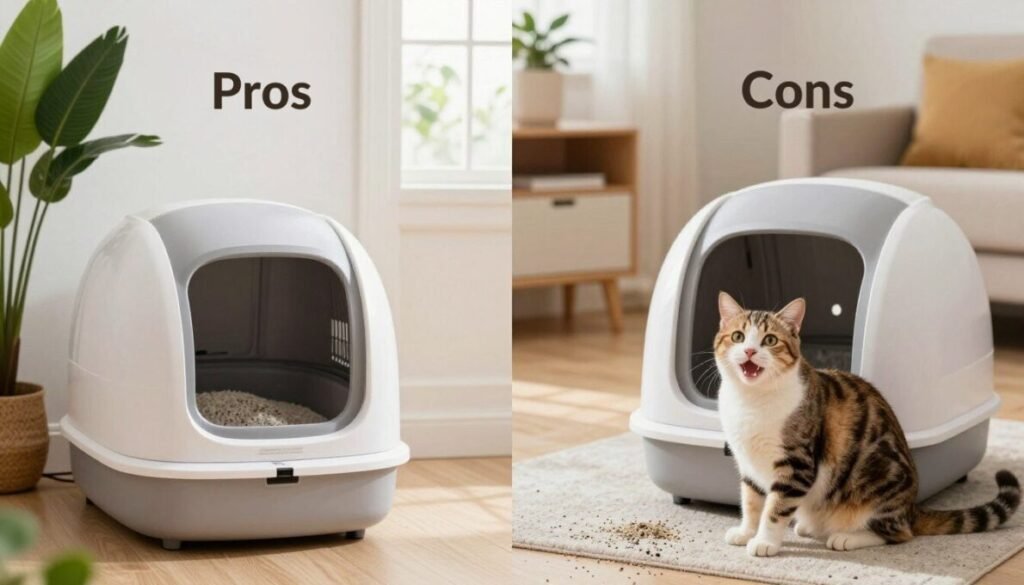
Some people want to spend less time cleaning up, while others prefer a simpler setup with fewer components to manage. It’s important to consider your daily needs, not just what looks appealing online.
Pros: less scooping, more consistent cleanliness, and easier multi-cat maintenance
Less scooping means fewer missed days and fewer last-minute messes.
Regular cleaning cycles help keep the litter surface smooth, which many cats prefer.
In multi-cat households, frequent cleaning can help prevent buildup and keep the box feeling cleaner.
Sealed drawers and covered waste bins can reduce odors, especially in smaller spaces.
Rotating designs like the Litter-Robot focus on consistent cleaning and sending alerts. Tray systems like PetSafe ScoopFree are easy to use, but require ongoing supply purchases.
Cons: upfront cost, ongoing supplies, noise, and space requirements
- Automatic litter boxes are more expensive than traditional options, especially if you need one for each floor.
- Purchasing supplies like liners or bags can add up over time.
- Noise and movement during cleaning may scare some cats or wake light sleepers if the box is placed near a bedroom.
- Most models also take up more space and require clearance to pull out drawers or trays, as well as access to a power outlet.
Do automatic litter boxes smell? What improves (and what doesn’t)
Many people wonder if automatic litter boxes smell. In many cases, the room smells better because waste does not sit exposed for long.
However, no litter box is completely odor-free. If the waste drawer is full, seals are weak, clumps break apart, or deep cleaning is skipped, odors can quickly become noticeable.
Using high-quality clumping litter, maintaining the correct fill level, and emptying the drawer on time usually helps the most. Enclosures can also help, as long as they provide good airflow; see Best Litter Box Furniture and Enclosures (Ventilation + Odor Tips) for ideas on placement.
Are automatic litter boxes worth it vs. a high-quality standard box
Whether automatic litter boxes are worth it depends on what you value most. If you are busy or travel frequently, they can make life easier. They offer less scooping, more consistent cleaning, and are easier to manage in multi-cat households..
A good traditional litter box can also be a great choice. It requires daily scooping, but it is more affordable, quieter, and less likely to malfunction.
Before making a decision, compare costs with Cat Litter Costs: Monthly Budget Breakdown. For many people, the choice comes down to whether the ongoing supplies and maintenance fit into their daily routine.
| Everyday factor | Automatic litter box | High-quality standard box |
|---|---|---|
| Daily labor | Less scooping; quick checks, light maintenance, and drawer level monitoring | Daily scooping is the main task; quick visual control each time |
| Odor control in real use | Often improved when cycles run consistently and the drawer is emptied on schedule | Strong control with strict daily scooping and high-quality clumping litte |
| Upfront cost | Higher purchase price; premium models cost the most | Lower cost even with a large box and quality scoop |
| Ongoing supplies | May require bags, liners, filters, trays, or specific litter; costs vary by brand | Mostly litter and optional deodorizing additives; fewer specialty parts |
| Noise and motion | Cycles can be audible; movement may bother some cats | Quiet and predictable; no motor sounds |
| Space and placement | Larger footprint; requires an outlet and clearance for drawers or trays | Flexible placement; fits tighter corners and smaller rooms |
| Best fit | Busy schedules, multi-cat households, and owners who value consistency | Budget-focused homes that want simplicity and full manual control |
Who should buy one and who should skip it
Some households can benefit from a self-cleaning litter box, while others may find it stressful or notice their cat avoiding it. It is all about finding the right fit for your lifestyle and your cat’s comfort.
Here are a few factors to consider when choosing the best automatic litter box for your needs.
Best fit households: long workdays, frequent travel, mobility limits, and multi-cat homes
For those with long work hours, an automatic litter box can be a great solution. It keeps the litter box clean while you are away and reduces the need for daily manual cleaning. It can also be helpful for people who travel frequently.
Individuals with mobility limitations often appreciate the ease of use, as these systems reduce physical effort and simplify maintenance.
Multi-cat households can also benefit from automatic litter boxes. They clean more frequently, which helps reduce odors and the likelihood of accidents. It is still important to provide enough litter boxes for all cats.
Cats that may struggle: kittens, seniors, anxious cats, and cats sensitive to noise/motion
Kittens and senior cats may find some automatic litter boxes difficult to use. Anxious cats or those sensitive to noise and motion may be startled by the unit’s activity.
Consider models with longer delay times and quieter operation. Some cats may also benefit from a manual start during the initial cycles. This can help them gradually become comfortable with the new setup.
Are automatic litter boxes safe for cats? Key safety features to look for
Automatic litter boxes can be safe for cats when they include the right features. Look for a unit that stops cleaning if a cat enters. It should also have stable footing and be placed on a level surface.
Controls that allow you to pause and delay cycles are important, along with easy access for cleaning and maintenance. These features can make a significant difference in both safety and overall usability.
- Detection and stop logic that prevents cycling while a cat is inside
- Tip-resistant design with a stable base on level flooring
- Adjustable delay settings so the unit does not cycle immediately when a cat exits
- Easy access for cleaning sensors, chute areas, and the waste drawer
Budget reality check: when “premium” makes sense and when it won’t
Premium litter boxes offer more features and better performance. They can be worth it if you value convenience and consistency in daily maintenance, but they also come with a higher price tag.
When deciding whether a litter robot is worth it, consider your cat’s needs and your own cleaning routine. The best choice is the one that fits your lifestyle while still ensuring comfort and safety for your cat.
| Household need | What to look for in a unit | Common trade-off |
|---|---|---|
| Long workdays | Large waste drawer, strong odor seal, reliable cycles | reliable cycles More parts to clean and maintain each week |
| Frequent short travel | High drawer capacity, jam alerts, simple emptying process | Still requires occasional checks for litter level and power |
| Mobility limits | Comfortable drawer height, lightweight bin removal, easy access for cleaning | Some designs are bulky and require more floor space |
| Multi-cat home | Fast reset time, consistent clump handling, spacious chamber | Higher litter usage and more frequent emptying |
Automatic litter box problems and how to fix them
Most issues with automatic litter boxes come down to setup, litter choice, and daily habits. Once you understand how the system works, fixing these problems becomes more routine rather than a constant challenge.

Wondering if automatic litter boxes smell? It often comes down to timing and seals rather than magic. Follow these steps to quickly identify the issue.
Cat won’t use it
First, turn the unit off so it behaves like a regular litter box. Place it near the current box to avoid sudden changes that might scare your cat.
Stick with the same litter your cat already prefers, as long as it is compatible. Delay the first cleaning cycles so your cat doesn’t hear the machine immediately after stepping out.
For the first week, run a cycle only when your cat is in another room. If accidents happen, slow down the transition instead of rushing it, as stress can lead to new unwanted habits.
Clumps sticking, smearing, or incomplete cleaning
Smearing clumps usually indicate that the litter depth or clumping strength is not optimal. Follow the recommended fill line to avoid dragging wet litter and creating residue or puddles.
Try using a stronger clumping formula and avoid overly dusty litter, which can clog moving parts. Understanding how automatic litter boxes work is key, as they rely on firm clumps for effective cleaning.
Wipe high-contact areas before residue hardens. A quick weekly cleaning of the globe, rake path, or sifting screen can help prevent recurring issues.
Odor leaks
When people ask if automatic litter boxes smell, the issue is often a small gap around the waste drawer. Check drawer alignment and inspect the gasket or seal for any damage.
Replace carbon filters on a regular schedule, but don’t rely on them to compensate for a full drawer. Emptying every 2–4 days for one cat is a realistic guideline, and multiple cats will require more frequent emptying.
Keep the area around the box clean and dry. Damp litter tracked onto the frame can trap odor. If the smell persists, clean the chute or drop zone where waste collects.
Errors and sensor issues
False errors often occur when the unit is placed on an uneven floor, especially in weight-sensing models. Place the box on a firm, level surface and re-check after repositioning it.
Clean dust from sensors and the entry lip, as fine litter can interfere with motion or infrared detection. If the model uses an app, reconnect to Wi-Fi, check for firmware updates, and restart the unit after a thorough cleaning..
| Complaint | What’s usually happening | Fast check | Simple fix |
|---|---|---|---|
| Cat avoids the box | Noise or movement feels unpredictable | Is it cycling right after your cat exits? | Turn it off, place it near the old box, and run manual cycles at first |
| Smearing or stuck clumps | Litter depth is off or clumps are weak | Is the litter level above or below the fill line? | Adjust litter depth, switch to a stronger clumping litter, and wipe contact points weekly |
| Odor around the unit | Drawer gap, worn seal, or overdue emptying | Does the drawer sit flush without wobbling? | Clear debris from the rim, check the gasket, empty more often, and replace the filter |
| Random error messages | Uneven surface or dusty sensor area | Does the unit rock when pressed on a corner? | Level the unit, clean sensors and entry area, and reset after repositioning |
If litter habits change during troubleshooting, reviewing Cat Peeing Outside the Box: Causes and Fixes can help. For ongoing maintenance, Litter Box Maintenance Checklist (Printable) helps keep things consistent without guesswork.
Conclusion
Do automatic litter boxes really work? Yes, for many U.S. homes. They can reduce daily scooping and help keep the litter consistently clean. However, performance depends on your cat’s comfort, the type of litter used, and regular maintenance.
Are they worth it if you work long hours, travel frequently, or have multiple cats? Often, yes. Still, they require ongoing upkeep such as cleaning sensors and replacing filters. A simple, low-cost setup may be a better option for those who prefer minimal maintenance.
Are automatic litter boxes safe for cats? They can be, when you choose a reliable model and maintain it properly. Look for units with strong safety sensors and keep them clean to ensure proper operation.
Remember, automatic litter boxes are not completely maintenance-free. They perform best when your cat is comfortable using them and when routine cleaning is maintained. For more information, check out Best Automatic Litter Box Roundup (2026) and Best Cat Litter for Automatic Litter Boxes (Low Dust & Odor Control). Follow How to Clean an Automatic Litter Box (Step-by-Step) for proper upkeep.
FAQ
Do automatic litter boxes really work?
Yes, they do when your cat gets used to them and the unit is properly maintained. Most models reduce daily scooping by separating clumps or waste automatically. However, you still need to empty the drawer, add litter, and clean components regularly.
Do self cleaning litter boxes really work in a busy home?
They can, depending on household activity and the number of pets. In busy homes with kids or other animals, you may need to empty the unit more frequently. Keeping the surrounding area calm can also help sensors perform more reliably.
How do automatic litter boxes work?
They detect when your cat leaves and then initiate a cleaning cycle. Depending on the model, they may rake, rotate, or sift the litter. This process moves clumps into a drawer or bin for later disposal.
Do automatic litter boxes smell less than a standard box?
Usually yes, because waste is contained more effectively. However, if the drawer becomes full or seals are not functioning properly, odors can still occur.
Are automatic litter boxes worth it?
They are worth it if you value convenience or need to reduce manual cleaning. However, if you are comfortable scooping daily, a traditional box may be more affordable and simpler.
What are the pros and cons of automatic litter box ownership?
Pros include less scooping and more consistent cleanliness. Cons include higher upfront cost, ongoing expenses, and potential noise. The best choice depends on your cat’s behavior and your household needs.
Are automatic litter boxes safe for cats?
A well-designed unit is safe when used correctly. Ensure it is placed on a stable, level surface and that sensors are kept clean. Always follow the manufacturer’s guidelines, especially for kittens.
Is Litter-Robot worth it compared with other options?
Litter-Robot can be worth it for users who want a rotating system with strong odor control. However, it only provides value if your cat accepts it and you maintain it regularly. Other models may be more affordable but require more manual upkeep.
What’s the best automatic litter box for odor control and clumps?
The best option depends on your priorities. Globe-style systems like Litter-Robot perform well with clumping litter. Tray-based models are convenient but may involve ongoing supply costs, while wash-and-flush systems require more specific maintenance.
Why won’t my cat use an automatic litter box?
Cats may avoid it due to noise or movement. Start by turning the unit off and placing it near the existing box. Use familiar litter and introduce the system gradually.
What automatic litter box problems come up most often?
Common issues include clumps sticking, incomplete cleaning cycles, and odor leaks. Regular maintenance and proper litter selection can resolve many of these problems. Software or app updates may also help fix certain errors.
What litter works best in a self-cleaning litter box?
Low-dust, strong clumping litter is typically recommended. Avoid overfilling or underfilling the unit, as this can cause performance issues. Always follow the manufacturer’s guidelines for compatible litter types.
How often do you need to empty and clean an automatic litter box?
Emptying frequency depends on the number of cats and drawer capacity. Deep cleaning is typically required weekly to monthly. Regularly clean seals, filters, and sensors to maintain odor control and proper function.