Litter-Robot 4 vs 3: Which One Is Really Worth Your Money in 2026?
This article contains affiliate links. We may earn a commission at no extra cost to you. We only recommend products we trust.
Are you comparing Litter-Robot 4 vs 3 and wondering which one will actually save you time, control odor, and fit your home in 2026?
On the surface, both models promise a hands-free cleaning experience and less daily maintenance.
But in real-world use, the differences quickly become noticeable—especially in noise, sensor accuracy, odor control, and overall convenience.
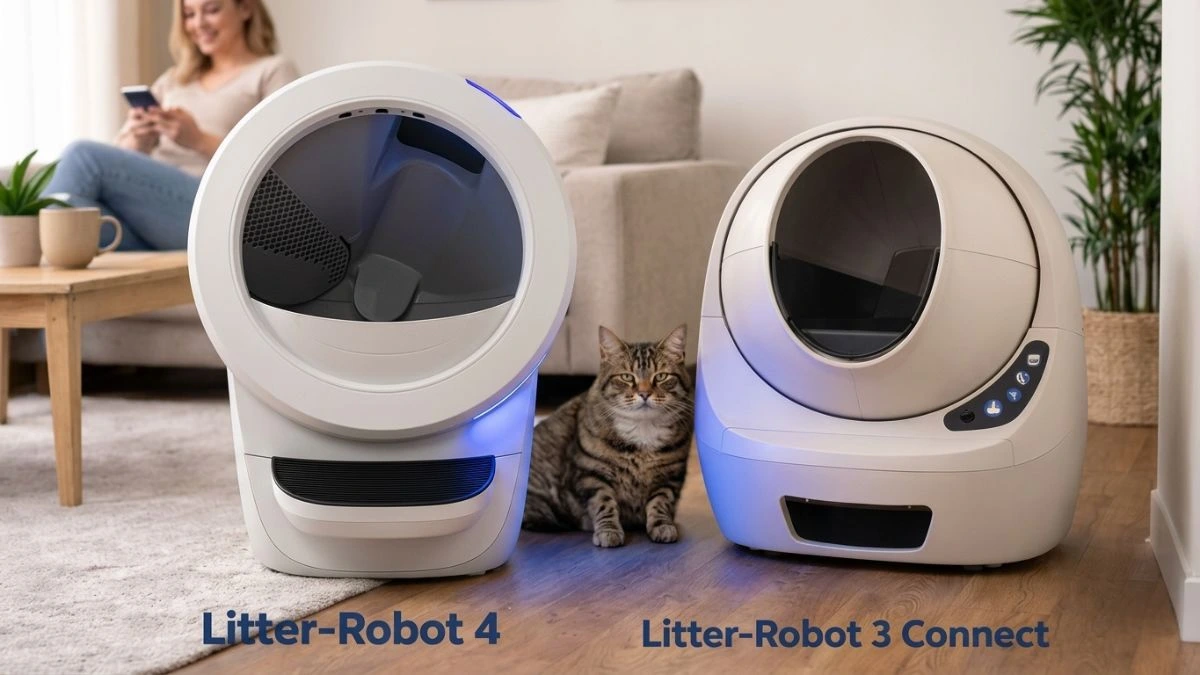
The Litter-Robot 4 (LR4) introduces upgraded sensors, quieter operation, improved odor sealing, and a wider entry that works better for large cats.
The Litter-Robot 3 Connect (LR3), on the other hand, is a proven and reliable model with solid app connectivity—but it uses older sensor technology and tends to be bulkier and louder.
If you’re trying to decide whether the upgrade is truly worth it, this guide breaks down what actually matters in daily use—so you can choose the right model for your home, your budget, and your cat.
The structure is simple and designed to help you make a clear decision.
You’ll start with a quick verdict, followed by a side-by-side comparison of the Litter-Robot 4 vs 3, and then deeper sections covering design, cleaning performance, noise, sensors, odor control, app features, pricing, and overall value.
This guide also includes practical recommendations based on real-life scenarios—whether you have one cat or multiple cats, large breeds, limited space, or a need for quieter operation and smart features.
Key Takeaways
- Litter-Robot 4 (LR4) focuses on a quieter experience, more accurate sensors, and improved odor control—making daily use smoother and more predictable.
- Litter-Robot 3 Connect (LR3) remains a reliable, time-tested option with solid cleaning performance and dependable Wi-Fi features.
- Choose LR4 if you have large cats, care about noise levels, or want a more refined and modern experience.
- Choose LR3 if your priority is saving money while still getting a proven automatic cleaning system that gets the job done.
- This comparison is based on 2026 specifications and consistent real-world user feedback, helping you match each model to your home, your routine, and your budget.
If you already have a clear idea of which model fits your needs, here’s a quick way to check current pricing and availability for both options:
Best Overall Choice
✔️ Best for: Multi-cat homes, quieter operation, and advanced tracking.

- LITTER-ROBOT SUPPLY BUNDLE: Save on the Litter-Robot 4 Supply Bundle, which comes complete with Litter-Robot 4 automatic…
- SELF-CLEANING LITTER BOX: Never scoop again with Litter-Robot 4, the automatic, self-cleaning cat litter box. The patent…
- MONITOR + CONTROL VIA APP: Control the WiFi-enabled sifting litter box straight from the Whisker app. Monitor waste and …
Best Budget-Friendly Option
✔️ Best for: Budget users who want reliable automatic cleaning.
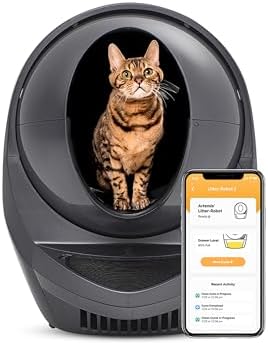
- SELF-CLEANING LITTER BOX: Never scoop again with Litter-Robot 3 Connect – the automatic, self-cleaning cat litter box. T…
- REDUCES LITTER BOX ODORS: The automatic clean cycle and carbon filter help reduce odors compared to standard litter boxe…
- MONITOR + CONTROL VIA APP: Control the smart litter box straight from the Whisker app. Get notifications when the waste …
Quick Verdict: Litter-Robot 4 vs 3 (Which One Should You Choose?)
If you want a quick, no-fluff answer, here it is:
The Litter-Robot 4 is the better choice for most homes in 2026. It’s quieter, more refined, and significantly better at odor control and sensor accuracy—making it easier to live with on a daily basis.
The Litter-Robot 3 Connect still holds its value as a more budget-friendly option. It delivers reliable self-cleaning performance and solid app features, but comes with louder operation, older sensors, and a bulkier design.
In short, choose LR4 for a smoother, more modern experience—especially if you have larger cats or care about noise and convenience.
Choose LR3 if your main goal is saving money while still getting a proven automatic litter box that works well.
For a deeper, hands-on breakdown of performance and features, you can also read our full Litter-Robot 4 review.
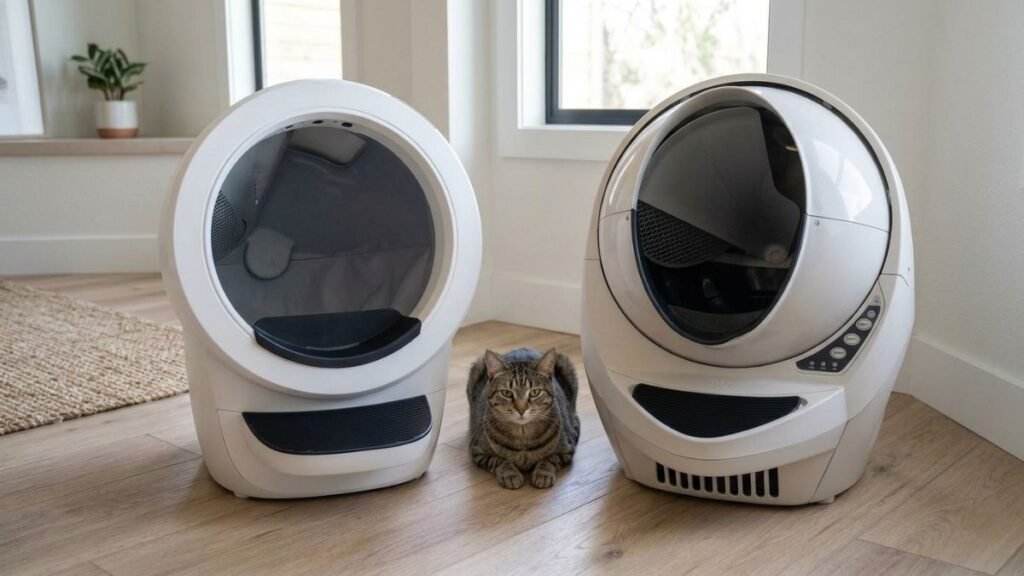
Who should choose Litter-Robot 4
The Litter-Robot 4 is the right choice if you want the most refined, low-maintenance experience possible.
It’s noticeably quieter, more precise with its sensors, and more effective at controlling odor—making it a better fit for daily use, especially in apartments or shared living spaces.
It also performs better with large or tall cats thanks to its wider entry and more accessible design.
Choose the LR4 if you value comfort, consistency, and small upgrades that make a real difference over time.
Who should choose Litter-Robot 3
The Litter-Robot 3 Connect is a strong option if your main goal is saving money while still getting reliable automatic cleaning.
It delivers consistent performance, proven mechanics, and solid app connectivity—especially appealing if you find it at a discounted or refurbished price.
However, it comes with trade-offs: louder operation, older sensor technology, and a larger footprint that requires more space.
Choose the LR3 if you’re comfortable with a slightly less refined experience in exchange for a lower upfront cost.
| Decision Factor | Litter-Robot 4 (LR4) | Litter-Robot 3 (LR3) |
|---|---|---|
| Best for | Owners who want quieter operation, smarter sensors, and a more modern experience | Buyers looking for a lower upfront cost and a proven, time-tested model |
| Noise level | Noticeably quieter, suitable for bedrooms and living areas | Louder during cleaning cycles, better suited for laundry rooms or isolated spaces |
| Cat size suitability | Better for large or tall cats thanks to wider entry and improved accessibility | Works well for average-sized cats, but may feel tight for larger breeds |
| Reliability & parts | Updated hardware with improved components and fewer false-trigger issues | Strong parts availability and large support community |
| Value proposition | Higher upfront cost with better long-term convenience and daily comfort | Lower initial cost with reliable performance and solid long-term value |
Key Differences Between Litter-Robot 4 and 3
The differences between the Litter-Robot 4 vs 3 go beyond small upgrades—they directly impact how each model performs in everyday use.
While both deliver automatic cleaning, the LR4 introduces meaningful improvements in noise reduction, sensor accuracy, odor control, and overall convenience.
In real-world conditions, these upgrades translate into fewer interruptions, smoother cycles, and a more consistent experience—especially in multi-cat households or smaller living spaces.
If odor is one of your main concerns, it’s worth understanding what actually causes it and how to fix it. You can read our full guide on why automatic litter boxes smell and how to fix it.
Another key factor is litter choice. Using the wrong type can affect sensor performance, clumping, and odor control. Here’s a complete guide to the best cat litter for automatic litter boxes.
If you’re still comparing models beyond the LR4 and LR3, check our full list of the best automatic litter boxes in 2026.
Below, we break down the key differences that actually matter—so you can clearly see which model fits your needs.
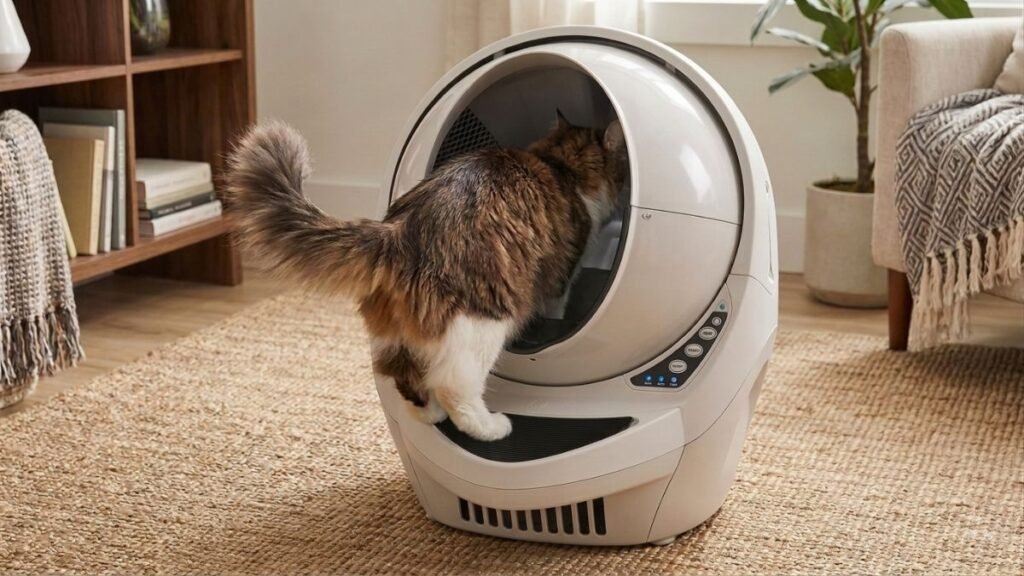
The Litter-Robot 4 features a more compact, modern design with a wider entry, making it more comfortable for larger cats and easier to place in tighter spaces.
It’s also noticeably quieter, thanks to improvements in motor performance and internal design—making it a better fit for living areas, bedrooms, or apartments.
In contrast, the Litter-Robot 3 Connect tends to be louder during cleaning cycles and uses older sensor technology, which can occasionally lead to false starts or less precise detection.
Sensor performance is one of the biggest upgrades in the LR4. Its improved detection system reduces unnecessary cycles and increases overall safety, especially in homes with active or curious cats.
Odor control is another area where the LR4 stands out. With better drawer sealing and improved airflow, it does a more effective job of containing smells between cleaning cycles.
The LR3 still performs well with its carbon filter system, but it relies more on regular maintenance to keep odors under control.
Both models support Wi-Fi and app connectivity. However, the LR4 offers a smoother and more refined app experience, with better tracking and responsiveness.
In terms of price, the LR4 sits in the premium range, while the LR3 Connect is often available at a lower cost—especially through refurbished options—making it a strong value choice.
At-a-Glance Comparison: Litter-Robot 4 vs 3
If you want a quick side-by-side view of the most important differences, this table highlights exactly what separates the Litter-Robot 4 from the Litter-Robot 3 Connect in real-world use.
| Feature | Litter-Robot 4 (LR4) | Litter-Robot 3 Connect (LR3) |
|---|---|---|
| Design & Footprint | Compact, modern design that fits better in smaller spaces | Bulkier design that requires more floor space |
| Entry Size | Wider opening, more comfortable for large breeds | Narrower entry that may feel tight for bigger cats |
| Noise Level | Quieter operation thanks to improved motor and internal design | Louder during cleaning cycles |
| Sensors & Safety | Upgraded sensors with more accurate detection and fewer false triggers | Older sensors with higher chance of false cycles |
| Odor Control | Improved sealing and airflow for better odor containment | Effective carbon filter system but more dependent on maintenance |
| App & Connectivity | More refined app with detailed tracking and smoother performance | Stable app with basic monitoring features |
| Waste Drawer | Similar capacity with improved sealing and odor containment | Comparable capacity with reliable but older sealing design |
| Price | Higher price with premium positioning and newer technology | Lower price, often discounted or available refurbished |
Design, Size, and Space: Which Fits Your Home Better?
Choosing an automatic litter box isn’t just about features—it’s about how well it fits into your daily environment.
Design, size, and entry height all play a direct role in where you can place the unit and how comfortable your cat feels using it.
In real-world use, these details matter more than most people expect. A unit that’s too bulky can limit placement options, while a narrow entry can make larger cats hesitant to use it.
If you’re working with limited space—like an apartment, laundry room, or bathroom layout—dimensions and footprint become even more important.
Below, we break down how each model fits into different types of homes and cat needs.
Litter-Robot 4 design and footprint
The Litter-Robot 4 features a sleeker, more compact design that fits more easily into modern homes.
Its reduced depth makes it a strong option for tighter spaces—like under counters, beside washer-dryer setups, or in smaller laundry rooms and apartments.
The updated materials and subtle LED interface give it a cleaner, more premium look that blends better with contemporary interiors.
In everyday use, the slightly smaller footprint makes a noticeable difference when positioning the unit without disrupting your space.
Just make sure to measure your available area carefully, allowing extra room not only for the unit itself, but also for opening, maintenance, and waste drawer access.
Litter-Robot 3 size and space requirements
The Litter-Robot 3 Connect has a larger, more traditional globe design, which requires more floor space and vertical clearance.
In practice, this can limit where you place it—especially in smaller homes, apartments, or tighter laundry areas.
While its size isn’t necessarily a dealbreaker, it may force you to position it in a more visible or less convenient spot compared to more compact models.
One advantage, however, is the wide availability of accessories and replacement parts, thanks to its longer time on the market.
Entry size and accessibility for large cats
Entry size becomes a critical factor if you have larger or taller cats.
The Litter-Robot 4 offers a wider opening and a lower step, making it easier for big cats to enter, turn comfortably, and use the unit without hesitation.
This is especially important for breeds like Maine Coons or Ragdolls, which need more space and better accessibility.
If you’re specifically looking for options that comfortably fit larger breeds, check our full guide to the best automatic litter boxes for large cats.
The Litter-Robot 3, on the other hand, works well for average-sized cats—but very large cats may find the entry slightly restrictive.
In some cases, cats need time to adjust, especially if they feel confined.
For homes with bigger cats, the LR4 generally provides a more comfortable and natural experience.
| Feature | Litter-Robot 4 (LR4) | Litter-Robot 3 Connect (LR3) |
|---|---|---|
| Overall shape | Sleeker, more compact globe design | Larger, more traditional globe shape |
| Depth / footprint | Reduced depth, easier to fit in tighter spaces | Greater depth, requires more floor space |
| Control panel & finish | Refined LED panel with modern materials and cleaner look | Functional control panel with a more classic design |
| Entry width & step height | Wider entry with a lower step for easier access | Standard entry that may feel tight for very large cats |
| Suitability for large cats | Better suited for large breeds due to improved entry and interior space | Works for most cats, but may feel restrictive for very large breeds |
| Best placement | Ideal for apartments, small laundry rooms, or tight spaces | Better suited for larger areas like open laundry rooms or spare rooms |
Cleaning Performance: Which One Works More Efficiently?
When choosing an automatic litter box, cleaning performance is what truly defines the experience over time.
You want a system that consistently removes waste, avoids clumping buildup, and runs smoothly without constant adjustments.
The Litter-Robot 4 introduces improved motor control and smarter cycle timing, which helps reduce litter sticking to the globe and minimizes incomplete cleaning cycles.
In everyday use, this means fewer interruptions, more consistent performance, and less need for manual intervention.
Its upgraded sensors also allow the unit to detect the right moment to clean, reducing unnecessary cycles. Over time, this can help extend motor lifespan and limit noise exposure.
The Litter-Robot 3 Connect uses a proven rotating globe system that sifts clumps into the waste drawer.
It performs reliably under normal conditions—especially when paired with high-quality clumping litter.
However, its older sensor system can occasionally lead to extra cycles or delayed responses, particularly if dust builds up or usage patterns vary.
In real-world feedback, users often report that the LR4 completes cycles more efficiently and with fewer false triggers, while the LR3 remains dependable but may require more occasional adjustments.
Below is a quick comparison of how both models handle cleaning cycles, timing, and long-term maintenance.
| Aspect | Litter-Robot 4 (LR4) | Litter-Robot 3 Connect (LR3) |
|---|---|---|
| Core cleaning method | Sifting globe with improved motor control for smoother operation | Sifting globe with proven, time-tested mechanics |
| Sensor feedback | More accurate presence detection with fewer false cycles | Reliable but older sensors that may occasionally misread |
| Cycle timing | Optimized timing reduces clumping buildup and incomplete cycles | Fixed timing that works well but may require occasional manual checks |
| Motor strain & longevity | Fewer unnecessary cycles, helping reduce long-term wear | Durable system, but extra cycles can increase wear over time |
| Real-world consistency | Faster cycles with fewer interruptions and partial cleans | Consistent performance with occasional manual adjustments |
| Ease of maintenance | Requires less frequent sensor cleaning | Needs more regular cleaning of sensors and internal components |
| Overall efficiency | Higher overall efficiency in most real-world scenarios | Strong performance with slightly more variability in daily use |
Noise Level: Is Litter-Robot 4 Really Quieter?
Noise level is one of the most overlooked—but most important—factors when choosing an automatic litter box.
It directly affects where you can place the unit and how comfortable it is to live with on a daily basis.
Real-world noise comparison
In real-world use, the Litter-Robot 4 is noticeably quieter.
Its improved motor and internal damping system reduce vibration and sound, making it much more suitable for bedrooms, living areas, or home offices.
The Litter-Robot 3 Connect, on the other hand, produces more noticeable noise—especially during startup and rotation.
While it’s not excessively loud, it can be distracting in quiet environments, which is why many users prefer placing it in a laundry room, basement, or more isolated area.
Noise perception also depends on your flooring and room setup.
Hardwood floors tend to amplify sound, while carpet helps absorb it. Placement plays a big role in how noticeable each cycle feels.
If you plan to keep the unit near sleeping or working areas, the LR4 is generally the better choice.
Quick tips to evaluate noise in your space
- Test placement near bedrooms or quiet areas
- Compare performance on hard floors vs carpet
- Run cleaning cycles during the day to gauge noise levels
A simple listening test in your actual setup can quickly show how much the LR4’s improvements matter in everyday life.
Sensors, Safety, and Reliability
When it comes to automatic litter boxes, safety and reliability are non-negotiable.
You want a system that not only cleans efficiently but also protects your cat during every cycle—without false starts or unexpected movement.
Advanced sensors in Litter-Robot 4
The Litter-Robot 4 features a more advanced sensor system that improves both accuracy and safety.
It can better detect your cat’s presence—not just movement like a tail or paw—which significantly reduces the risk of unwanted cycles.
In everyday use, this results in fewer interruptions and a more predictable cleaning routine.
It also provides clearer diagnostics through the Whisker app, making it easier to identify and fix issues quickly without guesswork.
Sensor limitations in Litter-Robot 3
The Litter-Robot 3 Connect uses an older sensor system that still performs well in most situations, but has some limitations.
It may struggle with lighter cats, kittens, or uneven litter levels, which can occasionally lead to false triggers or delayed cycles.
While firmware updates have improved reliability over time, it doesn’t reach the same level of precision as the newer model.
Common reliability and maintenance factors
Both models are built for long-term use, but regular maintenance is essential to keep performance consistent.
This includes:
- Emptying the waste drawer regularly
- Replacing carbon filters as needed
- Cleaning sensors and internal components
- Checking moving parts like belts and seals
In real-world use, the most common issues tend to be clump buildup, sensor interference from dust, or normal wear over time.
With proper care, both units can last for years—but the LR4 is designed to reduce failure points and minimize long-term maintenance.
Sensors & Reliability Comparison: Litter-Robot 4 vs 3
| Aspect | Litter-Robot 4 (LR4) | Litter-Robot 3 Connect (LR3) |
|---|---|---|
| Sensor types | Advanced proximity, weight, and motion sensors for more accurate detection | Earlier-generation weight and position sensors |
| False trigger handling | Better detection logic with fewer false starts and interrupted cycles | Reliable in most cases, but more prone to false positives |
| Diagnostics | Enhanced app reporting with clearer alerts and troubleshooting insights | Basic fault codes with limited diagnostic detail |
| Maintenance needs | Regular cleaning with fewer adjustments over time | Requires more frequent adjustments and sensor cleaning |
| Expected lifespan | Designed to reduce failure points and improve long-term durability | Durable with proper care, but more affected by long-term wear |
| Support & warranty | Current Whisker priority with ongoing updates and support resources | Still supported, but receives fewer updates as an older model |
When choosing between safety and long-term durability, it’s important to consider your cat’s behavior, size, and activity level.
The Litter-Robot 4 stands out with more advanced sensors, making it a safer and more reliable option for kittens, lighter cats, and highly active pets.
The Litter-Robot 3 Connect still performs well in most households, but its older sensor system may require more attention in specific situations.
In both cases, consistent maintenance plays a key role. Keeping sensors clean, replacing filters, and checking internal components regularly will help ensure long-term performance and reliability.
Odor Control and Waste Management
Odor control is one of the biggest deciding factors when choosing an automatic litter box.
No matter how advanced the system is, if it doesn’t keep smells under control, it quickly becomes a problem in everyday life.
This is especially important in apartments, smaller homes, or multi-cat households where odor can build up faster.
In real-world use, how each model handles waste sealing, airflow, and cleaning frequency makes a noticeable difference.
If odor has been an issue for you, it’s worth understanding what causes it and how to fix it. You can read our full guide on why automatic litter boxes smell and how to fix it.
Below, we break down how each model performs when it comes to odor control and waste management—so you can choose the one that fits your home and tolerance level.
Odor control system comparison
The Litter-Robot 4 offers a more advanced approach to odor control, with improved sealing and airflow designed to direct smells toward the carbon filter more efficiently.
In real-world use, this results in noticeably less odor escaping between cleaning cycles—especially in enclosed or smaller spaces.
The Litter-Robot 3 Connect also performs well, using a sealed waste drawer and carbon filter system to contain smells.
However, it relies more heavily on regular maintenance. If the drawer isn’t emptied frequently or the filter isn’t replaced on time, odor can become more noticeable.
Both models benefit from consistent upkeep, but the difference becomes clear over time.
The LR4 does a better job of minimizing odor with less effort, while the LR3 can deliver similar results—but only with more frequent maintenance and attention.
Waste drawer capacity and sealing
Both models offer a similar waste drawer capacity, which is typically enough to handle several days of use in single-cat or low-traffic households.
In multi-cat homes, however, you should expect to empty the drawer more frequently regardless of the model.
The Litter-Robot 4 improves on this with a more refined sealing system, helping contain odors more effectively without changing overall capacity.
In everyday use, this means fewer smells escaping between cleanings—even when the drawer is partially full.
The Litter-Robot 3 Connect still performs reliably, but its older sealing design depends more on consistent maintenance to keep odors under control.
If you have multiple cats, it’s also worth considering how often you’re willing to empty the drawer, as this directly impacts odor levels.
Be cautious with aftermarket liners or accessories, as they can affect how well the drawer seals and may reduce overall odor performance.
Odor & Waste Management Comparison: Litter-Robot 4 vs 3
| Feature | Litter-Robot 4 (LR4) | Litter-Robot 3 Connect (LR3) |
|---|---|---|
| Primary odor strategy | Improved sealing with directed airflow and optimized carbon filter placement | Sealed drawer with carbon filter; relies more on frequent emptying |
| Drawer volume (typical) | Similar capacity to LR3; handles several days in single-cat households | Comparable capacity; suitable for a few days of use in single-cat homes |
| Seal quality | Refined drawer design with tighter sealing to reduce odor leaks | Good seal when properly aligned, but more prone to odor if not emptied regularly |
| Maintenance impact | More forgiving, with less odor escape between cleanings | More dependent on strict maintenance and timely filter replacement |
| Best fit | Homes looking for better odor control with moderate maintenance effort | Homes willing to empty frequently to keep odor under control |
App Features and Smart Tracking
Both models allow you to monitor and control the unit remotely through the Whisker app, giving you access to real-time status updates, cycle notifications, and alerts when the waste drawer is full.
In everyday use, this makes it easier to stay on top of maintenance and quickly respond to any issues without constantly checking the unit.
The Litter-Robot 4 takes things further with more advanced tracking and detailed insights.
It provides precise cycle logs, visit tracking, and waste drawer status, giving you a clearer picture of your cat’s habits and the unit’s performance over time.
These improvements come from upgraded sensors and more refined data reporting, resulting in more accurate and reliable information.
The Litter-Robot 3 Connect focuses on core functionality.
It offers stable remote monitoring, basic cycle notifications, and essential status updates—everything you need for simple, dependable control.
The main difference comes down to detail and responsiveness.
The LR4 delivers deeper analytics and faster diagnostics, while the LR3 keeps things straightforward and easy to manage.
If you prefer more data, insights, and ongoing feature updates, the LR4 offers a more advanced experience.
If your priority is simplicity and reliability, the LR3 Connect still does the job well.
Below is a quick comparison to help you evaluate which app experience fits your routine.
App Features Comparison: Litter-Robot 4 vs 3
| Feature | Litter-Robot 4 (Whisker App) | Litter-Robot 3 Connect App |
|---|---|---|
| Cycle logs | Detailed timestamps with precise tracking of each cleaning cycle | Basic cycle history with limited detail |
| Visit tracking | Per-visit tracking with trends and usage insights | Simple visit counts without detailed analytics |
| Notifications | Custom alerts with enhanced diagnostics and real-time updates | Standard push notifications for cycles and errors |
| Smart home integration | Expanding support with API improvements and voice assistant compatibility | Core integrations with fewer advanced automation options |
| Future-proofing | Ongoing feature updates and improvements expected | Stable platform with less frequent updates |
If you value detailed insights, automation, and advanced tracking, the Litter-Robot 4 gives you more control and a deeper understanding of your cat’s behavior over time.
If you prefer a simpler, no-fuss experience with reliable alerts and basic monitoring, the Litter-Robot 3 Connect remains a practical and dependable choice.
Price vs Value: Is the Upgrade Worth It?
Choosing between the Litter-Robot 4 and the Litter-Robot 3 isn’t just about price—it’s about what you get in return over time.
While the LR4 comes with a higher upfront cost, it delivers meaningful upgrades in everyday use, including quieter operation, improved sensors, and better odor control.
In real-world scenarios, these improvements translate into less maintenance, fewer interruptions, and a more seamless experience overall.
The Litter-Robot 3 Connect, on the other hand, offers a more budget-friendly entry point.
It handles the core job well and remains a solid option for those who want reliable performance without paying a premium.
However, the trade-off becomes more noticeable over time.
You may deal with more frequent maintenance, slightly higher noise levels, and less precise sensor behavior compared to the newer model.
When thinking long-term, it’s not just about the initial price—it’s about convenience, consistency, and how much effort you’re willing to put into daily upkeep.
Price comparison
At first glance, the Litter-Robot 3 Connect is the more affordable option.
It’s commonly available at a lower price point, especially through discounts, bundles, or refurbished units—making it a strong choice for budget-conscious buyers.
The Litter-Robot 4, on the other hand, comes at a higher upfront cost due to its newer technology and upgraded features.
However, price alone doesn’t tell the full story.
Both models use similar ongoing supplies, including filters, liners, and maintenance kits, so recurring costs tend to be comparable.
That said, availability and fit of accessories can slightly impact long-term convenience and cost efficiency—especially with older models.
Price & Cost Comparison: Litter-Robot 4 vs 3 (2026)
Prices can vary depending on promotions, bundles, and availability. Always check the latest price before purchasing.
| Item | Litter-Robot 4 (LR4) – Typical 2026 | Litter-Robot 3 Connect (LR3) – Typical 2026 |
| MSRP / Retail price | $599–$699 (typical range, varies by retailer and bundle) | $349–$499 (typical range, often lower during sales or refurbished deals) |
| Common sale price | $499–$599 | $299–$399 |
| Refurbished / clearance | $429–$549 | $229–$329 |
| Annual consumables | $40–$80 | $40–$80 |
| Replacement parts | $60–$180 | $50–$160 |
| Resale value (after ~2 years) | Higher retention due to newer model demand | Lower retention as an older-generation unit |
If you’re deciding based on value, the Litter-Robot 3 offers a lower upfront cost, while the Litter-Robot 4 delivers a more refined experience with better sensors, quieter operation, and improved odor control.
Long-term value
When evaluating long-term value, it’s important to look beyond the initial price and focus on everyday experience.
The Litter-Robot 4 delivers a smoother, quieter, and more automated routine. With better sensors, improved odor control, and fewer unnecessary cycles, it reduces the need for constant adjustments over time.
In real-world use, this translates into less maintenance, fewer interruptions, and a more consistent experience—especially in busy or multi-cat households.
The Litter-Robot 3 Connect remains a solid budget-friendly option.
It performs well in most scenarios, but over time you may need to deal with more manual intervention, slightly higher noise levels, and less precise sensor behavior.
What impacts long-term cost?
- Maintenance & repairs:
- The LR4 is designed to reduce unnecessary wear, while the LR3 may require more frequent adjustments over time
- Resale value:
- The LR4 tends to retain value better, helping offset its higher upfront cost
- Daily experience:
- Quieter operation, smarter features, and fewer issues can make a noticeable difference over months and years
Final value perspective
If your priority is convenience, comfort, and long-term ease of use, the Litter-Robot 4 is often worth the investment.
If you’re focused on saving money upfront and still getting reliable performance, the Litter-Robot 3 Connect remains a practical choice.
Ultimately, the decision comes down to one question:
Is a smoother, quieter, and more automated experience worth the higher initial cost for you?
Pros and Cons of Each Model
If you want a quick, side-by-side breakdown, these pros and cons highlight how each model performs in real-world use—helping you choose based on your space, budget, and daily routine.
Litter-Robot 4: Pros and Cons
Pros
- Quieter operation, ideal for apartments, bedrooms, and noise-sensitive environments
- More advanced sensors that reduce false cycles and improve overall safety
- Better odor control with improved sealing and airflow design
- Wider entry and more accessible design for large or tall cats
- More refined app experience with detailed tracking and diagnostics
Cons
- Higher upfront cost compared to older models
- Some parts and accessories may differ due to newer design (compatibility should be checked)
Litter-Robot 3 Connect: Pros and Cons
Pros
- Lower upfront cost, especially with refurbished or discounted units
- Proven cleaning system with a long track record of reliability
- Wide availability of replacement parts and strong community support
- Solid app functionality for basic monitoring and alerts
Cons
- Louder operation, which may be noticeable in quieter environments
- Older sensor system with a higher chance of false cycles
- Larger footprint, requiring more space for placement
- Odor control is effective but more dependent on regular maintenance
Quick takeaway
The Litter-Robot 4 focuses on comfort, automation, and a more refined daily experience, while the Litter-Robot 3 Connect prioritizes affordability and proven performance.
Final Verdict: Which One Should You Choose?
Choosing between the Litter-Robot 4 and the Litter-Robot 3 Connect ultimately comes down to how much value you place on convenience, comfort, and long-term ease of use.
If you want the most refined experience—with quieter operation, smarter sensors, better odor control, and less day-to-day maintenance—the Litter-Robot 4 is the clear upgrade.
It’s especially worth it for:
- Multi-cat households
- Large or tall cats
- Apartments or noise-sensitive environments
- Owners who want a more automated, low-maintenance routine
On the other hand, the Litter-Robot 3 Connect remains a strong and practical choice if your priority is saving money upfront.
It’s a good fit for:
- Budget-conscious buyers
- Single-cat or low-traffic households
- Users who don’t mind occasional adjustments
- Those who want a reliable system without premium features
Final decision
If your budget allows, the Litter-Robot 4 delivers a noticeably better everyday experience and is the best long-term investment for most homes.
If you’re looking for a more affordable entry point and are comfortable with a few trade-offs, the Litter-Robot 3 Connect still gets the job done reliably.
Bottom line
Choose Litter-Robot 4 if you want convenience, quieter performance, and a more advanced system
Choose Litter-Robot 3 Connect if you want to save money and still get dependable core functionality
Best for single-cat homes
If you have a single cat and keep up with regular maintenance, the Litter-Robot 3 Connect offers excellent value.
It delivers reliable automatic cleaning, solid performance, and essential Wi-Fi alerts—all at a more affordable price point.
Choose the LR3 if your priority is saving money while still getting dependable daily performance.
However, if you prefer a quieter experience with more precise sensors and smoother app tracking, the Litter-Robot 4 can still be worth the upgrade—even in a single-cat household.
Best for multiple cats
For households with two or more cats, the Litter-Robot 4 is generally the better choice.
It’s designed to handle higher daily usage, with improved odor control and more reliable sensor performance—even with frequent cycles.
In real-world use, this means fewer issues, more consistent cleaning, and a better overall experience in busy homes.
You’ll still need to empty the waste drawer more often, but the LR4 does a better job of keeping odors contained between cleanings.
If you want a deeper breakdown of top options for multi-cat households, check our guide to the best automatic litter boxes for multiple cats.
Overall, if you’re managing multiple cats, the LR4 offers more stability, less hassle, and better long-term performance.
Best for budget users
If your main priority is saving money, the Litter-Robot 3 Connect offers the best overall value.
It’s often available at a significantly lower price—especially through refurbished units or seasonal discounts—while still delivering reliable automatic cleaning and essential smart features.
In everyday use, it handles the core job well without requiring a premium investment.
Choose the LR3 if your focus is getting dependable performance at the lowest possible cost.
However, keep in mind that the lower price comes with trade-offs, including more noise, less advanced sensors, and a slightly higher need for manual adjustments over time.
Best for tech-focused users
If you’re looking for a more advanced, connected experience, the Litter-Robot 4 stands out.
With improved diagnostics, smoother tracking, and ongoing feature updates, it offers a more modern and refined level of control—especially for tech-savvy users.
In everyday use, this means better visibility into your cat’s habits, faster issue detection, and a more seamless app experience overall.
So the real question becomes:
Is the Litter-Robot 4 worth it for your home?
If you expect heavy daily use, prefer quieter operation, and want the most advanced smart features available, the LR4 delivers a noticeably better experience.
Best Use Cases: Litter-Robot 4 vs 3
| Use Case | Recommended Model | Why It Fits |
|---|---|---|
| Single-cat, low budget | Litter-Robot 3 Connect | Reliable cleaning, lower upfront cost, and essential Wi-Fi alerts |
| Multi-cat households | Litter-Robot 4 | Better odor control, stronger sensors, and handles frequent daily cycles |
| Cost-conscious upgrades | Litter-Robot 3 (refurbished) | Best value for automated cleaning with solid features at a lower price |
| Tech enthusiasts | Litter-Robot 4 | Advanced app tracking, diagnostics, and quieter overall performance |
These recommendations are designed to help you confidently choose between the Litter-Robot 4 and the Litter-Robot 3 Connect based on what matters most in your daily routine.
Take into account your budget, the number of cats in your home, and how important features like noise level, automation, and smart tracking are to you.
When you align the right model with your needs, both options can deliver a cleaner, more convenient litter management experience.
Final Verdict
The Litter-Robot 4 stands out as the best overall choice for most households.
With quieter operation, more advanced sensors, improved odor control, and a more refined design, it delivers a noticeably better day-to-day experience—especially in multi-cat homes, apartments, or for owners who value convenience.
If you’re willing to invest more upfront, the LR4 offers a smoother, more automated, and lower-maintenance routine over time.
The Litter-Robot 3 Connect, however, remains a strong budget-friendly alternative.
It provides reliable automatic cleaning, essential smart features, and a proven system at a significantly lower price—making it a great option for cost-conscious buyers.
Final decision
Choose Litter-Robot 4 if you want the best overall experience with less noise, better sensors, and improved odor control
Choose Litter-Robot 3 Connect if you want dependable performance at a lower upfront cost
Bottom line
Both models can transform your daily routine—but the right choice depends on how much you value comfort, automation, and long-term convenience.
If budget allows, the Litter-Robot 4 is the clear upgrade.
If not, the Litter-Robot 3 Connect still delivers solid performance and great value.
Frequently Asked Questions: Litter-Robot 4 vs 3 (2026)
Is Litter-Robot 4 better than Litter-Robot 3?
Yes, for most users, the Litter-Robot 4 is a clear upgrade. It’s quieter, has more advanced sensors, and offers better odor control. The Litter-Robot 3 Connect is still reliable, but the LR4 delivers a more refined and low-maintenance experience.
What is the main difference between Litter-Robot 4 and 3?
The biggest differences are noise level, sensor accuracy, and odor control. The LR4 is quieter and more precise, while the LR3 is more affordable and uses older—but still effective—technology.
Is Litter-Robot 4 worth the extra cost?
Yes, if you value convenience, quieter operation, and better long-term performance. If you’re on a tighter budget or have a single cat, the LR3 Connect remains a strong and more affordable alternative.
Which model is better for multiple cats?
The Litter-Robot 4 is better for multi-cat households. It handles frequent use more efficiently, offers better odor control, and has more reliable sensors under heavy usage.
Which model is better for large cats?
The Litter-Robot 4 is more suitable for large breeds due to its wider entry and improved interior space, making it more comfortable for bigger or taller cats.
How do noise levels compare between LR4 and LR3?
The Litter-Robot 4 is noticeably quieter thanks to its improved motor and internal design. The LR3 is louder, especially during cleaning cycles, and may be more noticeable in quiet environments.
Do both models support Wi-Fi and the app?
Yes, both models support Wi-Fi and the Whisker app. However, the LR4 provides more advanced tracking, better diagnostics, and a smoother app experience.
Which model controls odor better?
The Litter-Robot 4 offers better odor control with improved sealing and airflow. The LR3 performs well but requires more frequent maintenance to keep odors under control.
How often do you need to empty the waste drawer?
It depends on the number of cats. In single-cat homes, every few days to a week is typical. In multi-cat households, you may need to empty it every 2–4 days to maintain performance and odor control
Is Litter-Robot 3 Connect still worth buying in 2026?
Yes, especially if you find it at a discounted or refurbished price. It remains a reliable and cost-effective option, even though it lacks some of the newer features found in the LR4