

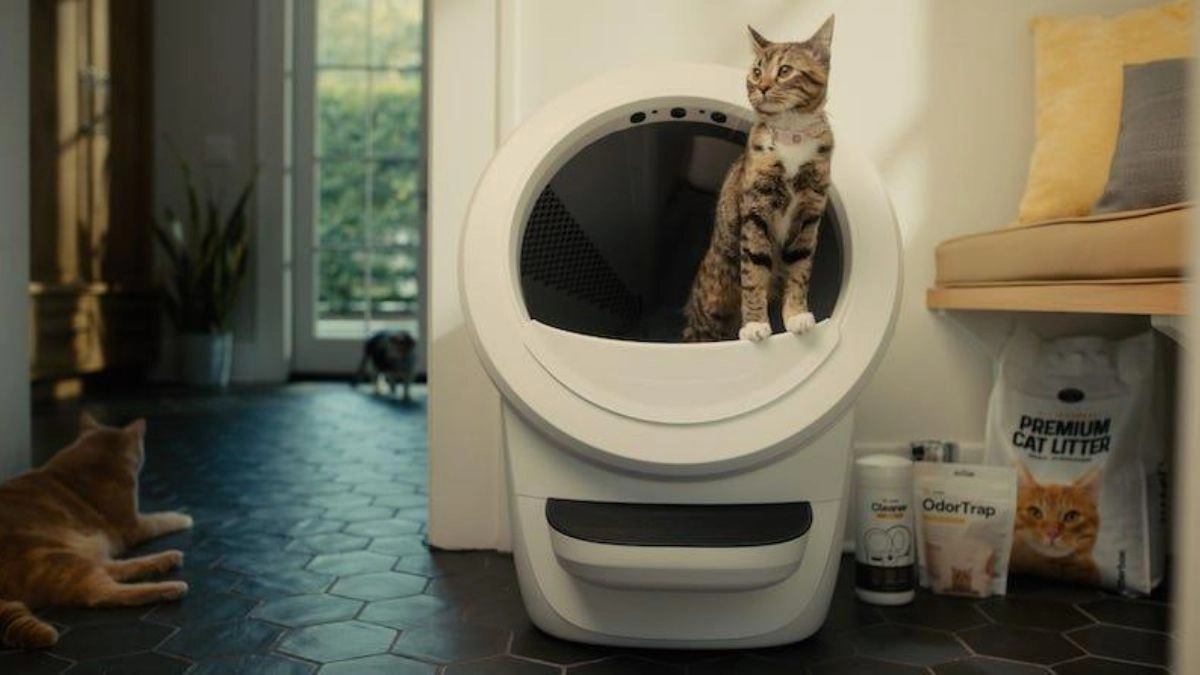
Why Your Automatic Litter Box Still Smells (And How to Fix It Fast)
This article may contain affiliate links. We may earn a commission at no extra cost to you.
Quick Answer: Your automatic litter box smells because of hidden waste buildup, bacteria, saturated filters, or poor ventilation. Even self-cleaning systems can trap odor in areas you don’t see, which leads to persistent smells if not properly maintained.
You clean it. You empty the waste drawer. And still… the smell comes back.
If your automatic litter box still smells, you’re not alone — and the problem usually isn’t what you think.
Many cat owners expect a self-cleaning litter box to keep their home fresh, but persistent odors caused by ammonia and bacteria are more common than expected.
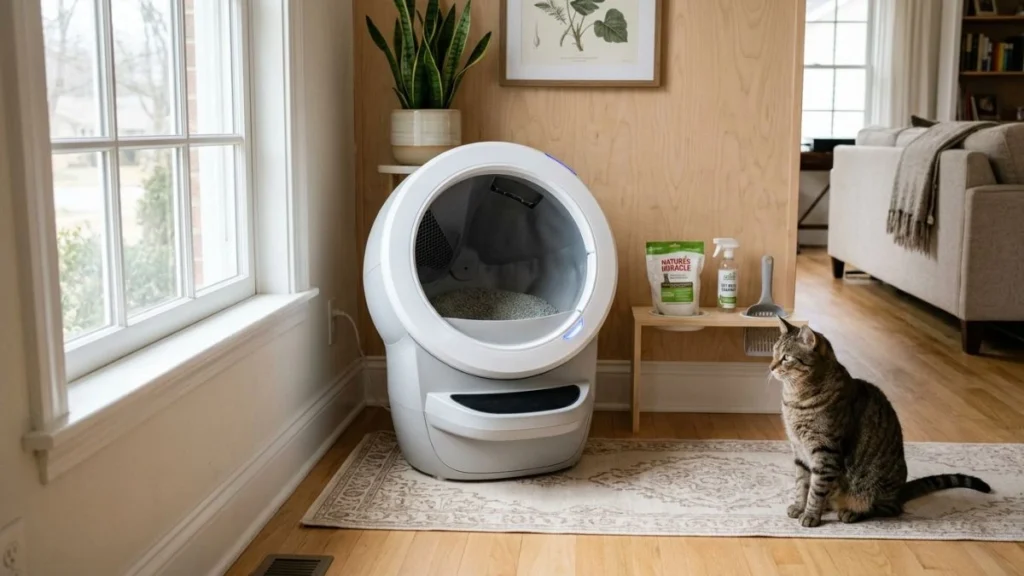
In this guide, you’ll discover why your automatic litter box still smells and the exact steps to fix it.
We’ll break down the most common causes of odor in self-cleaning litter boxes and show you what actually works in real-world use.
Here’s what you’ll learn:
- Simple daily habits that prevent odor buildup
- The best litter types for automatic boxes
- How placement and airflow affect smell
- When diet or health issues may be the hidden cause
- And the products that actually eliminate odor, not just mask it
Many cat owners switch to automatic litter boxes expecting better odor control. In our Litter-Robot 4 Review (2026), we break down whether this smart litter box is really worth it.
Ready to make your home smell fresh again? We’ll walk you through simple, practical steps to eliminate odor, improve cleaning routines, and keep your litter box working the way it should.
Understanding automatic litter box smell: what makes self-cleaning boxes still stink
Automatic litter boxes aim to keep homes clean and reduce scooping. Yet, many owners still notice a lingering smell. It’s important to understand why and how to tackle this issue.
How automatic cleaning mechanisms can leave residual odor
Units with rakes, drums, and scoops move waste into a bin. But, urine and fecal particles often stay behind. Bacteria then break them down, causing the smell.
Parts that handle waste rarely get a full clean. This buildup in tight spots is a major source of the smell.
Common differences between manual and automatic odor buildup
Manual litter boxes get a thorough clean often. This limits bacteria growth and smell.
Automatic boxes, however, hide waste in sealed areas. This makes it seem cleaner, but odors can build up until a deep clean.
Why electronics, seals, and trap compartments retain smell
Parts like rubber gaskets and motor cavities absorb smells. Scratches on plastic can trap bacteria and odors.
Sealed areas can trap smells, making them worse. Filters help, but need to be replaced to keep the air fresh. Neglecting these areas can lead to ongoing smell problems.
Cause: Infrequent waste removal and bacteria growth in self-cleaning units
Waste left in a tray or bin is the main cause of automatic litter box smell. Urine quickly breaks down into ammonia. Bacteria start multiplying in 24 hours, pushing odors up.
Even self-cleaning timers can’t stop this process once waste builds up.
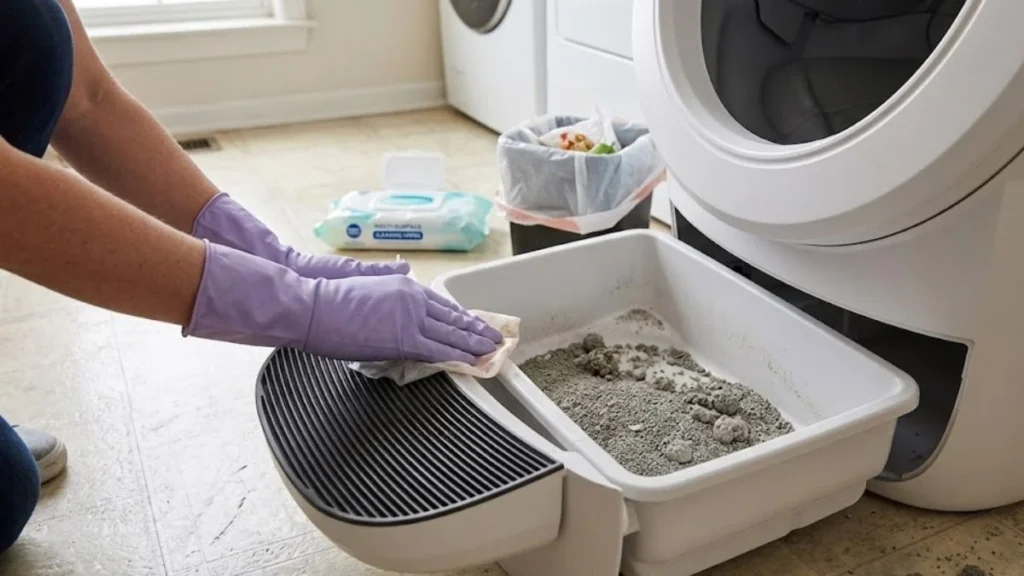
How leftover waste in trays and bins generates ammonia and bacterial odors
Urine turns into ammonia through bacteria when it sits. This ammonia is strong and can be smelled in the air. Solid waste also carries bacteria that release smells as they break down.
Small gaps and scratches in plastic give bacteria places to hide. This makes odors worse.
Recommended scooping and bin-emptying frequency for single- and multi-cat homes
For single-cat homes, scoop at least once a day. Empty the waste drawer or bin once a week. Wash the drawer monthly to remove buildup.
Multi-cat homes need more attention. Scoop several times a day. Empty waste drawers two to three times a week. Wash parts every two to four weeks to keep smells down.
Cleaning checklist: safely washing the waste drawer and mechanical parts
- Unplug the unit and follow the manufacturer’s instructions before any cleaning.
- Remove the waste drawer or bin and any liners.
- Scoop daily and dispose of waste into a sealed trash bag.
- Wash the drawer, rake, and parts weekly with warm water and mild unscented soap.
- Avoid bleach; mixing bleach with ammonia can create toxic fumes that harm people and pets.
- Inspect for scratches and hidden crevices. Use a soft brush to remove trapped material.
- Dry parts completely before reassembly to prevent mold and to support long-term automatic litter box odor control.
- Avoid heavily scented cleaners that may deter cats and mask rather than remove causes of smell.
| Household Type | Scooping Frequency | Waste Drawer Emptying | Full Wash Schedule |
|---|---|---|---|
| Single-cat | At least once daily | Weekly | Monthly |
| Multi-cat (2–3 cats) | Multiple times daily | 2–3 times per week | Every 2–4 weeks |
| Heavy use (4+ cats or frequent guests) | After each use when possible | Every 2–3 days | Every 1–2 weeks |
Cause: Using the wrong litter for automatic litter boxes and odor control
The right litter is key for controlling odor and the automatic litter box’s performance. Clumping clay, silica crystal, and natural litters differ in how they handle waste and smells. Choose litter that fits your machine, your cat’s needs, and your preferences to reduce odors.
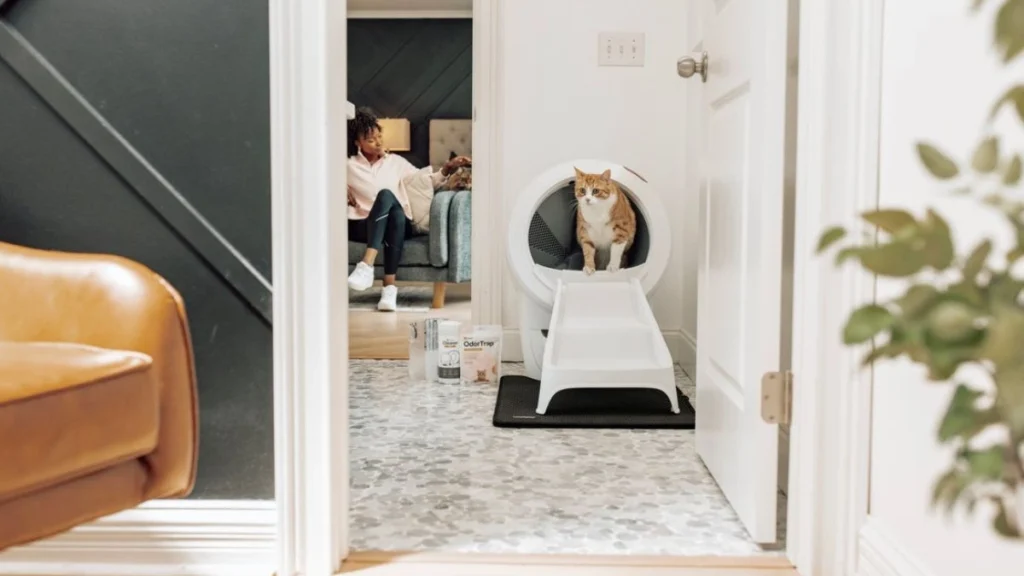
Clumping litter for automatic boxes is often the best choice. It forms tight clumps that are easy to clean. This type of litter traps waste well, reducing ammonia smells. However, clay litters can be dusty, so pick a low-dust option and follow the manufacturer’s advice.
Silica crystal litter is great for absorbing moisture and controlling ammonia. Its granular texture absorbs quickly, keeping the waste area dry. But, some cats might not like it, so try a small bag first.
Natural litter odor control options like tofu, wheat, or corn are good for the environment and gentle on paws. They can naturally neutralize smells but might need more frequent changes. Look for natural additives like activated charcoal for better odor control.
The size and absorption rate of litter particles affect both smell and how well the litter box works. Too small and it clogs, too large and it doesn’t clump well. Fast absorption helps prevent smells and keeps the litter box clean.
What’s added to the litter is important too. Litters with baking soda, activated charcoal, or carbon neutralize smells instead of covering them up. This is better for your cat’s health and keeps smells under control.
Changing litter types needs a careful plan. Start by mixing old and new litter over 7-10 days, increasing the new mix each day. Watch your cat for any signs of discomfort. Always check your litter box’s manual before switching litter to avoid problems.
When picking litter for your automatic box, consider odor control, mechanical fit, and your cat’s comfort. A good choice saves time, reduces smells, and keeps your litter box working well.
Cause: Tray and housing materials absorbing and trapping odors
The materials of a litter box play a big role. Over time, trays and housings absorb oils, urine, and tiny scratches that hold onto smells. Often, the smell comes from these trapped residues more than from fresh waste.
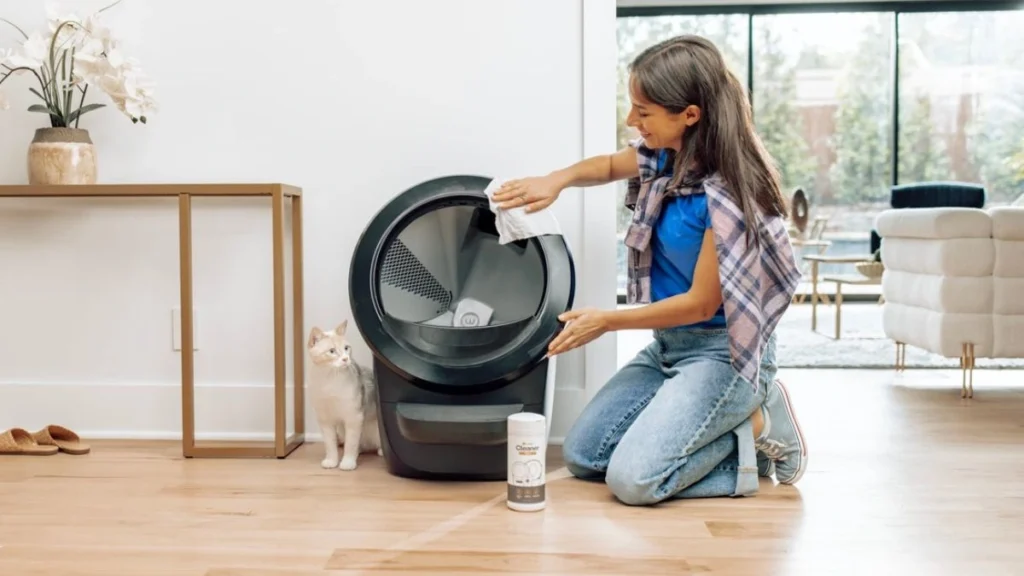
Check surfaces every month, especially on older units. Look for deep scratches and discoloration where bacteria and smells can hide. If cleaning doesn’t work, you might need to replace parts to get rid of the smell.
Why scratched plastic keeps odors and when to replace parts
Scratches create tiny grooves that trap oils and waste. Even strong cleaners can’t reach these spots, so smells stay. If washing doesn’t get rid of the smell, look for visible scratches or cloudiness.
Replace the waste drawer, tray, or liner if cleaning doesn’t remove the smell. In busy homes, check and replace trays monthly to avoid lingering odors.
Cleaning agents and methods that remove embedded odors safely
Start with warm water and mild, unscented soap for cleaning. This removes surface dirt without harsh fumes that can react with ammonia. Avoid bleach because it can produce dangerous gases and may scare cats away.
Use enzyme cleaners on parts that smell bad; these break down odor-causing molecules. Follow the instructions and rinse well before putting them back.
Use baking soda carefully on non-porous surfaces to absorb smells. Place activated charcoal nearby to help the air. Don’t mix cleaners. Test any product on a small area first to make sure it won’t damage the finish or seals.
Material upgrades and aftermarket parts that reduce lasting scent
Switching to stainless steel or a coated tray reduces scratches and odor absorption. Brands and accessories offer new bins, sealed bags, and carbon filters to reduce odor transfer between cleanings.
Aftermarket odor-control liners and carbon filter kits work well with popular units. When picking parts, make sure they fit your model, like Litter-Robot or other automatic designs.
| Issue | Easy Fix | When to Replace |
|---|---|---|
| Surface scratches trapping odor | Clean with enzyme cleaner, rinse, dry | Visible deep grooves or clouding after cleaning |
| Faded or discolored tray | Mild soap wash, baking soda spot treatment | Persistent discoloration and smell despite cleaning |
| Sealed bin or filter failure | Install replacement carbon filter or sealed bag | Filter saturated or sealed bag torn |
| Recurring litter robot smell problem | Full parts inspection, enzyme treatment, charcoal nearby | Smell returns within days of cleaning |
| General litter box materials odor | Switch to coated or stainless tray, add aftermarket liners | Multiple components show wear or retain odor |
Cause: Poor placement and ventilation around the automatic litter box
Where you place your automatic litter box matters a lot. A spot with bad air flow traps moisture. This makes the litter stay wet, letting bacteria and ammonia grow. This leads to a strong smell, even when the litter box is working right.
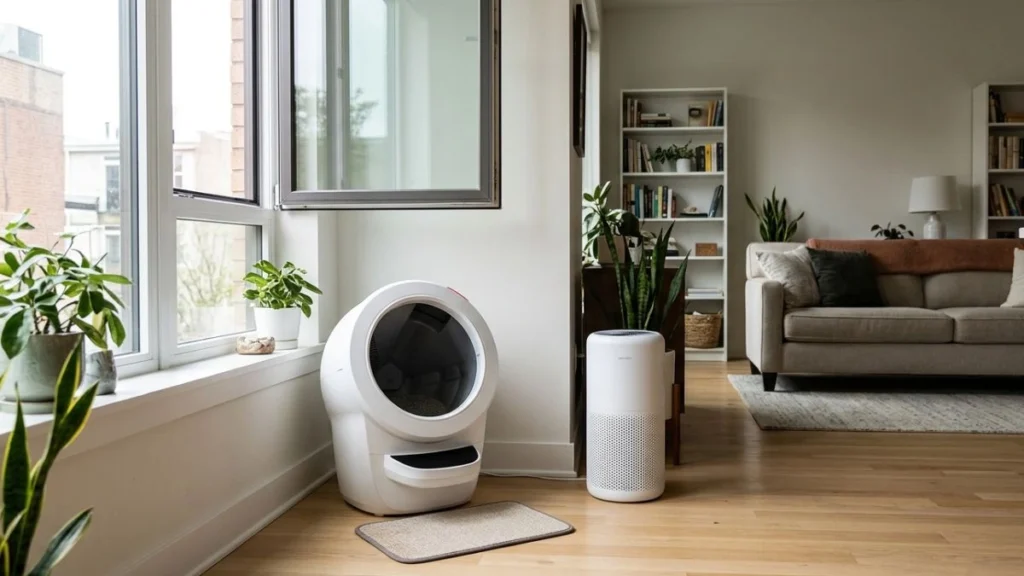
High humidity makes smells worse. Small places like closets, tight bathrooms, and basements with little air movement trap air. This air gets full of odor molecules, making it hard for fresh air to come in.
How humidity and enclosed spaces worsen odors
When litter is damp, urine turns into ammonia faster. Bacteria love moist places inside the litter box. Spaces that don’t let air move well make smells worse by trapping them.
Best locations and airflow tips to minimize lingering smell
Choose a spot with good air flow and low humidity. Places like utility rooms, mudrooms, or open corners work well. Make sure the litter box is easy for cats to get to and for you to clean.
Avoid tight closets and small bathrooms. If you must use a small room, keep the door open. Add a passive vent or door grille to help air move better.
Using exhaust fans, open windows, and air purifiers to support odor control
Put the litter box near a window or use a nearby exhaust fan when cleaning. Opening a window briefly after cleaning helps fresh air in.
Use an air purifier for litter box use with an activated carbon stage. Carbon catches odor molecules, while a HEPA stage removes dust and dander. This combo makes a great automatic litter box solution when you clean regularly.
Small odor absorbers help between cleanings. Use activated charcoal pouches or baking soda boxes near the unit. Change or recharge them monthly to keep things smelling good.
| Placement Option | Ventilation Tip | Why it Helps |
|---|---|---|
| Utility room or mudroom | Use a ceiling or wall vent; keep door slightly open | Steady air exchange reduces humidity and odor concentration |
| Open corner in a living area | Maintain 2–3 feet of clear space around the unit | Improves airflow and makes maintenance easier for owners |
| Near a window | Open window briefly after waste disposal | Flushes trapped odor with fresh outdoor air |
| Small bathroom (avoid if possible) | Run exhaust fan during and after use; leave door ajar | Reduces trapped moisture; better than sealed space |
| Garage (climate-appropriate) | Ensure low humidity; add an air purifier with carbon | Remote location keeps smells out of living spaces |
Cause: Cat diet, health issues, and sudden changes that intensify smells
Diet and health are key to avoiding automatic litter box smell. A new food or health issue can make waste smell stronger. Look out for sudden odor changes, even with regular cleaning.
How diet influences urine and feces odor
Bad kibble with fillers can make feces smell worse. High-quality, meat-based foods lead to less smelly stools. Some foods, especially high-fat ones, can change how waste smells. Look for foods that help with digestion if smells are a problem.
When strong or unusual odors signal a health problem
A strong ammonia smell, sweet urine, or bad diarrhea might mean a health issue. This could be a urinary tract infection, kidney disease, diabetes, or stomach problems. If smells change suddenly, see a vet for tests.
Hydration strategies and feeding changes that can help
Give your cat more water with wet food or a fountain. This can make urine less smelly. Change your cat’s diet slowly over a week or two. Always follow your vet’s advice to avoid health problems.
Keep an eye on how smells change with your cat’s behavior and litter habits. Note any lasting smells after changing food or water. If smells don’t go away, get vet advice. This helps find medical reasons and keeps your litter box smelling fresh.
Cause: Design limitations and maintenance of automatic odor-control features
Many units have built-in odor systems. They use carbon filters, sealed bins, and small deodorizers. These parts trap ammonia and volatile odors.
How built-in filters, carbon inserts, and sealed bins work—and when they fail
Carbon inserts absorb odorous molecules until they’re full. Sealed waste drawers limit airflow, keeping smells inside for a while. Filters and gaskets slow down scent escape. Active deodorizer packs neutralize ammonia.
Over time, carbon packs get saturated and filters get clogged. Seals crack or compress. Waste builds up behind baffles or in corners. When this happens, the unit stops working well, and the litter robot smell comes back.
Maintaining and replacing filters, deodorizers, and carbon packs on schedule
Follow the manufacturer’s advice for when to replace parts. This is usually every 1–3 months, depending on your household size. Set reminders for filter replacements and change carbon packs more often in homes with many cats.
Regularly empty and wash sealed bins. Check gaskets for wear and replace them if needed. Use proper liners to prevent moisture and lingering scents. Clean areas where waste can collect.
When to upgrade to a top rated self-cleaning litter box or an advanced automatic litter box for odor elimination
If regular maintenance doesn’t stop the smell, it might be time to upgrade your litter box. Look for a top-rated self-cleaning model with better odor control. Systems like the Litter-Robot 4 offer larger waste capacity, improved ventilation, and stronger seals, which means less scooping and fewer odors. If you’re comparing different models, check our guide to the Best Automatic Litter Box for Cats, where we review the most reliable self-cleaning systems and their odor-control features.
An advanced automatic litter box can save you time and reduce smells in homes with many cats. Think about the cost now versus the long-term benefits. These include fewer filter swaps, less cleaning, and less litter robot smell over time.
Practical fixes that actually work to stop automatic litter box smell
Small routine changes can quickly remove most odors. These fixes address the seven common causes of self cleaning litter box smell. Using them together will give you steady results.
Seven actionable fixes
- Daily scoop and weekly bin emptying: Scoop waste every day and empty the waste drawer weekly for single-cat homes. Increase frequency for multi-cat homes to cut ammonia buildup and stop automatic litter box smell.
- Choose the right litter: Use a high-quality clumping clay or silica crystal that the unit supports. Introduce the best litter for automatic litter box slowly to avoid cat stress.
- Replace scratched trays: Inspect trays and replace any that trap odor. Stainless or coated replacements resist absorption better than worn plastic.
- Improve placement: Move the unit to a ventilated spot and avoid humid, enclosed areas. Better airflow reduces lingering self cleaning litter box smell.
- Address diet and health: Upgrade food quality, boost hydration, and consult your veterinarian if odors change suddenly. Health issues can drive strong litter smells.
- Maintain filters and seals: Replace carbon filters and deodorizers on schedule. Wipe gaskets and sealed bins to prevent trapped odors from returning.
- Deep clean for bacteria: Use enzyme cleaners on removable parts and give a monthly deep clean to eliminate hidden bacteria that cause persistent smell.
Natural and safe deodorizing options
- Baking soda: Sprinkle a thin layer under litter or mix a small amount into the litter to neutralize odor. Use sparingly to avoid affecting clumping action.
- Activated charcoal: Place charcoal pouches near the unit or choose charcoal-based additives. Charcoal absorbs airborne compounds better than heavy fragrances and acts as an effective litter box deodorizer for cats.
- Enzyme cleaners: Use pet-safe enzyme sprays for removable parts. These break down organic odor molecules and handle bacteria that routine soap cannot.
Recommended cleaning routine and product list
- Daily: Scoop waste, check sensors and rakes, top up litter as needed.
- Weekly: Empty waste bin, replace liner, wipe accessible parts with mild soap and water.
- Monthly: Deep-clean removable components with an enzyme cleaner, inspect filters and seals, replace carbon filter refills if needed.
Suggested products
- Pet-safe enzyme cleaner spray for deep cleaning.
- Activated charcoal pouches placed near the unit.
- Unscented baking soda for light neutralizing under litter.
- Carbon filter refills sized for your unit.
- HEPA + carbon air purifier to reduce room-level odors and support long-term control.
Focus on neutralizing odors rather than masking them with strong scents. Track results for a few weeks and adjust litter choice or cleaning frequency to learn how to stop litter box smell in your home for good.
Best Products to Stop Automatic Litter Box Smell
Choosing the right products is key for an odor-free litter box. Tools that remove odors are better than those that simply mask them. Make sure the products you choose are compatible with your litter box and appropriate for the size of your home.
Helpful products and solutions for lasting odor control
Choosing the right products is essential for keeping your litter box odor-free. Solutions that neutralize and absorb odors work much better than those that simply mask the smell. For the best results, select products that are compatible with your litter box system and suitable for the size of your home and the number of cats you have.

- Used for waste box of Self Cleaning Automatic Litter Box, set of 12 pieces
- Official Size for LR 4: Built in activated carbon, this carbon filter great for absorbing odors and controlling moisture…
- More Activated Carbon: Each filter contains as much as 200 grams of activated carbon to cover more area. This makes them…

- Dual-Action Odor Elimination: Our cat litter odor remover combines ozone and negative ion technology to remove odors at …
- Smart Sensor: Cat odor remover is equipped with a sensitive sensor monitor, this device automatically detects when your …
- 3 Modes, 1 Effortless Solution:P1 – Gentle Ion Mode: Runs quietly 24/7, releasing tiny ions to trap dust and keep air fr…
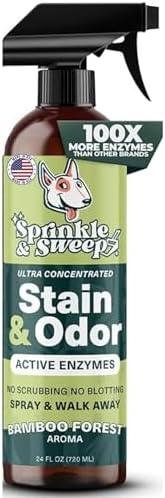
- POWERFUL ENZYME CLEANING: Advanced enzymatic formula breaks down urine, feces, drool, and vomit at the source, deliverin…
- RESIDUE-FREE PERFORMANCE: Designed for true spray-and-walk-away convenience, this cleaner uses active enzymes to lift me…
- BAMBOO & MINT FRESHNESS: Infused with a bamboo and mint essential oil blend that neutralizes odors while leaving a crisp…

- Cleaner Air in Minutes: PuroAir is proven to filter the pollutants lurking in your home’s air. This large room air purif…
- Powerful Air Filter: PuroAir HEPA air purifiers for home feature a powerful 3-layer filtration system—a pre-filter, HEPA…
- Backed by Science: Lab tested and studied to filter the most common household pollutants with ease. Better filtration me…
For the best automatic litter box for odor control, look for units with sealed waste drawers, replaceable carbon filters, and strong self-clean cycles. The top rated self-cleaning litter box options often have large waste capacity, which means you empty it less often.
Consider an automatic cat litter box with odor control that includes built-in ventilation or an odor-neutralizing compartment. These features reduce maintenance and make an odor-free automatic litter box solution more attainable for busy households.
Complementary accessories extend product life and performance. Keep spare replacement carbon filters, activated charcoal pouches, and enzyme cleaner on hand. Use high-quality clumping or silica litters labeled compatible with automatic systems to cut tracking and odor.
For a real-world example of a top rated self-cleaning litter box that addresses many odor issues, check the in-depth Litter-Robot 4 review and related accessory guides on this site. That unit often scores well for multi-cat homes and offers specific replacement parts to fight litter robot smell.
Final buying advice: prioritize products that neutralize odors instead of masking them. Follow replacement schedules for filters and deodorizers to maintain long-term control and protect indoor air quality.
Conclusion
Automatic litter boxes often smell due to waste buildup, the wrong litter, or scratched materials. They can also smell if they’re not placed right or if your cat’s diet changes. Filters or hidden bacteria can also cause odors.
Fixing these issues is simple. Scoop the litter box daily and deep clean it regularly. Choose the right litter, like premium clumping or crystal, to control smells. Replace old parts and clean filters to get rid of odors.
Where you put the litter box matters too. Move it to a dry, well-ventilated area. An air purifier or fan can help keep it smelling fresh. Watch your cat’s diet and health, and see a vet if smells change suddenly.
Enzyme cleaners, activated charcoal, and carbon filters can also help. They get rid of smells without covering them up.
For lasting results, stick to a daily cleaning routine. Choose your litter wisely and replace damaged parts quickly. If smells keep coming back, think about getting a self-cleaning litter box.
Look for top-rated models like the Litter-Robot 4. Also, get accessories like carbon filters and enzyme sprays. With the right care and tools, you can keep your home smelling fresh.
FAQ: Automatic Litter Box Smell
Why does my automatic litter box still smell even when it looks clean?
Even when it looks clean, small amounts of urine and feces can stay behind. Bacteria break down these residues into ammonia, causing the smell. Also, hidden areas like electronics and rubber gaskets can trap oils and bacteria, making it hard to get rid of the odor.
How often should I scoop and empty an automatic litter box to control odor?
For one cat, scoop daily and empty the waste drawer once a week. In multi-cat homes, scoop more frequently and empty the drawer 2–3 times per week. Clean removable parts monthly to prevent odor buildup.
What is the best litter for automatic litter boxes to prevent smell?
High-quality clumping clay and silica crystal litter work best. Clumping clay forms tight clumps, while silica crystals absorb moisture and control ammonia. Natural litters can help but may require more frequent changes.
Can litter particle size or additives affect performance and odor?
Yes. Fine litter can clog the system, while large particles may not clump properly. Additives like activated charcoal or baking soda help neutralize odor, but avoid strong fragrances that only mask smells.
Which cleaning agents are safe and effective for removing hidden odors?
Use warm water and unscented soap for routine cleaning. For deep cleaning, use enzyme cleaners to break down odor-causing bacteria. Avoid bleach and always dry components completely before reassembly.
Do automatic litter boxes need maintenance for filters and deodorizers?
Yes. Replace carbon filters and deodorizers every 1–3 months, depending on usage. Clean sealed bins and check gaskets regularly to prevent odor buildup.
How does placement and ventilation affect litter box smell?
Poor airflow traps moisture and increases odor. Place the litter box in a well-ventilated area and avoid tight spaces. Air purifiers or slightly open doors can help improve airflow.
Can my cat’s diet or health cause stronger litter box odors?
Yes. Low-quality food and dehydration can intensify odor. Sudden changes in smell may indicate health issues like infections or digestive problems — consult a veterinarian if needed.
How do I deep-clean an automatic litter box without damaging electronics?
Unplug the unit and remove all washable parts. Clean with mild soap weekly and use enzyme cleaner monthly. Avoid water contact with electronic components and dry everything thoroughly before reassembling.
Are air purifiers effective for litter box odor control?
Yes. Air purifiers with activated carbon filters help remove odor molecules, while HEPA filters capture dust and dander. Placing one near the litter box improves overall air quality.