Litter-Robot 4 vs Other Automatic Litter Boxes (2026): Which One Is Actually Worth It?
This post may contain affiliate links. If you buy through them, we may earn a small commission at no extra cost to you. We only recommend products we genuinely trust.
Are you trying to decide whether the Litter-Robot 4 is actually worth it—or if another automatic litter box can do the same job for less?
At first glance, most self-cleaning litter boxes seem similar. But once you start comparing real-world performance—like odor control, cleaning reliability, and daily maintenance—the differences become much more noticeable.
If you’re new to this technology, it helps to understand how automatic litter boxes work before comparing different models, especially if you’re not familiar with how automatic litter boxes actually work.
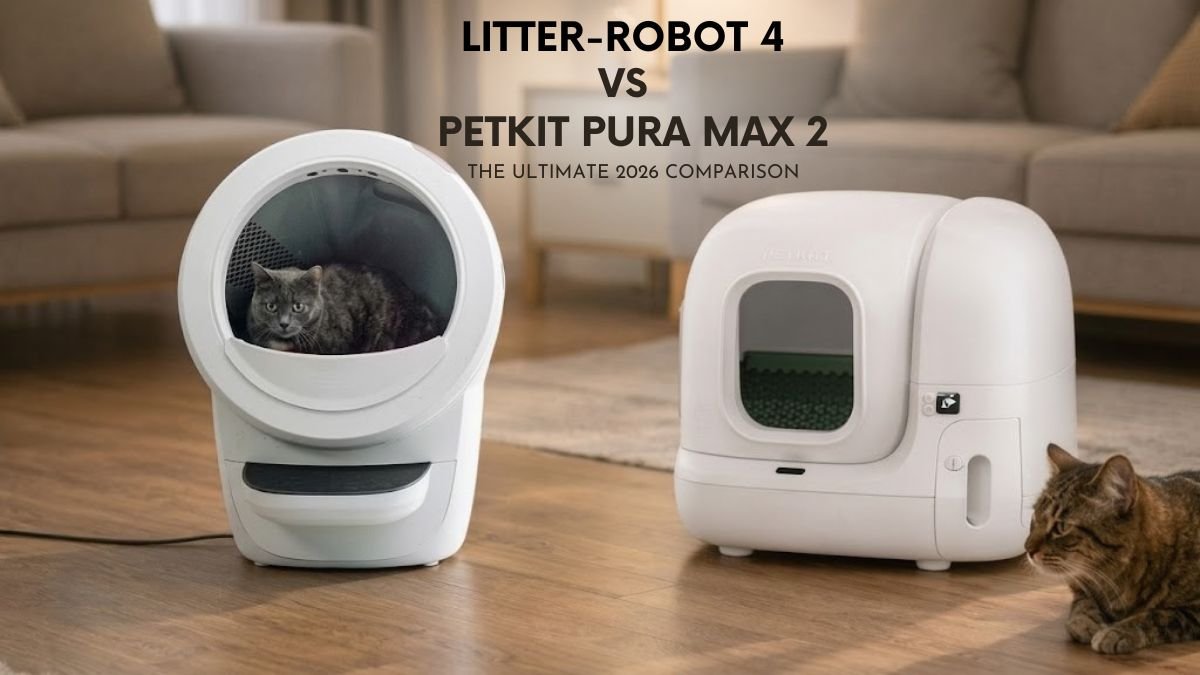
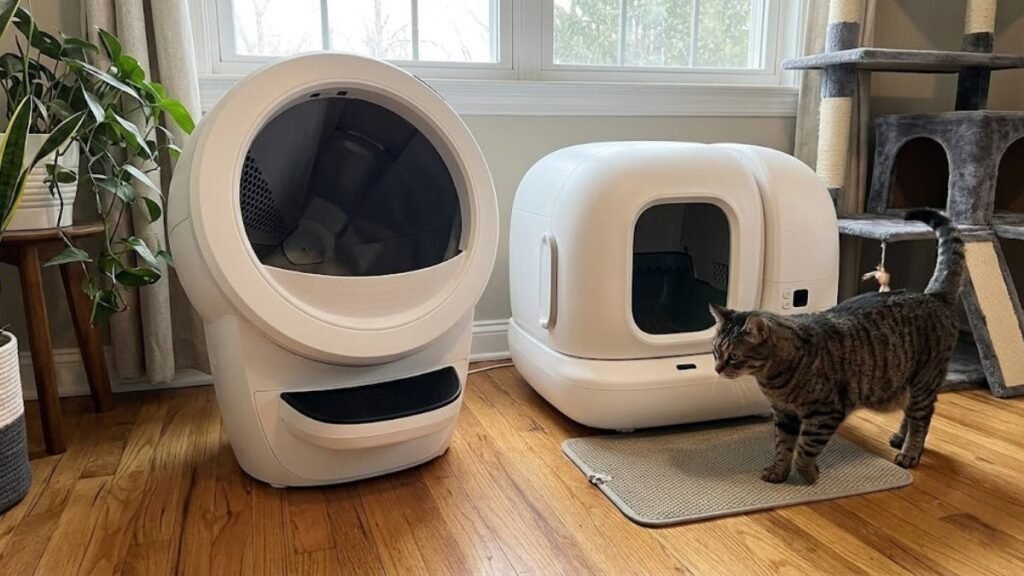
In this guide, we compare the Litter-Robot 4 by Whisker with one of its most popular alternatives, the PETKIT Pura Max 2. These models stand out for their smart features, reduced scooping effort, and overall convenience—but they’re built for different types of homes.
We’ll break down what actually matters: cleaning performance, noise levels, design, cat comfort, odor control, smart features, maintenance, and long-term cost.
By the end, you’ll know exactly which one fits your space, your cat, and your budget—so you can choose with confidence and avoid wasting money on the wrong option.
Key Takeaways
- This is a focused Litter-Robot 4 vs other automatic litter boxes comparison, spotlighting the Litter-Robot 4 and PETKIT Pura Max 2.
- You’ll get side-by-side insights on cleaning performance, noise, design, odor control, smart features, and overall maintenance.
- Litter-Robot 4 vs competitors is evaluated based on real-world use—not just specs on paper.
- The guide includes tailored recommendations for large cats, multi-cat homes, budget buyers, and those seeking a premium experience.
- By the end, you’ll know whether the Litter-Robot 4 is the best automatic litter box for your household—or if an alternative like the PETKIT Pura Max 2 is a better fit.
Quick Verdict: Is Litter-Robot 4 Really the Best Choice?
Looking for a quick answer? In most multi-cat homes, the Litter-Robot 4 is one of the most reliable options available. Its globe-style sifting system, larger interior, and well-developed Whisker app make it especially effective for heavy, daily use.
That said, it’s not the best fit for every situation. When comparing it to other automatic litter boxes, factors like price, size, noise, and maintenance style can make a big difference—especially in smaller homes or single-cat setups.
If you want to see how the Litter-Robot 4 compares to the PETKIT Pura Max 2 in real-world use, this video shows a clear side-by-side breakdown of performance, noise, and daily operation.
When Litter-Robot 4 is the best option
Go for the Litter-Robot 4 if you have multiple cats or larger breeds. It’s designed to handle frequent use with less manual cleaning, and the spacious interior makes it more comfortable for bigger cats.
The Whisker app adds another layer of convenience, with reliable tracking, alerts, and remote control. Over time, its durability and capacity tend to justify the higher upfront cost—especially in busy households.
When another automatic litter box is a better choice
If you’re working with limited space, prefer quieter operation, or want a lower upfront cost, alternatives like the PETKIT Pura Max 2 can be a better fit.
Many of these models use sealed waste bag systems and built-in odor control, making them practical for apartments or single-cat homes. They’re also easier to place and typically more budget-friendly, while still offering smart features and safety sensors.
Whether the Litter-Robot 4 is the right choice depends on your space, your cat’s needs, and how much maintenance you’re willing to handle. The best option is the one that fits your daily routine—not just the one with the most features.
Key Differences Between Litter-Robot 4 and PETKIT Pura Max 2
You’re comparing two of the most popular automatic litter boxes on the market—and what really matters is how they perform in everyday use.
This section breaks down the key differences between the Litter-Robot 4 and the PETKIT Pura Max 2, focusing on design, waste handling, and overall ecosystem.
The goal is simple: help you quickly understand how each model fits into your routine—so you can compare noise levels, space requirements, maintenance, and long-term costs without getting lost in technical details or marketing claims.
Overview of both models
The Litter-Robot 4 is Whisker’s latest self-cleaning litter box, built on a fourth-generation rotating drum system. It features improved cycle timing, a quieter motor, and a larger waste drawer compared to earlier versions.
In real-world use, what stands out most is its consistency—especially in multi-cat homes where frequent cycles are needed throughout the day. Whisker also offers a well-developed ecosystem, including app control, liners, carbon filters, and odor control refills.
The PETKIT Pura Max 2, on the other hand, is designed for those who prioritize a more compact and space-efficient setup. It uses a rake or conveyor-style cleaning mechanism and includes a built-in waste bag system for easier disposal.
In practice, this model feels more streamlined for smaller homes or apartments. It also includes integrated odor control features and smart app functionality, making it a convenient option for lighter daily use.
Who this comparison is for
This comparison is designed for U.S. cat owners trying to decide between the Litter-Robot 4 and the PETKIT Pura Max 2—especially if you care about how these systems perform in everyday use.
You’re likely comparing factors like noise, size, maintenance, and long-term costs, not just features on paper. This guide focuses on what actually impacts your daily routine.
Your decision should also consider litter type, number of cats, and available space. The Litter-Robot 4 tends to perform best with clumping clay litter and in higher-traffic homes, while the PETKIT Pura Max 2 is better suited for smaller spaces and simpler setups with strong odor control.
Use this comparison as part of a broader evaluation of litter robot alternatives, helping you understand how globe-style systems compare to rake or conveyor-based designs in real-world use.
Cleaning System Comparison and Waste Handling
Understanding how each system handles waste is key to choosing the right automatic litter box—because this directly affects reliability, maintenance, and your day-to-day experience.
The Litter-Robot 4 and the PETKIT Pura Max 2 use completely different cleaning approaches. These differences impact how often you’ll need to clean the unit, how well it handles clumps, and which types of litter perform best over time.
Choosing the right litter also plays a major role in performance, and using the best cat litter for automatic litter boxes can prevent many common issues.
In the sections below, you’ll see how each system works in practice—and what that actually means for your routine at home.
How the Litter-Robot 4 cleaning system works
The Litter-Robot 4 uses a rotating globe combined with a fixed sifting screen to separate clean litter from waste. After your cat exits, the unit waits for a set delay, then begins a cycle where the globe slowly rotates and filters clumped waste through the screen.
The clumps are directed into a sealed waste drawer located below, keeping them contained and helping reduce odors between cleanings.
One of the biggest advantages of this design is that it avoids traditional rakes or moving parts that come into direct contact with the litter. In real-world use, this typically means fewer jams and less frequent manual cleaning.
The waste drawer is also larger than most competing models, which allows for longer intervals between emptying—especially useful in multi-cat households. You can also use liners and carbon filters to improve odor control and simplify maintenance.
How the PETKIT Pura Max 2 cleaning system works
The PETKIT Pura Max 2 uses a mechanical rake or conveyor-style system to collect waste. After your cat finishes, the unit activates a cleaning cycle where the rake sweeps clumps into a sealed compartment.
The waste is then stored inside a disposable bag or removable container, making disposal simple—just pull out the bag and throw it away.
In real-world use, this system can feel more convenient for quick, clean disposal, especially in single-cat homes. However, because the rake mechanism has more moving parts that come into direct contact with the litter, it may require more frequent cleaning over time.
This also means performance can vary depending on the type of litter used, particularly with heavier or stickier clumps.
Real-world differences in waste handling and daily use
In real homes, the Litter-Robot 4 tends to experience fewer clogs, mainly because its globe-style system avoids moving parts that come into direct contact with the litter. This becomes especially noticeable in multi-cat households, where frequent and heavier clumps can quickly overwhelm less robust systems.
If you’re still unsure how these systems function in practice, it helps to take a closer look at how automatic litter boxes work in real-world scenarios.
The PETKIT Pura Max 2, on the other hand, offers a more straightforward disposal experience. Its bagged system feels quick and clean—especially in single-cat homes, where removing and replacing a sealed bag is often faster than handling a drawer and liners.
However, in multi-cat environments, this convenience can shift. You’ll likely need to replace bags more frequently, which can increase both maintenance and ongoing costs over time.
| Feature | Litter-Robot 4 | PETKIT Pura Max 2 |
|---|---|---|
| Primary cleaning method | Rotating sifting globe | Rake/conveyor sweep into bagged container |
| Parts contacting litter | Minimal; fixed screen | Multiple moving parts (rake/comb) |
| Clog and jam risk | Lower with clumping litters | Higher with very hard or sticky clumps |
| Waste disposal style | Sealed waste drawer with liners and carbon filter options | Sealed disposable bags or removable container |
| Suitability for multi-cat homes | Better due to larger capacity | May require frequent bag changes |
| Performance with fine or pellet litters | Best with clumping clay; some crystal litters work | Performance varies by model and litter type |
| Maintenance frequency | Lower; less mechanism cleaning | Higher; rake and bag areas need more attention |
| User convenience | Less frequent emptying; simple drawer removal | Easy bag removal; cleaner for single-cat use |
Noise Level and Operational Sound
You want a litter box that keeps your home calm—especially since these devices run multiple times throughout the day. Noise can quickly become a problem if the unit is placed near living areas, bedrooms, or small apartments.
This section compares how the Litter-Robot 4 and the PETKIT Pura Max 2 sound during cleaning cycles, startup, and everyday use in real homes
Noise during cleaning cycles
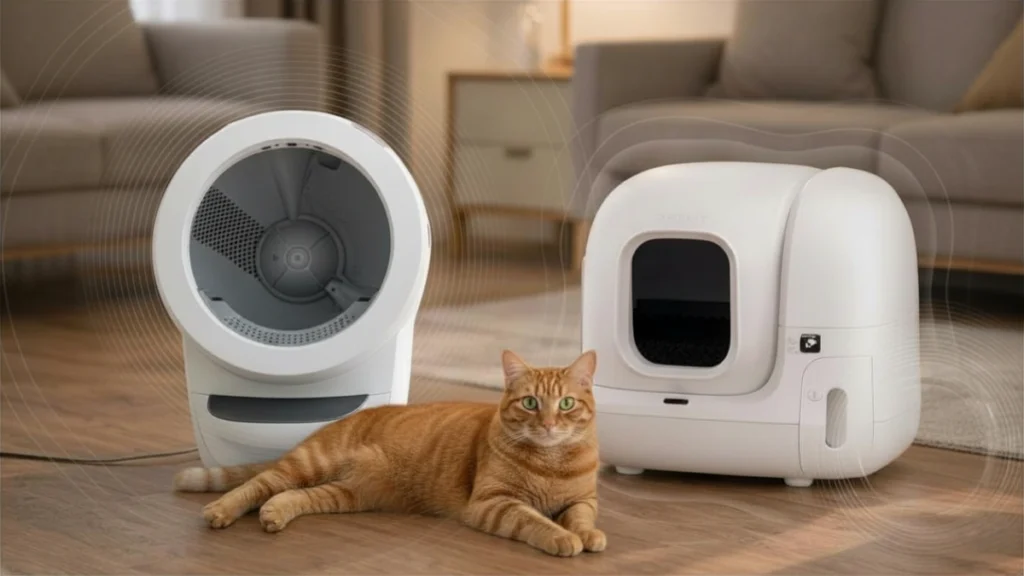
The Litter-Robot 4 produces a steady motor-like hum during its cleaning cycle. The sound is consistent and rhythmic, usually lasting a short time, and most users describe it as moderate rather than disruptive.
The PETKIT Pura Max 2, on the other hand, uses a rake or conveyor-style mechanism that tends to generate softer, more subtle sounds—especially on padded or carpeted surfaces.
Floor type can make a noticeable difference. Carpet or mats help absorb vibration and reduce noise, particularly with the PETKIT system, while hard floors may amplify mechanical sounds from both units.
In simple terms, the Litter-Robot 4 sounds more like a slow, controlled motor, while the PETKIT Pura Max 2 resembles a gentle sweeping or raking motion.
Startup and alert sounds
Both units include chimes, app notifications, and on-device alert sounds to keep you informed about cleaning cycles, errors, or maintenance needs.
The Litter-Robot 4 allows you to customize these alerts through the Whisker app, giving you control over which sounds you hear—or whether you want to mute them entirely.
The PETKIT Pura Max 2 also offers adjustable alert tones and settings directly through its app and device controls, making it easy to manage notifications based on your preferences.
If you prefer a quieter home environment with fewer interruptions, it’s worth checking and adjusting these sound settings during the initial setup.
Which model is quieter in real use
In real homes, the PETKIT Pura Max 2 often feels quieter—especially in smaller spaces or when placed on padded mats. These surfaces help reduce vibration and soften the sound of the rake or conveyor mechanism during cleaning cycles.
The Litter-Robot 4, while slightly more noticeable due to its motor-driven rotation, runs for a short period and is generally considered tolerable by most users. Its heavier build can also help absorb some vibration, particularly on hard floors.
In practice, the perceived noise level depends a lot on placement. Using a mat or positioning the unit on softer flooring can make a noticeable difference with either model.
Design, Size, Entry, and Cat Comfort
When choosing an automatic litter box, size and layout matter more than most people expect—both for your space and for your cat’s comfort.
The Litter-Robot 4 is noticeably larger and taller, which means it requires more floor space and enough vertical clearance to access the waste drawer comfortably.
The PETKIT Pura Max 2, on the other hand, is more compact and easier to place in tighter areas. Its smaller footprint makes it a better fit for apartments, closets, or spaces where every inch counts.
Exterior size and space requirements
The Litter-Robot 4 is wider and taller than most automatic litter boxes, so it requires more dedicated space. If you’re planning to place it in a laundry room, closet, or under shelving, you’ll need to account for extra height and enough clearance to access the waste drawer comfortably.
The PETKIT Pura Max 2, on the other hand, has a smaller footprint and a lower profile, making it much easier to fit into tighter spaces. This makes it a more practical option for apartments, narrow areas, or homes where space is limited.
Entry size and accessibility
The Litter-Robot 4 features a wide, higher entry, along with an internal step and a lower threshold in newer versions. This setup works well for average to large cats, giving them enough room to enter comfortably.
However, in real-world use, older cats or those with mobility issues may find the higher entry more challenging—especially without an added step or ramp.
The PETKIT Pura Max 2, by comparison, offers a lower-profile entry and more accessible opening options. This makes it easier for smaller, senior, or less mobile cats to get in and out without extra assistance.
Interior space and comfort for cats
The Litter-Robot 4 features a spacious, spherical interior that gives cats more room to turn, dig, and move naturally. This makes a noticeable difference for larger breeds like Maine Coons or Ragdolls, which can feel cramped in smaller units.
In real-world use, that extra space often leads to a more comfortable experience—especially for cats that like to move around before settling.
The PETKIT Pura Max 2, on the other hand, has a more compact and enclosed interior. This can feel cozier and more secure for smaller or shy cats that prefer a tighter, more protected space.
Most cats adjust to a new automatic litter box within a few days, but more sensitive or anxious cats may take longer—and often adapt more easily to enclosed designs like PETKIT’s.
If you have multiple cats, it’s worth measuring their size (especially shoulder width and body length) to make sure the unit provides enough space for natural movement.
Before making a decision, also consider your available space, your cat’s mobility, and whether you’re managing one cat or several. These factors can make a significant difference in long-term comfort and usability.
Odor Control, Filters, and Maintenance
Keeping odors under control and staying on top of maintenance is one of the biggest concerns for most cat owners—especially if the litter box is placed inside the home.
If you’re dealing with persistent smells, understanding why automatic litter boxes smell can help you fix the root cause more effectively.
If you’ve ever dealt with persistent smells, you already know how important it is to understand what actually causes them. In fact, many odor issues aren’t just about the litter box itself, but how it’s used and maintained. If that’s something you’re struggling with, this guide on why automatic litter boxes smell can help you fix the root of the problem.
In this section, we’ll break down how each system handles odor control, what kind of maintenance they require, and how ongoing supply costs can impact your experience over time.
Odor control systems and effectiveness:
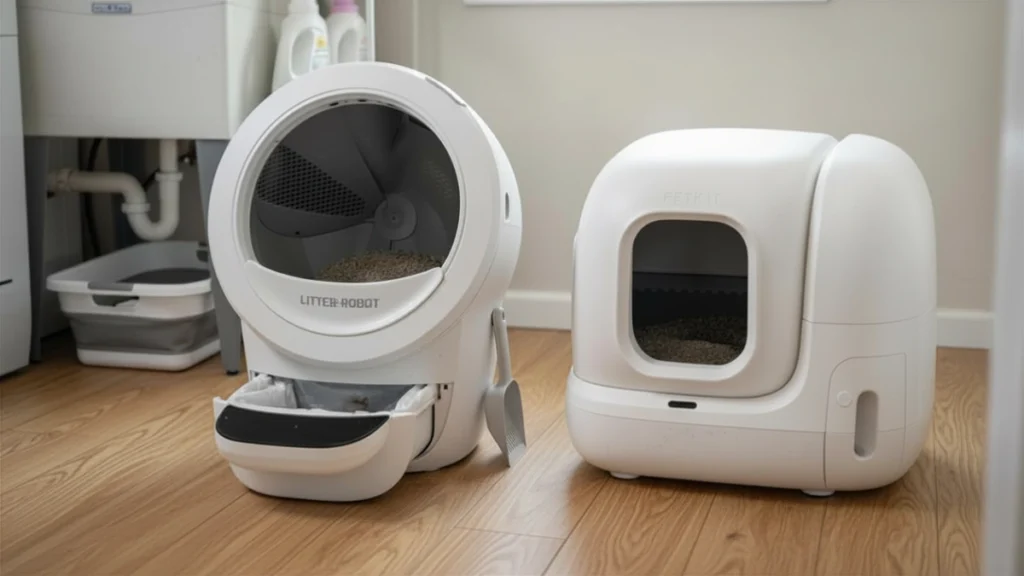
The Litter-Robot 4 uses a sealed waste drawer combined with carbon filters and optional odor-control refills to keep smells contained. When filters and liners are replaced regularly, it does a very effective job of reducing odors—even in multi-cat households.
The PETKIT Pura Max 2 takes a different approach, using sealed waste bags along with odor-control materials like activated carbon. This setup feels clean and practical, especially for single-cat homes or lighter daily use.
When comparing the two, the biggest difference comes down to capacity and seal strength. The Litter-Robot 4 tends to handle higher waste volume more efficiently, while the PETKIT system relies more on frequent bag changes to maintain odor control over time.
Routine maintenance and cleaning:
The Litter-Robot 4 requires routine maintenance such as emptying the waste drawer, replacing filters, and occasionally cleaning the globe. Thanks to its larger capacity, these tasks are usually less frequent—especially in multi-cat homes.
The PETKIT Pura Max 2, on the other hand, often involves more frequent interaction. This includes cleaning the rake mechanism and replacing waste bags more regularly, particularly as usage increases.
Both units benefit from occasional wipe-downs to keep sensors and internal components working properly over time.
When choosing between them, it’s important to consider how much time and effort you’re willing to spend on regular maintenance—not just the features they offer.
Cost and availability of replacement supplies:
Whisker offers a wide range of replacement supplies for the Litter-Robot 4, including liners, carbon filters, and odor-control refills, all available online and in major pet retailers. There are also third-party options, which can help reduce long-term costs.
PETKIT Pura Max 2 supplies—such as waste bags and odor-control components—are also easy to find through PETKIT’s official channels and pet stores. While the bags are generally more affordable upfront, the need for more frequent replacements can increase total costs over time.
Both brands are widely available in the U.S., making it easy to find supplies and compare prices. In practice, long-term value often depends less on the initial price and more on how frequently you’ll need to replace consumables based on your household’s usage.
Quick checklist to help you decide:
- Replace filters and odor-control components on schedule to maintain consistent odor performance.
- Factor in how much time you’re willing to spend on maintenance, including drawer emptying, rake cleaning, or bag replacement.
- Compare supply prices and availability in the U.S., especially if you plan to use the unit daily or in a multi-cat household.
Smart Features, Safety Sensors, and App Experience
Both the Litter-Robot 4 and the PETKIT Pura Max 2 come equipped with smart features and safety technology designed to make daily use easier and more reliable.
They offer remote control, real-time alerts, and usage tracking—giving you more visibility and control over your cat’s litter box, even when you’re not at home.
In this section, we’ll take a closer look at how each model performs when it comes to app functionality, sensor accuracy, and overall day-to-day experience.
App control and smart features
The Whisker app for the Litter-Robot 4 gives you full control over cleaning cycles, real-time alerts, and firmware updates. It also lets you track usage patterns and adjust settings directly from your phone.
In real-world use, this level of control is especially helpful in multi-cat homes, where monitoring activity and managing cycles remotely can make a noticeable difference.
The PETKIT Pura Max 2 app also offers core features like remote control, scheduling, and notifications for bag changes or maintenance. Its interface is designed to be simple and easy to use, focusing on essential daily functions without too much complexity.
When it comes to smart features, the main difference is ecosystem depth. The Litter-Robot 4 connects with a broader range of Whisker services and smart-home integrations, while the PETKIT Pura Max 2 prioritizes simplicity and clear, practical alerts for everyday use.
Safety sensors and cat protection
Both models include multiple safety systems designed to prevent the unit from operating while your cat is inside. These typically include presence and weight sensors that automatically pause or stop cleaning cycles when movement is detected.
The Litter-Robot 4 uses a more mature and refined sensor system, which tends to reduce false starts and provide more consistent performance—especially in busy, multi-cat households.
The PETKIT Pura Max 2 also features safety sensors and an emergency stop function to protect your cat during operation. In everyday use, it performs reliably, although occasional adjustments or cleaning of the sensors may be needed to maintain accuracy.
When comparing the two, the Litter-Robot 4 generally offers a more stable experience, while the PETKIT Pura Max 2 still provides a solid level of safety for most home setups.
Ease of setup and daily use
Both units are relatively easy to set up, with step-by-step instructions provided through their respective apps. Most users can get either system running quickly without much technical difficulty.
The PETKIT Pura Max 2 stands out for its compact design, making it easier to place and integrate into smaller spaces right from the start.
The Litter-Robot 4, while larger, offers the advantage of a bigger waste drawer—meaning fewer trips to empty it, especially in multi-cat households.
In daily use, both systems rely on monitoring app alerts and handling routine maintenance. The key difference comes down to convenience: the Litter-Robot 4 requires fewer interventions over time, while the PETKIT Pura Max 2 is easier to position and manage in tighter spaces.
Price vs Value: Which One Is Worth It?
Before buying an automatic litter box, it’s important to look beyond the initial price. What you pay upfront is only part of the equation—ongoing costs, maintenance, and long-term reliability all play a role in the real value.
In this section, we’ll break down not just the price of each model, but also what you can expect to spend over time on supplies, maintenance, and potential replacements.
Price comparison
Prices in the U.S. in 2026 can vary depending on bundles, availability, and promotions.
The Litter-Robot 4 typically ranges between $700 and $850 when purchased new, positioning it as a premium option in the automatic litter box market.
The PETKIT Pura Max 2, on the other hand, usually falls between $350 and $500, sometimes including extra accessories or starter bundles.
This price gap reflects differences in size, build quality, and overall system design. The Litter-Robot 4 is clearly more expensive than most competitors, targeting users who are willing to invest more upfront for durability, capacity, and advanced features.
Long-term value and cost of ownership
Looking at long-term costs is essential when choosing an automatic litter box. The upfront price is only part of the investment—ongoing supplies and maintenance will impact your total cost over time.
The Litter-Robot 4 requires liners, carbon filters, and optional odor-control refills. The PETKIT Pura Max 2 uses waste bags, filters, and other replacement components to maintain performance.
In general, filters and carbon inserts need to be replaced every 1 to 3 months. Waste bags are typically replaced monthly for a single cat, and more frequently in multi-cat households.
For a single-cat home, annual supply costs for the Litter-Robot 4 usually range between $80 and $150. The PETKIT Pura Max 2 tends to fall between $60 and $120 per year. In homes with multiple cats, these costs can easily double or more depending on usage.
That said, both systems can reduce litter waste and eliminate daily scooping, saving time and effort. Over time, these benefits can help offset the higher upfront cost of the Litter-Robot 4.
Ultimately, long-term value depends on how long you plan to use the unit and how many cats you have. A more expensive model can end up being the better investment if it lasts longer, requires fewer interventions, and performs more consistently over time.
A practical recommendation framework
The PETKIT Pura Max 2 is a strong choice for those who want a lower upfront cost and a more compact, space-friendly solution. It works especially well in single-cat homes or smaller living spaces where convenience and simplicity matter most.
The Litter-Robot 4, on the other hand, is better suited for users who prioritize capacity, durability, and a more complete ecosystem of accessories and features. It’s particularly effective in multi-cat households where performance and reduced maintenance make a bigger difference over time.
When deciding between the two, consider not just the initial price, but also yearly supply costs, potential maintenance, and how much time you want to save on daily cleaning.
In the end, the right choice comes down to your space, your cats, and how much convenience you want built into your routine.
Pros and Cons of Each Model
Here’s a quick, side-by-side look at the strengths and limitations of two of the most popular automatic litter boxes.
These points are based on real-world use and will help you quickly decide which model fits your home, your cats, and your routine best.
Litter-Robot 4: What to expect
Pros
- Large interior and high-capacity waste drawer, making it ideal for multi-cat households and reducing how often you need to empty it
- The rotating sifting drum design helps minimize clogs and mechanical issues, improving reliability over time.
- The Whisker app offers strong functionality, including alerts, usage tracking, and regular updates, along with a well-developed accessory ecosystem.
- Widely considered reliable in long-term use, with many users reporting consistent performance over time.
Cons
- Higher upfront cost compared to more compact or entry-level automatic litter boxes.
- Larger and heavier design, which can make placement and relocation more difficult.
- Higher entry height may not be ideal for senior cats or those with mobility issues without additional accessories.
- Ongoing costs for filters, liners, and accessories can add up over time.
PETKIT Pura Max 2: What to expect
Pros
- Lower upfront cost and compact design, making it a great fit for smaller homes, apartments, or tighter spaces.
- Built-in bagged waste system combined with odor-control features provides a clean and convenient disposal experience for everyday use.
- Generally quieter during operation, especially when placed on softer surfaces, with reliable app control and safety sensors.
- Simple and user-friendly setup, making it a strong option for single-cat households or budget-conscious buyers.
Cons
- The rake and conveyor system can be more sensitive to certain litter types, especially heavier or stickier clumps, which may require more frequent cleaning.
- Smaller waste capacity means bags need to be replaced more often, particularly in multi-cat homes.
- May show more wear over time in high-usage households compared to larger, heavy-duty models.
| Feature | Litter-Robot 4 | PETKIT Pura Max 2 |
|---|---|---|
| Upfront cost | Higher; premium build and ecosystem | Lower; budget-friendly option |
| Footprint | Large; requires more space | Compact; ideal for small areas |
| Waste capacity | Large drawer; fewer emptying cycles | Smaller bag; more frequent changes |
| Cleaning mechanism | Sifting drum; lower risk of jams | Rake/conveyor; may jam with heavy clumps |
| App and support | Mature Whisker app; strong ecosystem and support | Functional app; smaller service network in some regions |
| Best use case | Multi-cat homes; users seeking reliability and low maintenance | Single-cat homes; budget-conscious users; limited space |
Compare these points with your home’s needs to make the right decision. The best automatic litter box isn’t just about features—it’s about how well it fits your space, your routine, and your cat’s behavior.
If you prioritize capacity, long-term reliability, and fewer daily interventions, the Litter-Robot 4 stands out as a strong investment.
If you’re looking for a more compact, budget-friendly option that still delivers solid performance, the PETKIT Pura Max 2 can be a better fit for your home.
Take a moment to consider your space, the number of cats you have, and how much maintenance you’re comfortable with. Choosing the right model now can make a big difference in your daily routine—and your cat’s comfort—over time.
Which One Should You Choose?
Choosing the right automatic litter box comes down to your specific situation—your cats, your available space, and how much effort you want to put into daily maintenance.
If you want a broader comparison of top-performing models, exploring the best automatic litter box options can help you make a more informed decision.
If you have multiple cats, deal with heavier daily use, or simply want a more “set it and forget it” experience, the Litter-Robot 4 is usually the better long-term choice. Its larger capacity, more robust design, and reliable performance make it especially suited for busy households.
On the other hand, if you live in a smaller space, want a quieter unit, or prefer a lower upfront investment, the PETKIT Pura Max 2 is a strong alternative. It delivers excellent value and convenience, particularly for single-cat homes or lighter use.
In real-world comparisons, neither option is universally “better”—each one wins in different areas. The Litter-Robot 4 stands out for durability and ecosystem, while the PETKIT Pura Max 2 is often preferred for price, compact size, and quieter operation .
Before making your decision, think about:
- How many cats you have
- Where the litter box will be placed
- How often you want to deal with maintenance
- Your budget (both upfront and long-term)
Choosing based on these factors will lead you to the right model—not just the most popular one.
Best for large cats
For larger breeds like Maine Coons or Ragdolls, the Litter-Robot 4 is typically the better choice. Its spacious, globe-style interior gives cats enough room to turn, dig, and move comfortably without feeling restricted.
If you have a larger breed, choosing the right size becomes essential, especially when considering options built for large cats.
In real-world use, this extra space can make a big difference—especially for bigger cats that tend to avoid smaller or cramped litter boxes. A more comfortable environment often leads to better, more consistent use.
Best for multiple cats
For households with two or more cats, the Litter-Robot 4 is generally the better choice. Its larger waste drawer and efficient sifting system allow it to handle higher daily usage with less effort.
For households with more than one cat, it’s worth exploring solutions designed specifically for multi-cat litter box setups.
In real-world use, this means fewer clogs, fewer emptying cycles, and a more consistent cleaning performance—even when multiple cats are using the unit throughout the day.
For busy homes, this can significantly reduce maintenance time and make litter management much more manageable over the long term.
Best for budget users
If you’re working with a tighter budget, the PETKIT Pura Max 2 is a strong option. Its lower upfront cost makes it much more accessible while still offering solid performance and smart features.
In real-world use, the built-in bagged waste system adds convenience, especially for single-cat households or lighter daily use.
It’s a practical choice for smaller homes or apartments, where space and cost both play an important role in the decision.
Best for premium experience
If you’re looking for a premium, low-maintenance experience, the Litter-Robot 4 stands out as the top choice. It combines advanced app features, a well-developed ecosystem, and a durable design built for long-term use.
In real-world use, this translates into fewer daily interventions, more consistent performance, and a smoother overall experience.
For those who value convenience, reliability, and a more “hands-off” routine, the higher upfront cost can be well worth the investment over time.
Decision checklist
Number of cats: One, two, or several — households with multiple cats benefit from larger capacity and less frequent emptying.
Cat size and mobility: Larger breeds need more interior space, while senior or less mobile cats benefit from lower entry points.
Available space: Measure both the unit footprint and entry clearance before buying, especially for tighter areas or apartments.
Tolerance for maintenance: If you prefer less frequent cleaning, choose a model with a larger waste capacity and fewer manual interventions.
Budget: Consider both the upfront cost and long-term expenses, including supplies, maintenance, and durability over time.
| Need | Recommended Model | Key Reason |
|---|---|---|
| Large cats | Litter-Robot 4 | Larger drum and more interior space reduce stress and improve comfort |
| Multiple cats | Litter-Robot 4 | Large waste drawer and efficient sifting handle higher daily use |
| Budget-conscious | PETKIT Pura Max 2 | Lower upfront cost with convenient bagged waste system |
| Premium experience | Litter-Robot 4 | Advanced app features, accessory ecosystem, and long-term durability |
Use this guide as a quick reference whenever you’re comparing automatic litter boxes.
If you’re still unsure, list your priorities—such as space, number of cats, budget, and maintenance preference—and match them against the checklist above.
This simple step can make your decision much faster and help you choose a model that truly fits your home and your cat’s needs.
Final Verdict
When comparing cleaning systems, noise, design, and overall performance, the Litter-Robot 4 stands out as the more complete solution. It’s especially well-suited for homes with larger cats or multiple pets, where its bigger waste drawer, robust design, and accessory ecosystem make daily maintenance easier and more consistent.
The PETKIT Pura Max 2, on the other hand, is an excellent choice for smaller spaces or tighter budgets. Its compact design, lower upfront cost, and convenient bagged waste system make it a practical option for apartments and single-cat households.
Before making your final decision, take time to measure your available space, consider your cat’s size and behavior, and factor in long-term costs such as supplies and maintenance.
If you have multiple cats or want a more “hands-off” experience, the Litter-Robot 4 is typically the better investment. But for simpler setups or limited space, the PETKIT Pura Max 2 delivers solid performance at a more accessible price point.
Before making your final decision, you may also want to explore a complete comparison of top models, a detailed breakdown between Litter-Robot versions, and a full explanation of how automatic litter boxes work to better understand your options.
Litter-Robot 4 vs Others (FAQ)
What are the main differences between the Litter-Robot 4 and PETKIT Pura Max 2?
The Litter-Robot 4 uses a rotating globe that separates waste into a sealed drawer, offering larger capacity and fewer maintenance cycles. The PETKIT Pura Max 2 uses a rake system with sealed bags, making it more compact and easier to manage in smaller spaces.
Is the Litter-Robot 4 worth it in 2026?
Yes—especially for multi-cat homes or larger breeds. Its higher upfront cost is offset by durability, capacity, and reduced daily maintenance. For lighter use or smaller homes, more affordable options like PETKIT may be sufficient.
Which automatic litter box is better for multiple cats?
The Litter-Robot 4 is the better option for multi-cat households due to its larger waste drawer and more efficient cleaning system, which reduces the need for frequent emptying.
Which one is quieter: Litter-Robot 4 or PETKIT Pura Max 2?
The PETKIT Pura Max 2 is generally quieter, especially on carpet or padded surfaces. The Litter-Robot 4 produces a motor sound during cycles, but it’s short and manageable for most homes
How do odor control systems compare between the two models?
The Litter-Robot 4 uses a sealed drawer with carbon filters and odor refills, making it more effective for multi-cat homes. The PETKIT Pura Max 2 uses sealed bags and odor-control materials, which work well but may require more frequent changes
Which model is better for large cats?
The Litter-Robot 4 is better for large breeds like Maine Coons due to its larger interior and more spacious entry, allowing cats to move comfortably.
What are the ongoing costs of each litter box?
The Litter-Robot 4 typically costs $80–$150 per year in supplies, while the PETKIT Pura Max 2 ranges from $60–$120 annually. Costs increase in multi-cat homes due to more frequent usage.
Are automatic litter boxes safe for cats?
Yes. Both models include safety sensors that stop operation when a cat is detected inside. Regular cleaning and proper setup help ensure consistent safety performance.
Which automatic litter box is best for small apartments?
The PETKIT Pura Max 2 is better for small spaces due to its compact size, quieter operation, and lower footprint.